Here’s what the Bank of Canada’s rate drop means for the loonie
Advertisement
Read this article for free:
or
Already have an account? Log in here »
To continue reading, please subscribe:

Digital Subscription
One year of digital access for only $205*
- Enjoy unlimited reading on winnipegfreepress.com
- Read the E-Edition, our digital replica newspaper
- Access News Break, our award-winning app
- Play interactive puzzles
*First annual payment billed as $205.00 + GST for one year. This annual subscription will automatically renew at $233.00 + GST every 52 weeks (10% off the regular annual price of $259.35). Offer available to new and qualified returning subscribers only. Cancel any time.
To continue reading, please subscribe:
Add Free Press access to your Brandon Sun subscription for only an additional
$1 for the first 4 weeks*
- Enjoy unlimited reading on winnipegfreepress.com
- Read the E-Edition, our digital replica newspaper
- Access News Break, our award-winning app
- Play interactive puzzles
*Your next Brandon Sun subscription payment will increase by $1.00 and you will be charged $17.95 plus GST for four weeks. After four weeks, your payment will increase to $24.95 plus GST every four weeks.
Read unlimited articles for free today:
or
Already have an account? Log in here »
Hey there, time traveller!
This article was published 24/07/2024 (801 days ago), so information in it may no longer be current.
The Bank of Canada lowered its key interest rate for the second time this year to 4.5 per cent. Here’s what the decision means for the Canadian dollar.
How has the decision affected the Canada-U.S. dollar exchange rate?
The loonie didn’t react much to the Bank of Canada decision because the move was already priced in, said Rishi Sondhi, senior economist at TD Bank Group.
The Canadian dollar did dip briefly from around 72.55 to 72.44 soon after the rate decision was released, with more dovish wording than some were expecting from the central bank, but it recovered after the press conference to around 72.52, according to XE.com.
How much risk is there to the Canadian dollar as the Bank of Canada diverges from the U.S. Federal Reserve?
The Bank of Canada has reduced rates twice now while the U.S. Fed has yet to lower rates. Divergence between the two central banks’ rate policy could put pressure on the Canadian dollar.
The loonie didn’t move down on Wednesday, but is down about a cent over the past month as inflation, GDP and jobs numbers made it likely the Bank of Canada would cut.
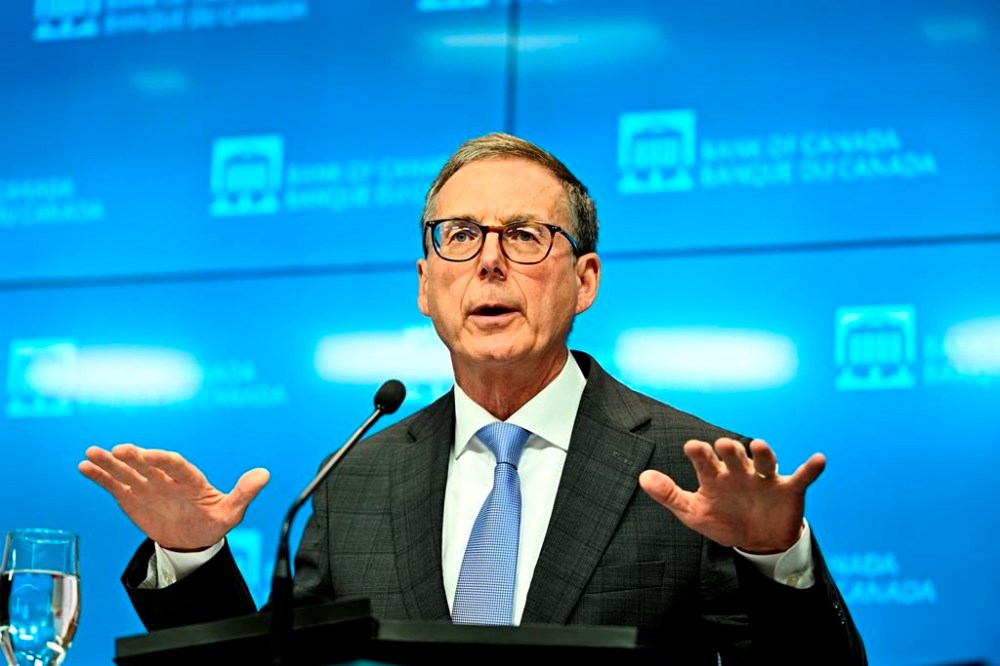
Further divergence with the U.S. Fed could put more pressure on the loonie, but Bank of Canada governor Tiff Macklem said at the press conference Wednesday that he doesn’t expect that to become a big problem as the U.S. could also soon be in a position to cut.
“With inflation showing more signs of easing in the United States, my sense is that divergence is not going to be particularly serious.”
How much does a lower loonie put pressure on inflation through higher costs for imports?
A lower-valued currency means imports will cost more, which puts pressure on inflation. But the Canadian dollar has been trading roughly around current levels for the past two years, so those pressures are already baked in to inflation trends and not making it worse, said Sondhi.
The Canadian economy is also increasingly service-based, so inflation is less affected by import trends, he said. Even categories like imported food are affected by domestic retail costs, limiting the outside effects.
How stable has the Canadian dollar been through this interest rate cycle?
The Canadian dollar has been fairly rangebound between 72 and 76 cents for the past two years, marking a pretty long stretch of relatively stability, said Sondhi.
“It’s actually been pretty a remarkably stable currency … it’s obviously on the lower end of that range right now, so it’s still low, but I think it’s important to note that it has been rangebound.”

What’s ahead for the loonie?
The Canadian dollar should hold around where it’s been trading for the rest of the year, said Sondhi, because both the Bank of Canada and the U.S. Fed will be cutting.
TD has forecast a year-end target for the Bank of Canada rate to be at 4.25 per cent by year end, but the dovish tone from the bank leaves room for it to go lower still.
Financial markets have fully priced in the first U.S. rate cut in September, while the Fed also has decision meetings scheduled in November and December.
This report by The Canadian Press was first published July 24, 2024.