

Ours versus theirs
Winnipeg remains a bastion of affordable real estate in Canada
Advertisement
Read this article for free:
or
Already have an account? Log in here »
To continue reading, please subscribe:

Digital Subscription
One year of digital access for only $205*
- Enjoy unlimited reading on winnipegfreepress.com
- Read the E-Edition, our digital replica newspaper
- Access News Break, our award-winning app
- Play interactive puzzles
*First annual payment billed as $205.00 + GST for one year. This annual subscription will automatically renew at $233.00 + GST every 52 weeks (10% off the regular annual price of $259.35). Offer available to new and qualified returning subscribers only. Cancel any time.
To continue reading, please subscribe:
Add Free Press access to your Brandon Sun subscription for only an additional
$1 for the first 4 weeks*
- Enjoy unlimited reading on winnipegfreepress.com
- Read the E-Edition, our digital replica newspaper
- Access News Break, our award-winning app
- Play interactive puzzles
*Your next Brandon Sun subscription payment will increase by $1.00 and you will be charged $17.95 plus GST for four weeks. After four weeks, your payment will increase to $24.95 plus GST every four weeks.
Read unlimited articles for free today:
or
Already have an account? Log in here »
Hey there, time traveller!
This article was published 27/07/2024 (809 days ago), so information in it may no longer be current.
Purchasing a home is often the largest, most important financial transaction people ever make. It’s also typically one of our most lucrative investments, and considered a backbone of middleclass wealth.
Over the last 25 years, the Canadian home’s average price has increased about 340 per cent, data compiled by the personal finance blog, The Measure of a Plan, shows.
In 1999, the average home cost about $163,000, and it was likely to be a single-family detached home.
Todd Lewys / Free Press
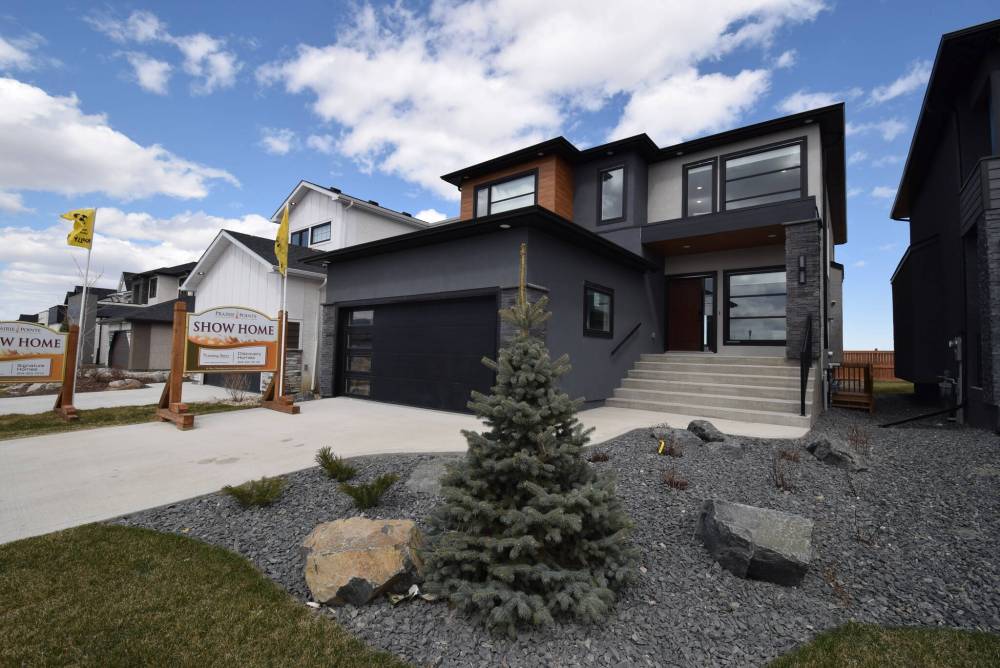
A single family home in Highpark Drive
Today, the average aggregate cost for all housing types — condominiums, row homes and duplexes included— is about $718,500. For a single-family detached home, the average price is about $809,000.
Toronto and Vancouver — Canada’s largest markets — drive national pricing.
Both have seen the strongest international migration paired with housing supply that has failed to keep pace, leading to the dramatic price growth.
In Toronto, the average price is nearly 400 per cent higher than 25 years ago.
In contrast, Winnipeg today is a bastion of relative housing affordability. In 1999, the average price was about $83,000 for all housing types. Today, it’s $363,000.
“Homes remain affordable,” says Akash Bedi, broker/owner of RE/MAX Executives Realty in Winnipeg.
That’s not to say, their price tag is cheap for first-time buyers, he adds.
“An affordably priced home — about $350,000 — will get multiple offers.”
Since 1999, the average price of a home here has grown 337 per cent. Median household income has not kept pace, growing from about $49,600 to $80,000, based on the census data. That’s an increase of about 61 per cent.
Unlike Toronto and Vancouver, most resales in Winnipeg are for single-family detached homes.
Winnipeg Regional Real Estate Board statistics from June show single-family home sales make up about 71 per cent of the 1,585 transactions that occurred. In metropolitan Vancouver, by comparison, single-family home sales made up about 29 per cent of sales in June.
It’s little wonder; the average price of a single-family home was more than $2 million in Vancouver (and more than $1.3 million in Toronto). In Winnipeg, the average price of a single family detached home in the city was about $436,000 in June, up six per cent year over year.
Still, it can be a hefty price for first-time buyers.
Amid all the demand and price growth, it’s hardly surprising a recent survey found buyers are more worried about pricing than about interest rates.
The survey by Zoocasa, a national realty firm, found 42 per cent stated rising prices as their top concern versus 15 per cent indicating interest rates are the top worry.
“About three in 10 of the people we work with in Winnipeg are concerned about prices,” says Rajwinder Sandhu, realtor with eXp Realty in Winnipeg, citing his firm’s internal data.
Those individuals are often first-time buyers wanting to purchase a single-family detached home with most looking in that affordability sweet spot of $350,000.
“But there’s often nothing they can find that they like,” he adds. “So price is a bit of a concern.”
Interest rates continuing their slow descent will boost buying power — though rate decreases are likely to increase prices, he adds.
Even today, fixed-rate, five-year mortgages — which are still popular — are not exorbitant by historical standards, says mortgage specialist Aaron Brager with Castle Mortgage Group in Winnipeg.
“The challenge is all competition where desirable homes in the lower price points get multiple offers, pushing prices to the edge or beyond a lot of first-time buyers’ borrowing capacity.”
He adds that five-year fixed mortgages have interest rates in about the high four to low five per cent range.
That’s slightly less than 20 years ago when fixed-rate mortgage rates ranged between five and six per cent. Then again, home prices were much lower.
The average price of a home in Winnipeg was about $114,000 in 2004.
Homes in that price range still exist on the market today. Winnipeg even has listings for less than $100,000— the caveat being those are typically condominiums in buildings 40 to 50 years old.
“A lot of first-time buyers aren’t as interested in condos,” Brager notes, adding many of his clients are in this group. “That’s partly due to condo fees skewing affordability.”
The additional cost can make it more challenging for buyers to even qualify for a mortgage, he adds.
Yet the difference in price may be more financially palatable all the same, today and in the future.
Brager notes a monthly payment in the high 4 per cent range on a $400,000, five-year, fixedrate mortgage is about $2,300 (based on a five per cent down payment).
For a $200,000 mortgage, (the average price of a condominium in Winnipeg in June was $273,000), the monthly cost is about $1,150, he adds.
When comparing that kind of mortgage payment to the average rent in Winnipeg of about $1,400 a month for a one-bedroom apartment, “even with condo fees, there is still a lot more affordability in the condo market,” Sandhu says, noting these buyers are also building equity with each payment.
These lower price points are attractive for investors seeking to rent the properties, he adds. But in the future, apartment condominiums and row housing could soon become the norm here as affordable single-family homes increasingly become hard to find.
Even today builders are increasingly constructing row, duplexes, fourplexes and apartments “strictly because of their more affordable price points,” Bedi says.

“There are simply a lot of people looking for shelter whether it’s to purchase or rent.”
Although single-family homes remain the first choice of buyers, that is likely to shift gradually as Winnipeg experiences the similar growing pains seen over the past two decades in the nation’s largest cities, Sandhu says.
“I think in the next five years that trend you have seen in those cities will eventually come here.”
Joel Schlesinger is a Winnipeg-based freelance journalist
joelschles@gmail.com