

China launches WTO complaint against Canada over EV, aluminum and steel tariffs
Advertisement
Read this article for free:
or
Already have an account? Log in here »
To continue reading, please subscribe:

Digital Subscription
One year of digital access for only $205*
- Enjoy unlimited reading on winnipegfreepress.com
- Read the E-Edition, our digital replica newspaper
- Access News Break, our award-winning app
- Play interactive puzzles
*First annual payment billed as $205.00 + GST for one year. This annual subscription will automatically renew at $233.00 + GST every 52 weeks (10% off the regular annual price of $259.35). Offer available to new and qualified returning subscribers only. Cancel any time.
To continue reading, please subscribe:
Add Free Press access to your Brandon Sun subscription for only an additional
$1 for the first 4 weeks*
- Enjoy unlimited reading on winnipegfreepress.com
- Read the E-Edition, our digital replica newspaper
- Access News Break, our award-winning app
- Play interactive puzzles
*Your next Brandon Sun subscription payment will increase by $1.00 and you will be charged $17.95 plus GST for four weeks. After four weeks, your payment will increase to $24.95 plus GST every four weeks.
Read unlimited articles for free today:
or
Already have an account? Log in here »
Hey there, time traveller!
This article was published 06/09/2024 (756 days ago), so information in it may no longer be current.
OTTAWA – China launched a complaint against Canada at the World Trade Organization on Friday over recently announced tariffs on Chinese electric vehicles, aluminum and steel.
The Ministry of Commerce announcement of the filing came after a promise earlier this week it would do so.
Following in the footsteps of the U.S., Prime Minister Justin Trudeau announced on Aug. 26 that Canada would impose a 100 per cent tariff on Chinese EVs and a 25 per cent tariff on steel and aluminum.
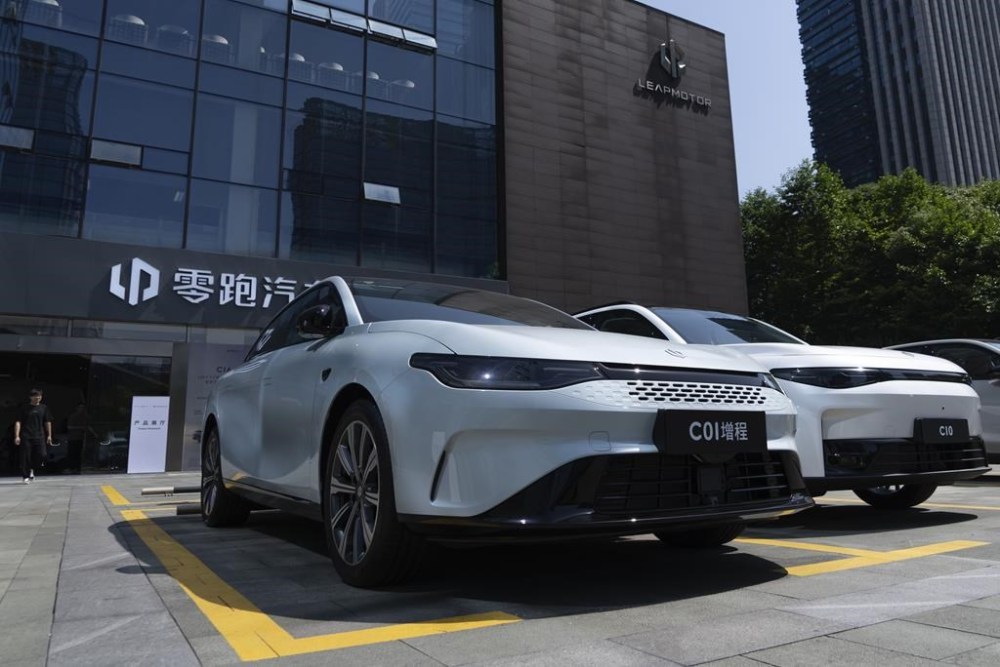
Leapmotor vehicles are parked outside a showroom in Hangzhou in eastern China's Zhejiang province on Tuesday, May 14, 2024. China has launched a complaint against Canada at the World Trade Organization over recently announced tariffs on Chinese electric vehicles, aluminum and steel. THE CANADIAN PRESS/AP-Caroline Chen
While the U.S. tariffs have yet to take effect, Canada’s tariffs will come into place next month.
Finance Minister Chrystia Freeland has cited unfair trading practices but also “abysmal” environmental and labour standards that she said allow China to unfairly price and dump products into the market at a huge cost to the environment and workers.
Canada was under immense pressure to match the U.S. tariffs, pushed by industry groups including automakers, and steel and aluminum plants.
China responded this week by launching an anti-dumping investigation into Canadian canola imports and vowed to defend the “legitimate rights and interests of Chinese companies.”

The decisions by the U.S. and Canada to impose tariffs on Chinese EVs —which are much cheaper — comes as both countries invest heavily in building domestic EV supply chains.
Chinese brands are not a major player in Canada’s EV market right now, but imports from China have exploded in the last year after Tesla switched from U.S. factories for its Canadian sales to its manufacturing plant in Shanghai.
The federal government has also announced a 30-day consultation period to consider the threat of Chinese imports in other sectors, including batteries and battery parts, semiconductors, solar products, and critical minerals.
An RBC report earlier this week warned about the threat of retaliation from China over the tariffs, saying it would add to cost pressures domestically while jeopardizing Canada’s goal of phasing out the sale of new gas-powered vehicles by 2035.
This report by The Canadian Press was first published Sept. 6, 2024.