

Post-secondary financial blues
Students, parents struggle with rising costs of higher learning
Advertisement
Read this article for free:
or
Already have an account? Log in here »
To continue reading, please subscribe:

Digital Subscription
One year of digital access for only $205*
- Enjoy unlimited reading on winnipegfreepress.com
- Read the E-Edition, our digital replica newspaper
- Access News Break, our award-winning app
- Play interactive puzzles
*First annual payment billed as $205.00 + GST for one year. This annual subscription will automatically renew at $233.00 + GST every 52 weeks (10% off the regular annual price of $259.35). Offer available to new and qualified returning subscribers only. Cancel any time.
To continue reading, please subscribe:
Add Free Press access to your Brandon Sun subscription for only an additional
$1 for the first 4 weeks*
- Enjoy unlimited reading on winnipegfreepress.com
- Read the E-Edition, our digital replica newspaper
- Access News Break, our award-winning app
- Play interactive puzzles
*Your next Brandon Sun subscription payment will increase by $1.00 and you will be charged $17.95 plus GST for four weeks. After four weeks, your payment will increase to $24.95 plus GST every four weeks.
Read unlimited articles for free today:
or
Already have an account? Log in here »
Hey there, time traveller!
This article was published 07/09/2024 (713 days ago), so information in it may no longer be current.
No pain. No gain.
It’s not just a statement about trying to get in tip-top physical shape. Two new surveys about Canadians’ financial well-being when it comes to post-secondary education suggest a similar feat of endurance in order to get ahead.
No financial pain; no higher learning — and, potentially, a lesser shot at making a decent living.
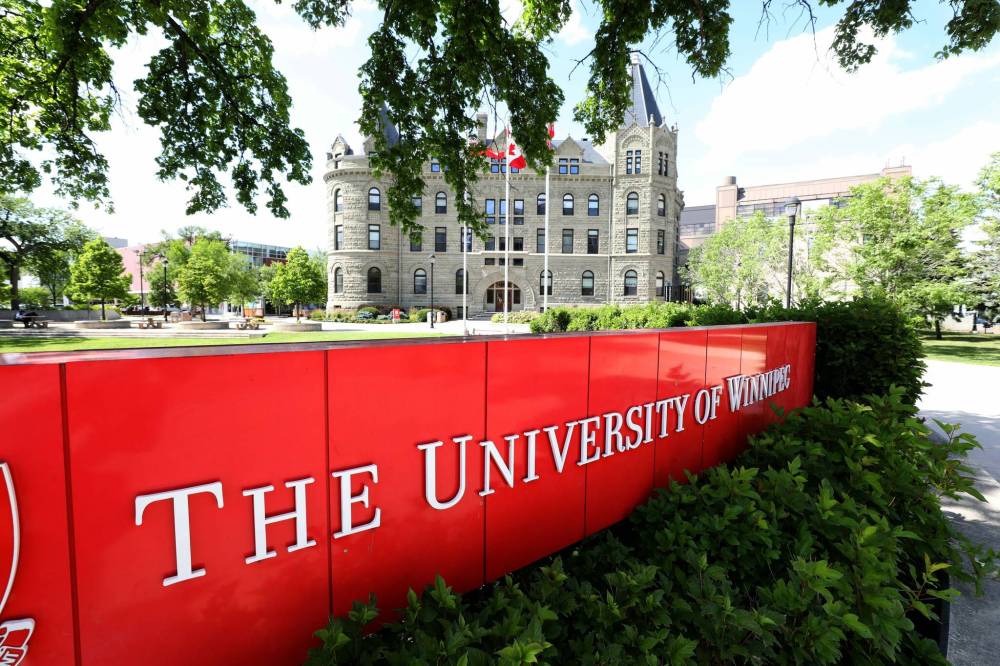
The University of Winnipeg (Ruth Bonneville / Free Press files)
As school ramps back into action, TD and Simplii Financial (a subsidiary of CIBC) both surveyed Canadian post-secondary students and parents helping their kids attend university or polytechnic schools, revealing unsettling conditions among their finances.
The TD poll found more than seven in 10 students define themselves as financially unstable in the Prairies region, which includes Manitoba. That’s the highest number among all regions in Canada. As well, 44 per cent state not being able to adequately meet basic needs for housing and food.
For parents, just about every respondent (96 per cent) states they’re helping pay for their kids’ post-secondary, with nearly eight in 10 indicating it is affecting their own financial well being.
Similarly, Simplii’s poll found about six in 10 students cannot make it through the school year without help from the ‘bank of mom and dad’.
That’s despite many — 75 per cent — tracking their spending, and 62 per cent indicating they feel financially literate.
“Most of them feel financial education has prepared them well for adulthood,” says Jimmy Dinh, managing director of Simplii Financial.
Yet many still feel they can’t cut it financially and, inevitably, will incur debt while pursuing higher learning that will hopefully lead to higher earnings, he adds about the survey findings.
One Bank of Canada study found that indeed post-secondary does result in a ‘wage premium’ for graduates.
Individuals with a university degree on average earn up to 53 per cent more in their 40s than those with only a high school education. It also found any post-secondary program results in 18 per cent more earnings for individuals than those with only a high school diploma.
That premium in pay, though, is shrinking. In 1997, the premiums were 63 per cent for a university degree and 20 per cent for other post-secondary.
At the same time, the cost of education is rising.
Statistics Canada data from 2023 show Manitoba had one of the lowest average costs at about $5,200 per year for tuition. That’s roughly double the cost 30 years ago, Statistics Canada numbers show. Tuition isn’t the only challenge. Supplies, groceries and housing are all more costly today than ever before.
Even though inflation has eased, those price gains of 10 per cent or more for groceries, for example, over the past few years, as well as for rent, are now baked into budgets.
The challenge for students is they have limited capacity to earn more money to meet those needs, and the Simplii poll found many students take a dim view on their ability to earn more money while in school.
“Their enthusiasm for their prospect of finding employment is quite low overall to help cover their costs over the school year,” Dinh adds.
It’s not just students and parents feeling things are getting tougher.
A TD survey from last year found that, among graduates of post-secondary, 73 per cent indicated that current students face more challenges financially than past generations, says Meranda Hamiton, senior manager of youth and student banking at TD.
Neither of the recent surveys examined RESP (Registered Education Savings Plan) usage, but if Hamilton had to give any parent advice on their children’s post-secondary future, “it’s that it is never too early to start an RESP.”
Yet it can be too late to start one.
Once an individual turns 18, they’re no longer eligible for the Canada Education Savings Grant (CESG). That is the annual grant that comes with RESP contributions. It is a 20 per cent top-up on contributions up to $2,500 per year. That’s a maximum of $500 in grants annually per child with a lifetime maximum of $7,200.
It’s not just families with the capacity to save who can benefit from starting a RESP. Low income families can qualify for the Canada Learning Bond. The federal government puts $500 per child into the RESP once it’s started, and provides an additional $100 per year to a lifetime maximum of $2,000. (Unlike the CESG, the bond money is available until age 21 even for individuals, who have yet to open a RESP by age 17.) Additionally, any RESP contributions made by low- and middle-income income families attract an additional $50 to $100 in CESG.
Opening a RESP and saving can feel arduous for young families managing so many other spending priorities, but it’s worth the effort, says Sandra Fry, a debt counsellor with Credit Counselling Society in Winnipeg.
Her youngest of three children is now in post-secondary, and “pretty much getting a free ride because we scrimped and saved, but we started doing that 20 years ago.”
All her kids benefited from RESPs, even though they may not have appreciated some of the financial sacrifices made when they were younger.
“I used to tell them, ‘Do you want mom to save for your education? Then, shut up and clean the bathroom.’”
Fry also remembers well the challenges of paying for post-secondary without a RESP.

“I speak as somebody who finally paid off student loans when my youngest was alive,” she says. “That’s just gross.”
One more thing: Fry sees many parents and students struggling with debt these days in her practice.
The one commonality they have: No RESP.
Joel Schlesinger is a Winnipeg-based freelance journalist
joelschles@gmail.com