

Manitoba-based MicroPilot lands Boeing subsidiary collaboration
Advertisement
Read this article for free:
or
Already have an account? Log in here »
To continue reading, please subscribe:

Digital Subscription
One year of digital access for only $205*
- Enjoy unlimited reading on winnipegfreepress.com
- Read the E-Edition, our digital replica newspaper
- Access News Break, our award-winning app
- Play interactive puzzles
*First annual payment billed as $205.00 + GST for one year. This annual subscription will automatically renew at $233.00 + GST every 52 weeks (10% off the regular annual price of $259.35). Offer available to new and qualified returning subscribers only. Cancel any time.
To continue reading, please subscribe:
Add Free Press access to your Brandon Sun subscription for only an additional
$1 for the first 4 weeks*
- Enjoy unlimited reading on winnipegfreepress.com
- Read the E-Edition, our digital replica newspaper
- Access News Break, our award-winning app
- Play interactive puzzles
*Your next Brandon Sun subscription payment will increase by $1.00 and you will be charged $17.95 plus GST for four weeks. After four weeks, your payment will increase to $24.95 plus GST every four weeks.
Read unlimited articles for free today:
or
Already have an account? Log in here »
Hey there, time traveller!
This article was published 10/09/2024 (743 days ago), so information in it may no longer be current.
The unmanned aerial vehicle (UAV or drone) market has been growing for years, but the slow pace of global regulatory change has likely kept it from really taking off.
Howard Loewen, founder and CEO of Stony Mountain-based MicroPilot, has been in the business for longer than most and knows it requires a good amount of patience.
In its 30th year in operation, MicroPilot recently landed a prestigious collaboration with a Boeing Co. subsidiary (Aurora Flight Sciences) that will enhance the Manitoba company’s already strong global presence.
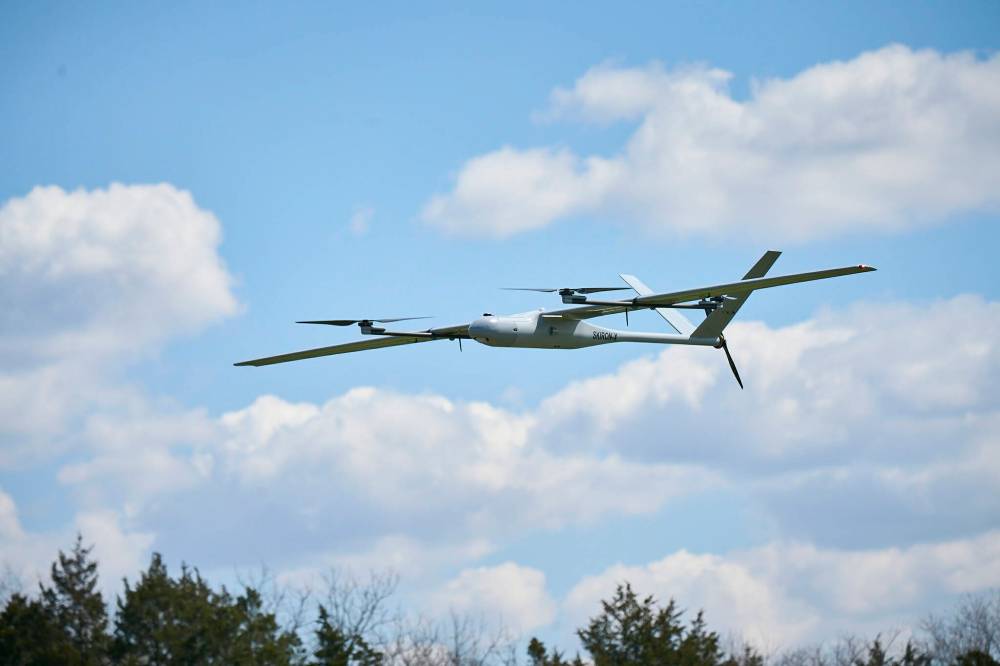
Supplied
Aurora Flight Sciences’ Skiron-X is a battery-powered, unmanned aerial vehicle.
Terms of the arrangement were not disclosed, but it involves some financial consideration for MicroPilot, as well as access to two new UAVs Aurora is developing that are not yet commercially available.
The deal is part of Boeing’s obligations under the Industrial and Technological Benefits (ITB) Policy, whereby foreign suppliers of military equipment to the Canadian Armed Forces are required to invest in the Canadian market at a level close to the actual sale prices of the equipment.
While neither Loewen or officials at Aurora would confirm it, the deal is likely part of the ITB program related to Canada’s $10.4-billion purchase of 16 Boeing P-8A Poseidon aircraft for maritime patrol announced in November 2023.
MicroPilot said it will uses the cash part of the deal to hire “a handful” of additional employees — adding to its existing 18-person workforce — and will have access to two Aurora Skiron-Xs, which boast vertical takeoff and landing capabilities and long flight time in a fixed-wing airframe.
MicroPilot was already supplying Aurora with its autopilot software and sensors and circuit boards. Loewen said the arrangement will let MicroPilot be able to improve and modernize the user interface for its industry-leading autopilot system, among other things.
“Being a supplier already to a Boeing company was a key to our ability to land this deal,” Loewen said. “And it’s a good deal for us. It’s like an equity investment but you don’t have to give up any equity.”
He was keen to give credit to Ottawa and Boeing, both of whom are becoming more creative in dispensing ITB investments.
“The Canadian government has done a really good job of diversifying away from (low-end industrial investments) to things that are much more oriented towards the future of the Canadian economy,” Loewen said.
“And Boeing deserves a lot of credit for being creative in the way they fulfil these obligations,” he said. “Not every defence supplier has progressed beyond just something like moving landing gear parts from St. Louis to Winnipeg.”
Aurora, which is based in Virginia and has about 1,000 employees in five U.S. sites, as well as a small operation in Switzerland, has developed about 35 different UAVs.
It primarily builds vehicles, sometimes on contract for other companies, to demonstrate the viability of certain technologies. Among other items, for instance, it is working with Wisk, a California company working to develop a UAV air taxi.
“I think this is a great partnership. Boeing was already familiar with MicroPilot and we have worked with them in the past. We’re glad they can use the Skiron technology to help their business, as well,” said Carmen Smith, a spokeswoman for Aurora.
Although Aurora is not expecting anything particular out of the arrangement, unlike its other models, Smith said the plan is to commercially manufacture the Skiron.
Its prime use is for airborne intelligence, surveillance and reconnaissance.

While those will usually be military applications, Smith said there are plenty of civilian uses, as well — for instance, forest fire monitoring or utility line inspections.
The battery-powered Skiron has the capability to fly for three hours and a new hydrogen fuel cell design can go as long as seven hours, the company said.
MicroPilot has provided a series of autopilots, software, accessories and customized UAV training and integration services to more than 1,500 clients in 100 countries.
Its customers are at the higher end of both the military and civilian markets. Although MicroPilot has supplied some technology to Ukraine, Loewen noted the drones used in the ongoing war with Russia are cheaply made and designed to fly just once.
martin.cash@freepress.mb.ca