

Boeing makes a ‘final offer’ to striking workers, but union says it’s not good enough
Advertisement
Read this article for free:
or
Already have an account? Log in here »
To continue reading, please subscribe:

Digital Subscription
One year of digital access for only $205*
- Enjoy unlimited reading on winnipegfreepress.com
- Read the E-Edition, our digital replica newspaper
- Access News Break, our award-winning app
- Play interactive puzzles
*First annual payment billed as $205.00 + GST for one year. This annual subscription will automatically renew at $233.00 + GST every 52 weeks (10% off the regular annual price of $259.35). Offer available to new and qualified returning subscribers only. Cancel any time.
To continue reading, please subscribe:
Add Free Press access to your Brandon Sun subscription for only an additional
$1 for the first 4 weeks*
- Enjoy unlimited reading on winnipegfreepress.com
- Read the E-Edition, our digital replica newspaper
- Access News Break, our award-winning app
- Play interactive puzzles
*Your next Brandon Sun subscription payment will increase by $1.00 and you will be charged $17.95 plus GST for four weeks. After four weeks, your payment will increase to $24.95 plus GST every four weeks.
Read unlimited articles for free today:
or
Already have an account? Log in here »
Hey there, time traveller!
This article was published 23/09/2024 (739 days ago), so information in it may no longer be current.
Boeing said Monday it made a “best and final offer” to striking machinists that includes bigger raises and larger bonuses, but the workers’ union said the proposal isn’t good enough and there won’t be a ratification vote before Boeing’s deadline at the end of the week.
The union complained that Boeing publicized its latest offer to 33,000 striking workers without first bargaining with union negotiators.
“Boeing does not get to decide when or if you vote,” leaders of the International Association of Machinists and Aerospace Workers district 751 told members Monday night. “The company has refused to meet for further discussion; therefore, we will not be voting” on Friday, as Boeing insisted.
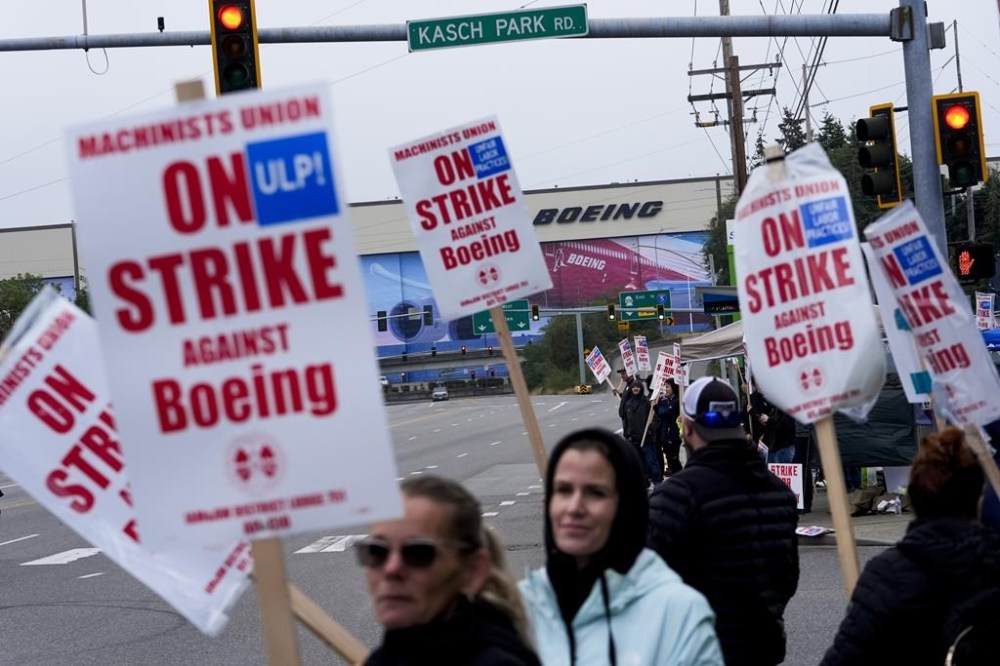
Boeing said that after two days of talks last week with federal mediators failed to produce an agreement, “we presented a best and final offer that made significant improvements and addresses feedback from the union and our employees.”
The new offer is more generous than the one that was overwhelmingly rejected earlier this month. The company said the offer includes pay raises of 30% over four years, up from 25% in the first proposal. The union originally demanded 40% over three years.
The new offer — and labeling it a final one — demonstrates Boeing’s eagerness to end the strike that began Sept. 13. The company introduced rolling furloughs of non-unionized employees last week to cut costs during the strike.
The strikers face their own financial pressure to return to work. They received their final paychecks last week and will lose company-provided health insurance at the end of the month, according to Boeing.
The company said its new offer is contingent on members of the machinists’ union in the Pacific Northwest ratifying the contract by late Friday night, when the strike will be a little over two weeks old.
The union, which represents factory workers who assemble some of the company’s best-selling planes, waited several hours before pushing back Monday night.
“This proposal does not go far enough to address your concerns, and Boeing has missed the mark with this proposal,” the union told members. The group added that it will survey members about the new offer.
Boeing’s latest offer includes upfront pay raises of 12% plus three annual raises of 6% each.
It would double the size of ratification bonuses to $6,000. It also would keep annual bonuses based on productivity. In the rejected contract, Boeing sought to replace those payouts with new contributions to retirement accounts.
Boeing said average annual pay for machinists would rise from $75,608 now to $111,155 at the end of the four-year contract.

The new offer would not restore a traditional pension plan that Boeing eliminated about a decade ago. Striking workers cited pay and pensions as reasons why they voted 94.6% against the company’s previous offer.
Boeing also renewed a promise to build its next new airline plane in the Seattle area — if that project starts in the next four years. That was a key provision for union leaders, who recommended adoption of the original contract offer, but one that seemed less persuasive to rank-and-file members.
The strike is likely already starting to reduce Boeing’s ability to generate cash. The company gets much of its cash when it delivers new planes, but the strike has shut down production of 737s, 777s and 767s. Work on 787s continues with nonunion workers in South Carolina.
On Friday, Boeing began requiring thousands of managers and nonunion employees to take one week off without pay every four weeks under the temporary rolling furloughs. It also has announced a hiring freeze, reduced business travel and decreased spending on suppliers.
The money-saving measures are expected to last as long as the strike continues.