

Via Rail CEO says late trains to Halifax “elephant in the room” as service modernizes
Advertisement
Read this article for free:
or
Already have an account? Log in here »
To continue reading, please subscribe:

Digital Subscription
One year of digital access for only $205*
- Enjoy unlimited reading on winnipegfreepress.com
- Read the E-Edition, our digital replica newspaper
- Access News Break, our award-winning app
- Play interactive puzzles
*First annual payment billed as $205.00 + GST for one year. This annual subscription will automatically renew at $233.00 + GST every 52 weeks (10% off the regular annual price of $259.35). Offer available to new and qualified returning subscribers only. Cancel any time.
To continue reading, please subscribe:
Add Free Press access to your Brandon Sun subscription for only an additional
$1 for the first 4 weeks*
- Enjoy unlimited reading on winnipegfreepress.com
- Read the E-Edition, our digital replica newspaper
- Access News Break, our award-winning app
- Play interactive puzzles
*Your next Brandon Sun subscription payment will increase by $1.00 and you will be charged $17.95 plus GST for four weeks. After four weeks, your payment will increase to $24.95 plus GST every four weeks.
Read unlimited articles for free today:
or
Already have an account? Log in here »
Hey there, time traveller!
This article was published 23/09/2024 (745 days ago), so information in it may no longer be current.
HALIFAX – The CEO of Via Rail told a Halifax business audience on Monday that although the Crown corporation has big modernization plans for its passenger service to the Maritimes, it needs to ensure its trains run on time.
In a presentation to the Halifax Chamber of Commerce, Mario Péloquin said the “elephant in the room” is the fact the Montreal-to-Halifax train — known as the Ocean — can’t keep its schedule.
“Via owns only three per cent of the network on which we operate across Canada and we are aware that this has an impact on the Ocean’s performance,” Péloquin said. “My trains are late all the time. The Ocean doesn’t arrive on time and there’s infrastructure in New Brunswick that makes the schedule even longer.”
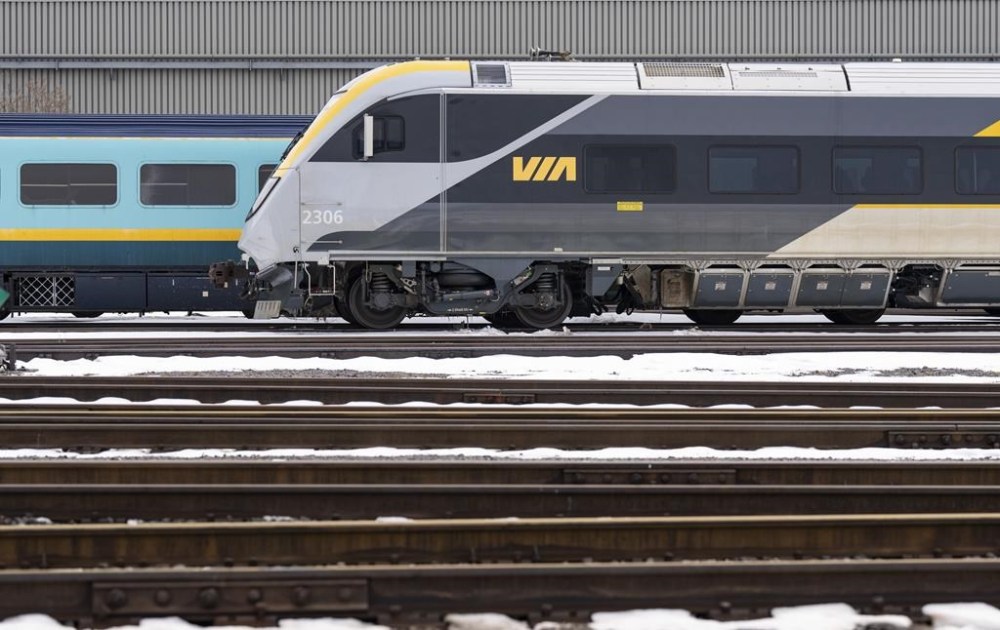
He said talks are continuing with CN Rail and other partners to try to improve a situation in which freight trains are given priority on rail lines causing delays for Via’s passenger service.
“For me collaboration is key for the future of passenger rail,” Péloquin said. “That means that we must continue having discussions with CN Rail and other partners in this region to improve this situation.”
Ted Bartlett, former president of public transportation advocacy group Transport Action Atlantic, told reporters the federal government has to take a leadership role in cutting a deal with CN in order to fix deteriorating track and to replace track sidings that have been removed over the years.
Bartlett said the state of the stretch of line between Campbellton, N.B., and Moncton, N.B., is a problem for quicker passenger trains. “They (CN) don’t need a fast track for their freight trains and it’s only a secondary line for them,” he said.
CN responded in an email that it is the only mode of transportation that finances its own infrastructure, and that last year, it made $53 million in capital investments to maintain more than 900 route miles of track in Atlantic Canada.
Spokesperson Ashley Michnowski wrote that each agreement with the railway’s customers must reflect the costs associated with the maintenance or expansion of the infrastructure necessary to deliver their services.
“The same principle applies to our partners who transport passengers, like VIA. However, passenger trains often require a higher level of maintenance or improvement than our freight trains,” Michnowski said.
“We must therefore have specific agreements with VIA and we respect them.”
Despite the ongoing problem, Péloquin said the Ocean manages to bring 13,000 passengers to Halifax every year and he believes there is room to grow. Part of the solution, he added, is marketing the train as an environmentally sustainable option through the use of new “state of the art” trains the corporation has targeted for service in about five years.
Péloquin encouraged business leaders to incorporate the use of the train, despite its length of travel, as part of their corporate policy, calling it a “breeding ground for encounters, new ideas and innovation.”

He told the chamber that the average age of Via’s trains is 77 years, making it the oldest fleet used by a passenger train service in the world.
The federal government committed in last spring’s budget to fund the replacement of the fleet on routes outside the Quebec City-Windsor corridor, although the exact dollar amount hasn’t been released.
“There is a number, but we are about to go for a request for proposal from international manufacturers and it would be more than imprudent for me to say a number,” Péloquin said. “They (companies) will offer us a budget and we will be able to select the right proponent.”
The committed funding is in addition to the $3 billion invested by Ottawa over the last five years to help modernize the passenger service, Péloquin said.
This report by The Canadian Press was first published Sept. 23, 2024.