

Bangladesh’s interim leader seeks Malaysia’s support for repatriation of Rohingya refugees
Advertisement
Read this article for free:
or
Already have an account? Log in here »
To continue reading, please subscribe:
Monthly Digital Subscription
$0 for the first 4 weeks*
- Enjoy unlimited reading on winnipegfreepress.com
- Read the E-Edition, our digital replica newspaper
- Access News Break, our award-winning app
- Play interactive puzzles
*No charge for 4 weeks then price increases to the regular rate of $19.95 plus GST every four weeks. Offer available to new and qualified returning subscribers only. Cancel any time.
Monthly Digital Subscription
$4.99/week*
- Enjoy unlimited reading on winnipegfreepress.com
- Read the E-Edition, our digital replica newspaper
- Access News Break, our award-winning app
- Play interactive puzzles
*Billed as $19.95 plus GST every four weeks. Cancel any time.
To continue reading, please subscribe:
Add Free Press access to your Brandon Sun subscription for only an additional
$1 for the first 4 weeks*
*Your next subscription payment will increase by $1.00 and you will be charged $16.99 plus GST for four weeks. After four weeks, your payment will increase to $23.99 plus GST every four weeks.
Read unlimited articles for free today:
or
Already have an account? Log in here »
Hey there, time traveller!
This article was published 04/10/2024 (458 days ago), so information in it may no longer be current.
DHAKA, Bangladesh (AP) — Bangladesh’s interim leader, Nobel laureate Muhammad Yunus, on Friday sought Malaysia’s help in engaging a regional Southeast Asia bloc on raising the issue of repatriating Rohingya refugees home to Myanmar.
Malaysia takes over the chair of the Association of Southeast Asian Nations, known as ASEAN, next year.
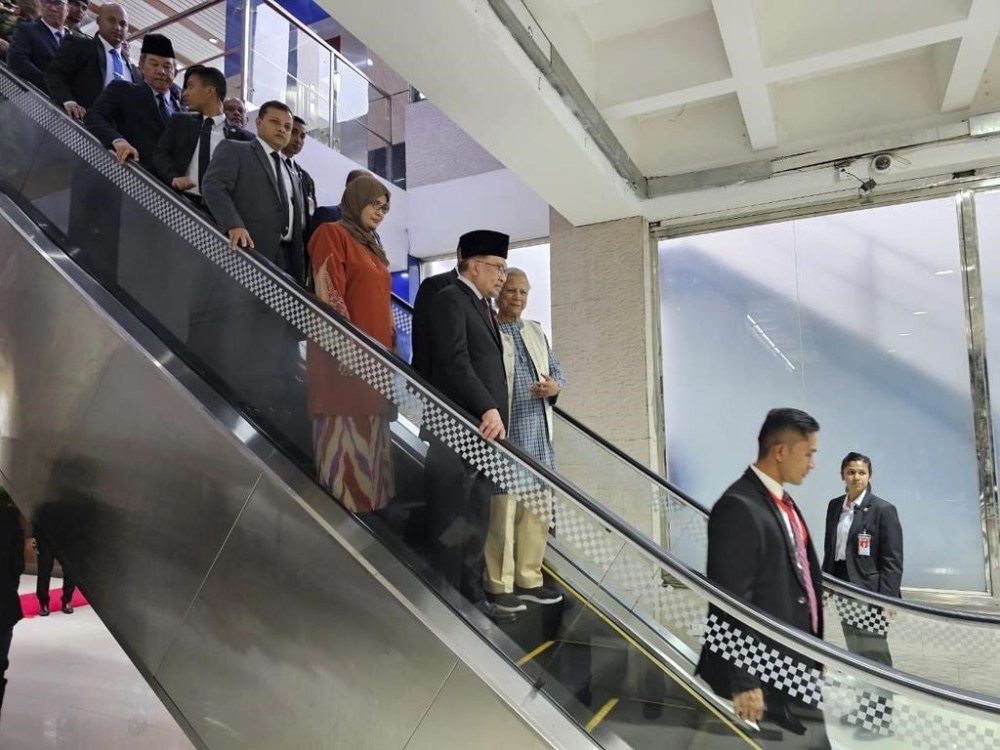
The appeal came as visiting Malaysian Prime Minister Anwar Ibrahim met with Yunus in Dhaka, Bangladesh’s capital — the first visit by a foreign leader to Bangladesh since Yunus took over on Aug. 8 and the first state visit by a Malaysian leader to Bangladesh in 11 years.
Yunus took over after Bangladesh’s former Prime Minister Sheikh Hasina fled the country during a mass uprising that accused her of corruption, violation of human rights and excessive use of force against the protesters. He has pledged reforms and a push for reviving Bangladesh’s troubled economy.
Bangladesh has been hosting 1 million Rohingya refugees who fled violence by Myanmar’s military. They live in destitute sprawling camps in Bangladesh and have long been demanding a safe return home.
Yunus told a news conference after the two leaders held talks that he asked for Malaysian prime minister’s help in raising the Rohingya repatriation issue at ASEAN.
“Malaysia will be supporting us in raising that,” Yunus said. “This is something we have to resolve as soon as possible.”
Yunus said that they also discussed boosting bilateral trade and finalizing a free trade agreement between their Muslim-majority nations, as well as political cooperation, investment, cultural and humanitarian ties.
They stressed the need for exploring new opportunities in sectors such as agriculture, energy, education, the semi conductor industry and connectivity, Yunus said.
Along with involving ASEAN in resolving the Rohingya refugee crisis, Bangladesh is also eager to increase trade with the bloc’s countries. Bangladesh was Malaysia’s second-largest trading partner in South Asia in 2023, with total trade reaching $2.78 billion, according to official figures.

Malaysia is also one of the leading destinations for Bangladeshi migrant workers. About 800,000 Bangladeshi workers are employed as low-skilled workers in Malaysia’s construction, manufacturing, plantation and services sectors.
But the recruiting process is often corrupt, and allegations of rights violations by Malaysian employers and Bangladeshi recruiting agencies are rampant.
Also, more than 6,000 Bangladeshi students study at Malaysian higher education institutions, according to 2023 figures.
The United News of Bangladesh agency reported that Anwar offered on Friday to recruit 18,000 more new Bangladeshi workers for Malaysia, promising to also ensure decent working conditions for workers from overseas.
“We need more workers but they can’t be treated as modern slaves,” the agency quoted him as saying. Anwar arrived from Pakistan with a 58-member delegation for the hourslong visit in Bangladesh.