

China announces more support for economy but holds back on major spending package
Advertisement
Read this article for free:
or
Already have an account? Log in here »
To continue reading, please subscribe:

Digital Subscription
One year of digital access for only $205*
- Enjoy unlimited reading on winnipegfreepress.com
- Read the E-Edition, our digital replica newspaper
- Access News Break, our award-winning app
- Play interactive puzzles
*First annual payment billed as $205.00 + GST for one year. This annual subscription will automatically renew at $233.00 + GST every 52 weeks (10% off the regular annual price of $259.35). Offer available to new and qualified returning subscribers only. Cancel any time.
To continue reading, please subscribe:
Add Free Press access to your Brandon Sun subscription for only an additional
$1 for the first 4 weeks*
- Enjoy unlimited reading on winnipegfreepress.com
- Read the E-Edition, our digital replica newspaper
- Access News Break, our award-winning app
- Play interactive puzzles
*Your next Brandon Sun subscription payment will increase by $1.00 and you will be charged $17.95 plus GST for four weeks. After four weeks, your payment will increase to $24.95 plus GST every four weeks.
Read unlimited articles for free today:
or
Already have an account? Log in here »
Hey there, time traveller!
This article was published 08/10/2024 (682 days ago), so information in it may no longer be current.
HONG KONG (AP) — China’s economic planning agency outlined details of measures aimed at boosting the economy on Tuesday but refrained from major spending initiatives.
The piecemeal nature of the plans announced Tuesday appeared to disappoint investors who were hoping for bolder moves, and Shanghai’s benchmark gave up a 10% initial gain as markets reopened after a weeklong holiday to trade just 3% higher.
The head of the National Development and Reform Commission said the government will frontload 100 billion yuan ($14.1 billion) in spending from the government’s budget for 2025 in addition to another 100 billion yuan for construction projects.
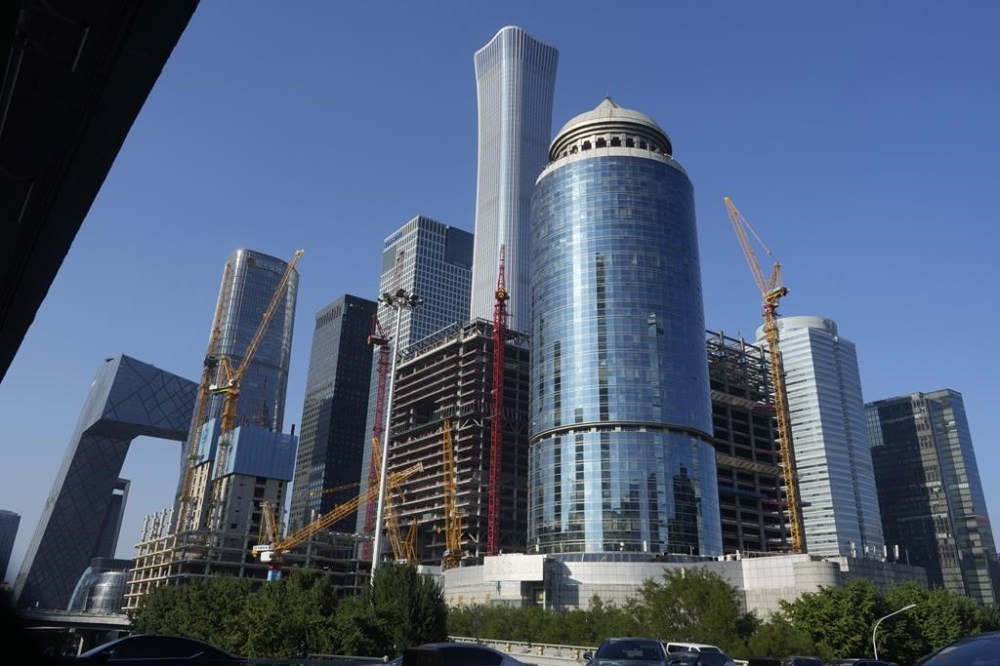
The scale of spending overall was well below the multi-trillion yuan levels that analysts said might be expected.
The NDRC’s chairman, Zheng Shanjie, said China was still on track to attain its full-year economic growth target of around 5%. But he acknowledged the economy faces difficulties and an increasingly “more complex and extreme” global environment.
China’s leaders have been struggling to rev up growth since the COVID-19 pandemic ended. A downturn in the property market has deepened that challenge, as consumer spending has lagged and global demand also has slowed.
In a note, UBS chief China economist Tao Wang said that the market was “likely expecting a significant fiscal stimulus.”
A modest package of 1.5 to 2 trillion yuan ($210 billion to $280 billion) is more reasonable to expect in the near-term, she said, with another 2 to 3 trillion yuan ($280 billion to $420 billion) in 2025.

In September, China unveiled a monetary stimulus package including cuts to mortgage rates and in the amount of reserves are required to keep on deposit with the central bank. Those and other measures were the most aggressive efforts so far to try to pull the property industry out of the doldrums and spur faster growth.
On Tuesday, the NDRC said that new measures would focus on boosting investment and spending and supporting small and medium-sized businesses that operate at a disadvantage to large, state-corporations.
But much of the information focused on technical issues such as payment regulations, management of projects and deployment of bonds for financing.
To counter falling housing sales and home prices, Zheng said there would be “comprehensive policy measures to help stop the decline in the real estate market.”
“In response to volatility and declines in the stock market, we will introduce a series of powerful and effective measures to strive to boost the capital market,” he said, without giving details.