

China’s exports slow sharply in September, adding to worries over the economy
Advertisement
Read this article for free:
or
Already have an account? Log in here »
To continue reading, please subscribe:
Digital Subscription
One year of digital access for only $1.44 a week*
- Enjoy unlimited reading on winnipegfreepress.com
- Read the E-Edition, our digital replica newspaper
- Access News Break, our award-winning app
- Play interactive puzzles
*Billed as $5.77 plus GST every four weeks. After 52 weeks, price increases to the regular rate of $19.95 plus GST every four weeks. Offer available to new and qualified returning subscribers only. Cancel any time.
To continue reading, please subscribe:
Add Free Press access to your Brandon Sun subscription for only an additional
$1 for the first 4 weeks*
- Enjoy unlimited reading on winnipegfreepress.com
- Read the E-Edition, our digital replica newspaper
- Access News Break, our award-winning app
- Play interactive puzzles
*Your next Brandon Sun subscription payment will increase by $1.00 and you will be charged $17.95 plus GST for four weeks. After four weeks, your payment will increase to $24.95 plus GST every four weeks.
Read unlimited articles for free today:
or
Already have an account? Log in here »
Hey there, time traveller!
This article was published 14/10/2024 (737 days ago), so information in it may no longer be current.
HONG KONG (AP) — China’s exports slowed sharply in September as global demand weakened, adding to worries over how to recharge growth in the world’s second-largest economy.
Exports rose 2.4% in dollar terms from a year earlier last month, down from 8.7% year-on-year growth in August, the Chinese customs office reported Monday. Imports rose just 0.3% in September.
Economists had estimated that exports would rise about 6% and that imports would climb about 0.9%.
China recorded a trade surplus of $81.7 billion in September, down from $91 billion in August.
China’s leaders have been struggling to rev up the economy since the COVID-19 pandemic ended.
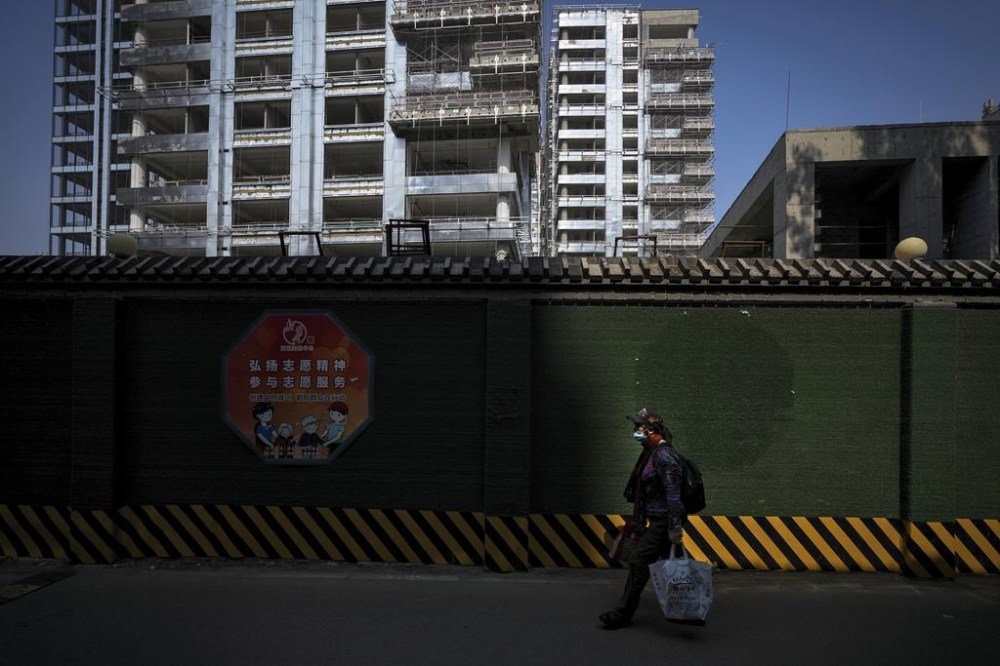
The U.S. and Europe recently raised tariffs on China’s exports of electric vehicles and other products, darkening the outlook for China’s trade as an engine of growth. The weak growth in imports reflects slack demand, partly due to a prolonged slump in the property industry, a major driver of sales of all sorts of products.
Other data released Monday showed weakening in inflation and falling wholesale prices for manufacturers.
Policymakers in Beijing have announced a slew of measures to boost the economy, including frontloading 200 billion yuan ($28.2 billion) from next year’s budget for spending and construction projects. Over the weekend, Finance Minister Lan Foan reiterated that the government is considering still more moves to drive faster growth.
But Lan and other officials have not yet delivered stimulus on the scale economists say is needed to pull the economy out of its funk.

So far this year, up to the end of September, China’s exports have risen 4.3% year-on-year, helped by increased shipments of autos, which rose more than 20%, according to a report by ING Economics. But overall exports are slowing.
“With this engine of growth stalling, other areas of the economy such as investment and consumption will need to step up to complete this year’s growth objectives,” the report said, referring to the government’s target of about 5% annual economic growth this year.
If the government follows through on promises to increase spending, that could fuel stronger imports of various goods including industrial materials, Zichun Huang of Capital Economics said in a note.
Earlier in the year, China’s export sector was the main factor supporting its manufacturers.
“We think shipments will stay strong in the near term, supported by gains in export competitiveness,” said Zichun Huang of Capital Economics in a note. “Further ahead, though, growing trade barriers are likely to become an increasing constraint.”