

CRA provides new guidance on interest deductibility

Advertisement
Read this article for free:
or
Already have an account? Log in here »
To continue reading, please subscribe:
Digital Subscription
One year of digital access for only $1.44 a week*
- Enjoy unlimited reading on winnipegfreepress.com
- Read the E-Edition, our digital replica newspaper
- Access News Break, our award-winning app
- Play interactive puzzles
*Billed as $5.77 plus GST every four weeks. After 52 weeks, price increases to the regular rate of $19.95 plus GST every four weeks. Offer available to new and qualified returning subscribers only. Cancel any time.
To continue reading, please subscribe:
Add Free Press access to your Brandon Sun subscription for only an additional
$1 for the first 4 weeks*
- Enjoy unlimited reading on winnipegfreepress.com
- Read the E-Edition, our digital replica newspaper
- Access News Break, our award-winning app
- Play interactive puzzles
*Your next Brandon Sun subscription payment will increase by $1.00 and you will be charged $17.95 plus GST for four weeks. After four weeks, your payment will increase to $24.95 plus GST every four weeks.
Read unlimited articles for free today:
or
Already have an account? Log in here »
Hey there, time traveller!
This article was published 16/11/2024 (561 days ago), so information in it may no longer be current.
Do you borrow money to invest? If so, you will want to read on.
In certain circumstances, the Canada Revenue Agency allows, under paragraph 20 (1) (c), the interest on money borrowed to invest to be deductible against taxable income. However, there have always been limitations and restrictions.
In mid-2024, CRA updated its Income Tax Folio S3-F6-C1 on interest deductibility. The folio provides better clarity on the phrase “for the purpose of earning income from a business or property” and the circumstances under which interest on an investment loan would clearly be deductible.
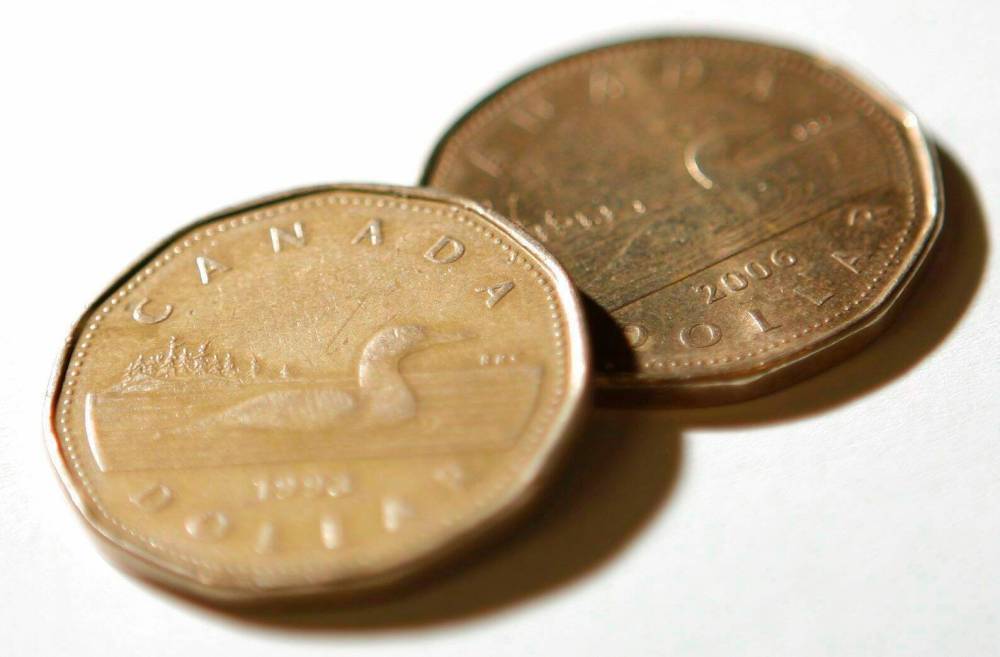
FILE - Canadian dollar coins, or Loonies, are shown in Ottawa on Friday Oct. 10, 2008. The Canadian dollar was up more than 1.8 cents at Monday’s open as financial markets reacted positively to news of a massive package to protect the embattled euro and contain the European debt crisis. The dollar opened North American trading Monday at 97.62 cents US, up 1.82 cents from Friday’s close. THE CANADIAN PRESS/Sean Kilpatrick
SEAN KILPATRICK/ THE CANADIAN PRESS FILES
Careful records and a clear path of money’s journey is important to avoid issues later as a taxpayer.
Such a loan must accrue interest which must be paid in the year or payable in respect of the year under a legal obligation to pay interest. Further, the interest amount must be “reasonable.”-
The purpose of the loan must be to earn income, such as from a business, an investment or other property.
Borrowing to buy an investment that will only ever generate capital gains does not qualify. Similarly, borrowing money to directly purchase a life insurance policy or other property from which the income will be exempt from tax will not qualify.
(Life insurance policies can be used as the collateral for investment loans used to purchase income-producing investments and the interest on that loan generally qualifies.)
Good news in this folio is the property or investment in question does not have to have a set rate of interest or dividends payable to meet the test. Further, the folio and court cases it quotes make it clear the investment income earned does not have to equal the amount of interest paid and deducted.
The folio quotes a court case that says “income” does not have to mean “profit” or “net income.” That means the interest on a mortgage or other loan used to buy a rental property, for example, would be deductible, even if the property showed a net rental loss in a given year.
The Supreme Court of Canada (Ludco Enterprises Ltd. et al. v The Queen, 2001) said: “The requisite test to determine the purpose for interest deductibility is whether … the taxpayer had a reasonable expectation of income at the time the investment was made.”
The Court has also stated: “The onus is on the taxpayer to trace the borrowed funds to an identifiable use which triggers the deduction.”
As always, careful records and a clear path of money’s journey is important to avoid issues later as a taxpayer.

We also suggest professional tax advice and recommendations from a professional financial planner or investment adviser who can demonstrate an understanding of these rules before choosing such an investment.
Perhaps most importantly, remember borrowing money to invest exaggerates both your gains and your losses. Never borrow to invest in fluctuating investments on a short time horizon, which I would define as five years or less.
Be aware before starting any such plan fluctuating investments may decline in value, perhaps significantly and for a long period of time, so make sure you are able — financially and psychologically — to stick to the plan through difficult periods.
Dollars and Sense is meant as an introduction to this topic and should not in any way be construed as a replacement for personalized professional advice. Please consult legal, tax, insurance and investment experts for advice on your unique situation.
David Christianson, BA, CFP, R.F.P., TEP, CIM, is recipient of the FP Canada Fellow (FCFP) Distinction. He is a senior wealth adviser and portfolio manager with Christianson Wealth Advisors at National Bank Financial Wealth Management, and author of the book: Managing the Bull, a No-Nonsense Guide to Personal Finance
Our newsroom depends on a growing audience of readers to power our journalism. If you are not a paid reader, please consider becoming a subscriber.
Our newsroom depends on its audience of readers to power our journalism. Thank you for your support.
Our newsroom depends on a growing audience of readers to power our journalism. If you are not a paid reader, please consider becoming a subscriber.
Our newsroom depends on its audience of readers to power our journalism. Thank you for your support.
Advertisement Advertise With Us
Advertisement Advertise With Us