

Manitoba clean tech sector under grow lights
From food to forever chemicals, ‘Everyone is talking about it’ at MEIA conference showcase
Advertisement
Read this article for free:
or
Already have an account? Log in here »
To continue reading, please subscribe:
Digital Subscription
One year of digital access for only $1.44 a week*
- Enjoy unlimited reading on winnipegfreepress.com
- Read the E-Edition, our digital replica newspaper
- Access News Break, our award-winning app
- Play interactive puzzles
*Billed as $5.77 plus GST every four weeks. After 52 weeks, price increases to the regular rate of $19.95 plus GST every four weeks. Offer available to new and qualified returning subscribers only. Cancel any time.
To continue reading, please subscribe:
Add Free Press access to your Brandon Sun subscription for only an additional
$1 for the first 4 weeks*
- Enjoy unlimited reading on winnipegfreepress.com
- Read the E-Edition, our digital replica newspaper
- Access News Break, our award-winning app
- Play interactive puzzles
*Your next Brandon Sun subscription payment will increase by $1.00 and you will be charged $17.95 plus GST for four weeks. After four weeks, your payment will increase to $24.95 plus GST every four weeks.
Read unlimited articles for free today:
or
Already have an account? Log in here »
Hey there, time traveller!
This article was published 20/11/2024 (696 days ago), so information in it may no longer be current.
While listening to Mark Custance talk about how much he loves living in tiny Pierson, you are reminded of how isolating small-town Manitoba life can be.
He notes much of the agricultural produce grown in the region is not for local consumption.
That’s why he’s so pumped about his new operation: a hydroponic vertical farming turnkey unit from Ottawa-based company Growcer.
The units (manufactured in Winkler by WGI Westman-owned Artspan) are structural insulated panel buildings, a little larger than a shipping container (and much more energy efficient), that can grow about 4,500 kilograms per year of about 100 different kinds of vegetables.
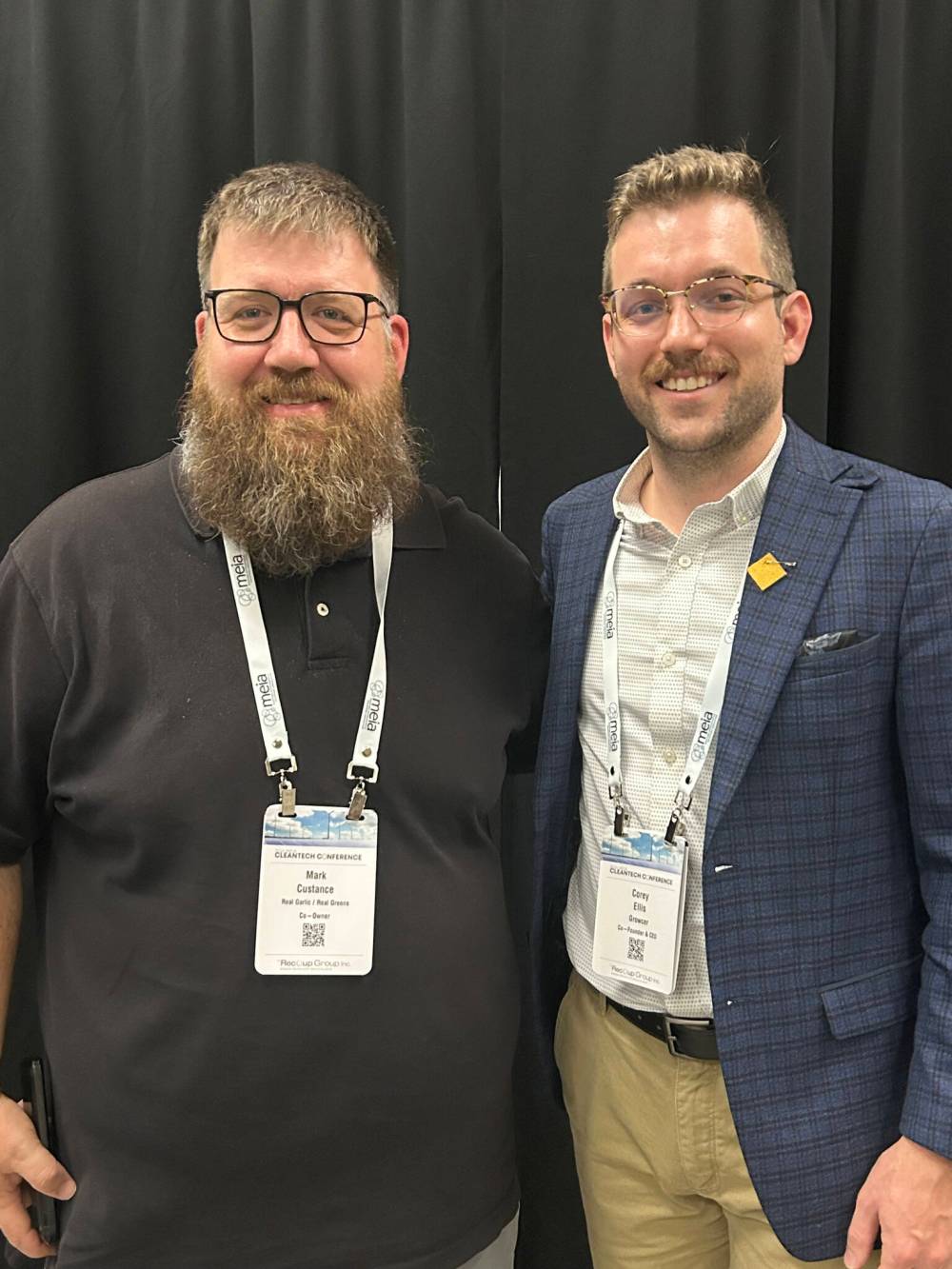
In Winnipeg on Wednesday, Custance and Growcer CEO Corey Ellis spoke at the Manitoba Environmental Industries Association’s Cleantech Conference, in a session titled Smart Farms, Clean Tech: Advancing Sustainable Agriculture.
MEIA CEO Jack Winram said the one-day gathering — it attracted more than 600 attendees and 50 companies in the trade show — is a way to showcase the Manitoba companies involved in finding solutions and providing goods and services that clean up waste and pollution.
One of the new areas of concern are so-called forever chemicals. About a half-dozen companies at the trade show are involved in addressing the remediation of those kinds of contaminants.
One of the keynote speakers at the event was Robert Bilott, a U.S. lawyer who gained prominence as an environmental attorney who became known as “DuPont’s worst nightmare.”
Bilott has won billions of dollars in awards for victims of contamination from forever chemicals or PFAS (per- and polyfluoroalkyl substances).
(His book, Exposure: Poisoned Water, Corporate Greed and One Lawyer’s Twenty-Year Battle Against DuPont, was the inspiration behind the 2019 movie Dark Waters starring Mark Ruffalo.)
Winram said clean tech companies in Manitoba are some of the best-kept secrets in the province.
While there are technological innovations that have to be discovered and sometimes a reticence to adopt new technologies, the field is booming. Some research suggests employment in the space will have annual growth of 30 per cent by 2030.
“There has been a tremendous amount of growth,” Winram said. “It’s hard to calculate because there is clean tech and environmental goods and service across every sector. Everyone is talking about it.”
While Growcer may technically not be a Manitoba company, its manufacturing is done in-province and more than 10 per cent of its 110 installations are in Manitoba, including its first at the Churchill Northern Studies Centre.

Norway House was the first First Nation to install one and Growcer has about a half-dozen more First Nation installations in Manitoba in the planning phase.
In addition to growing fresh produce for communities that might not otherwise have a selection, Ellis notes the units reduce greenhouse gases by eliminating waste. Growcer produce can last two weeks in the fridge and it eliminates fuel consumption and emissions from trucking sometimes thousands of kilometres to market, the company said.
Growcer farmers deploy different business plans. In Churchill, the research centre uses much of the produce and the rest is sold to outfitters and other venues in the northern town.
Growcer has started to finance the capital costs for some farmers who agree to a five-year arrangement to share their sales proceeds 50-50 with the company.
martin.cash@freepress.mb.ca