

Home affordability improves, but still challenging for many Canadians: RBC report
Advertisement
Read this article for free:
or
Already have an account? Log in here »
To continue reading, please subscribe:

Digital Subscription
One year of digital access for only $205*
- Enjoy unlimited reading on winnipegfreepress.com
- Read the E-Edition, our digital replica newspaper
- Access News Break, our award-winning app
- Play interactive puzzles
*First annual payment billed as $205.00 + GST for one year. This annual subscription will automatically renew at $233.00 + GST every 52 weeks (10% off the regular annual price of $259.35). Offer available to new and qualified returning subscribers only. Cancel any time.
To continue reading, please subscribe:
Add Free Press access to your Brandon Sun subscription for only an additional
$1 for the first 4 weeks*
- Enjoy unlimited reading on winnipegfreepress.com
- Read the E-Edition, our digital replica newspaper
- Access News Break, our award-winning app
- Play interactive puzzles
*Your next Brandon Sun subscription payment will increase by $1.00 and you will be charged $17.95 plus GST for four weeks. After four weeks, your payment will increase to $24.95 plus GST every four weeks.
Read unlimited articles for free today:
or
Already have an account? Log in here »
Hey there, time traveller!
This article was published 20/12/2024 (638 days ago), so information in it may no longer be current.
TORONTO – Home affordability in Canada is improving, according to a new RBC Economics report, but strains remain.
The report, released Friday, said home ownership costs in Canada have eased for three consecutive quarters.
RBC measures home affordability by looking at the share of income a median household would need to cover mortgage payments, property taxes and utilities. That figure reached an all-time high of 63.8 per cent in the fourth quarter of 2023, and has since fallen nationwide to 58.4 per cent as of the third quarter of 2024.
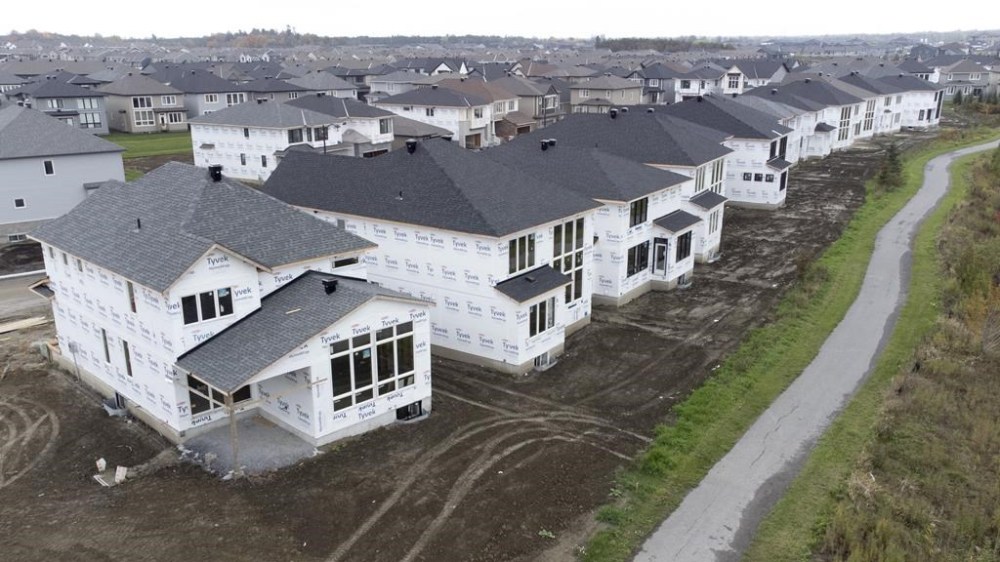
Still, home ownership remains a stretch for ordinary Canadians, the bank said.
“RBC’s affordability measures remain close to worst-ever levels nationally and in many major markets despite this year’s improvement,” Friday’s report stated.
Much of the improvements that Canada has seen in the last year on the affordability front has come as a result of factors like depreciating property values, interest rate cuts by the Bank of Canada, as well as household income growth.
According to RBC, median household income in Canada was up an average 4.4 per cent in the second and third quarters of 2024 compared with the same period a year ago.
“Sizable income rises — supported by firm (nominal) wage gains — have delivered much of the improvement in affordability,” the report stated.
“The impact of income gains dwarfed that of all other factors combined.”
The bank said it expects further affordability relief in 2025, thanks to anticipated further rate cuts by the Bank of Canada as well as moderating but continued growth in household income.

“In our base-case scenario, home prices will see small increases, longer-term interest rates will moderately drop and household income will grow steadily but see diminishing gains until the end of 2025,” the report stated.
In the third quarter of 2024, the report said Vancouver, Victoria and Toronto saw the largest gains in home affordability when compared with other Canadian markets.
Vancouver remains the most unaffordable housing market in Canada. Despite improvements in the Vancouver market’s affordability measures, covering homeownership expenses in that city still requires 96.7 per cent of a median household’s income, according to RBC.
This report by The Canadian Press was first publishedDec. 20, 2024.
Companies in this story: (TSX:RY)