

Tillwell completes ‘long road’ to aquamation
Headingley-based crematory will be first in province to offer alkaline hydrolysis

Advertisement
Read this article for free:
or
Already have an account? Log in here »
To continue reading, please subscribe:

Digital Subscription
One year of digital access for only $205*
- Enjoy unlimited reading on winnipegfreepress.com
- Read the E-Edition, our digital replica newspaper
- Access News Break, our award-winning app
- Play interactive puzzles
*First annual payment billed as $205.00 + GST for one year. This annual subscription will automatically renew at $233.00 + GST every 52 weeks (10% off the regular annual price of $259.35). Offer available to new and qualified returning subscribers only. Cancel any time.
To continue reading, please subscribe:
Add Free Press access to your Brandon Sun subscription for only an additional
$1 for the first 4 weeks*
- Enjoy unlimited reading on winnipegfreepress.com
- Read the E-Edition, our digital replica newspaper
- Access News Break, our award-winning app
- Play interactive puzzles
*Your next Brandon Sun subscription payment will increase by $1.00 and you will be charged $17.95 plus GST for four weeks. After four weeks, your payment will increase to $24.95 plus GST every four weeks.
Read unlimited articles for free today:
or
Already have an account? Log in here »
Hey there, time traveller!
This article was published 02/01/2025 (625 days ago), so information in it may no longer be current.
The taps are turned on: after more than a year of waiting for approvals, a Manitoba company will offer a water-based alternative to flame cremation.
Necessary equipment is still in Indiana. Once it’s transported and installed, Headingley-based Tillwell will be the first in the province to tout alkaline hydrolysis for human cadavers. Alkaline hydrolysis involves heated water and alkali breaking down bodies instead of fire.
“I’m excited to get going,” said Dwayne Till, chief executive of Tillwell.

JOHN WOODS / FREE PRESS files
Dwayne Till, founder of Tillwell, with a veterinary alkaline hydrolysis system in his business in Headingley. It is touted as an alternative to traditional cremation services.
“It’s been a long road.”
He received an early Christmas present Dec. 23 — a crematory licence, following a green light from Public Service Delivery Minister Mintu Sandhu, via letter.
The Free Press reviewed both documents. On Thursday, a provincial spokesperson confirmed Tillwell is licensed as a crematory.
Till has waited on approvals for at least 1 1/2 years. It follows upwards of seven years of the Manitoba Funeral Service Association lobbying government to recognize alkaline hydrolysis. (The province classified the practice as an after-death care service in November.)
Ontario, Saskatchewan and Quebec are among the Canadian provinces implementing the practice. It’s advertised as using less energy than flame cremation and being greener by avoiding the burning of fossil fuels.
Tillwell is shipping its equipment from Bio-Response Solutions, an Indiana-based company known for popularizing alkaline hydrolysis. Bio-Response calls its process “aquamation.”
Till hopes Bio-Response Solutions’ roughly 7.5-foot-long chamber will be installed before February. Then, it’ll be a matter of inspections and “reaching out to folks” to attract clients, Till said.
“I hope that the public sees the value in what we’re proposing,” he added. “My goal here was to build a business that would have a net positive impact on people.”
He and business partner Quinn Hunter are eyeing two aquamation packages. Both allow for a “witnessing ceremony,” where up to 50 people spend an hour with their loved ones before the process of alkaline hydrolysis begins.
The entire process — from Tillwell receiving the body to delivering remains in an urn — should take three to seven days, Till estimated.
Cadavers will spend up to 18 hours in Bio-Response Solutions’ chamber. During that time, a heated solution of 95 per cent water and five per cent alkali circulate around the body, breaking down organic materials.
The remaining inorganic materials — calcium phosphate of the bones — are processed into powder resembling the ashes of a flame cremation.
That process, plus the delivery of the remains, is slated to cost roughly $1,895.
Tillwell’s second option includes a consultation with an arborist, for customers who want to plant a memorial tree and incorporate the remains, Till explained.
He’s building a contact list of arborists and hasn’t put a price on the second package yet. People interested must have land in which they can plant a tree, he noted.
It’s his vision to partner with municipalities and the province, allowing Manitobans to plant memorial trees in public parks and Crown-protected land. Families would pay for the trees themselves, he added.
Manitoba has allowed for the scattering of cremated remains on Crown-protected land for the past decade, Till said. Scattering ashes isn’t allowed in City of Winnipeg parks, but internment of ashes is allowed at Winnipeg cemeteries.
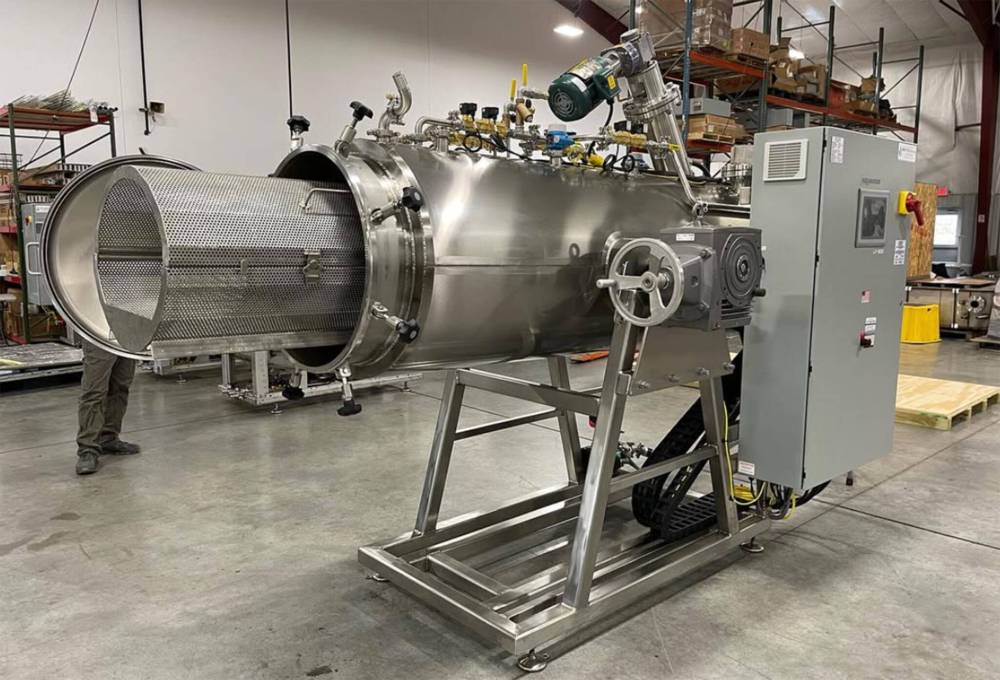
SUPPLIED
Tillwell will receive equipment from Bio-Response Solutions to aquamate human cadavers.
“Why wouldn’t we let (Manitobans) plant trees, contribute to that tree planting effort?” Till said. “(It) gives them the opportunity to feel like they have a personal stake in their green infrastructure.”
The City of Winnipeg has commemorative and memorial tree donation programs, noted spokesman David Driedger.
Till said he is unsure why it took the province more than a year to approve his 5 Fast Lane site for human aquamation. The Consumer Protection Office can’t speak to the licensing process of specific businesses, a provincial spokesperson wrote in a statement.
“Licensed crematories may offer aquamation services once they’ve met the legislative requirements,” the spokesperson continued.
Tillwell’s approval is a win for Manitoba’s funeral sector, said Kevin Sweryd, president of the Manitoba Funeral Service Association.
“I’m always a fan of options for families,” added Sweryd, who’s the president of Bardal Funeral Home. “From what I’ve (heard) with customers … the public interest is there.”
More funeral operations — including his — would offer alkaline hydrolysis if government legislation wasn’t a barrier, Sweryd said.
In Manitoba, alkaline hydrolysis is grouped together with flame cremation under the Cemeteries Act. Both practices must take place at least 200 yards from homes; it’s a distance many funeral centres don’t have.
Alkaline hydrolysis lacks emissions and people likely won’t know the process is happening, Sweryd said. The Manitoba Funeral Service Association is pushing for separate legislation allowing alkaline hydrolysis closer to residences.

Sweryd said he’s still waiting for an in-depth review of the Cemeteries Act — same as he’s been for three successive governments.
“The Manitoba government continues to review the Cemeteries Act and will consider all best practices in determining how to improve the act,” Sandhu said in a statement.
Tillwell has B Corp status, given to businesses with high social and environmental performances. It plans to donate five per cent of its revenue to Tree Canada for tree planting.
It’s been offering pet aquamation for the past six months, following Peaceful Pasture Pet Cremation in Lac du Bonnet.
gabrielle.piche@winnipegfreepress.com
Gabrielle Piché reports on business for the Free Press. She interned at the Free Press and worked for its sister outlet, Canstar Community News, before entering the business beat in 2021. Read more about Gabrielle.
Every piece of reporting Gabrielle produces is reviewed by an editing team before it is posted online or published in print — part of the Free Press‘s tradition, since 1872, of producing reliable independent journalism. Read more about Free Press’s history and mandate, and learn how our newsroom operates.
Our newsroom depends on a growing audience of readers to power our journalism. If you are not a paid reader, please consider becoming a subscriber.
Our newsroom depends on its audience of readers to power our journalism. Thank you for your support.
Gabrielle Piché reports on business for the Free Press. She interned at the Free Press and worked for its sister outlet, Canstar Community News, before entering the business beat in 2021. Read more about Gabrielle.
Every piece of reporting Gabrielle produces is reviewed by an editing team before it is posted online or published in print — part of the Free Press‘s tradition, since 1872, of producing reliable independent journalism. Read more about Free Press’s history and mandate, and learn how our newsroom operates.
Our newsroom depends on a growing audience of readers to power our journalism. If you are not a paid reader, please consider becoming a subscriber.
Our newsroom depends on its audience of readers to power our journalism. Thank you for your support.
Advertisement Advertise With Us
Advertisement Advertise With Us