

‘Massive milestone’ for micro-refinery tech
Manitoba UMO recycling company EnerPure seeks rapid expansion in wake of third-party engineering report
Advertisement
Read this article for free:
or
Already have an account? Log in here »
To continue reading, please subscribe:
Monthly Digital Subscription
$1 per week for 24 weeks*
- Enjoy unlimited reading on winnipegfreepress.com
- Read the E-Edition, our digital replica newspaper
- Access News Break, our award-winning app
- Play interactive puzzles
*Billed as $4.00 plus GST every four weeks. After 24 weeks, price increases to the regular rate of $19.95 plus GST every four weeks. Offer available to new and qualified returning subscribers only. Cancel any time.
Monthly Digital Subscription
$4.99/week*
- Enjoy unlimited reading on winnipegfreepress.com
- Read the E-Edition, our digital replica newspaper
- Access News Break, our award-winning app
- Play interactive puzzles
*Billed as $19.95 plus GST every four weeks. Cancel any time.
To continue reading, please subscribe:
Add Free Press access to your Brandon Sun subscription for only an additional
$1 for the first 4 weeks*
*Your next subscription payment will increase by $1.00 and you will be charged $16.99 plus GST for four weeks. After four weeks, your payment will increase to $23.99 plus GST every four weeks.
Read unlimited articles for free today:
or
Already have an account? Log in here »
Hey there, time traveller!
This article was published 13/01/2025 (434 days ago), so information in it may no longer be current.
For more than 15 years, Todd Habicht’s company, EnerPure Inc. (formerly HD Petroleum), has been working at proving up the engineering for his patented used motor oil recycling technology.
A third-party engineering report released Monday does just that.
With billions of litres of used motor oil (UMO) burned or improperly disposed of annually in North America, Habicht’s small-scale UMO micro-refinery has long been seen as an important solution to a global problem.
Supplied
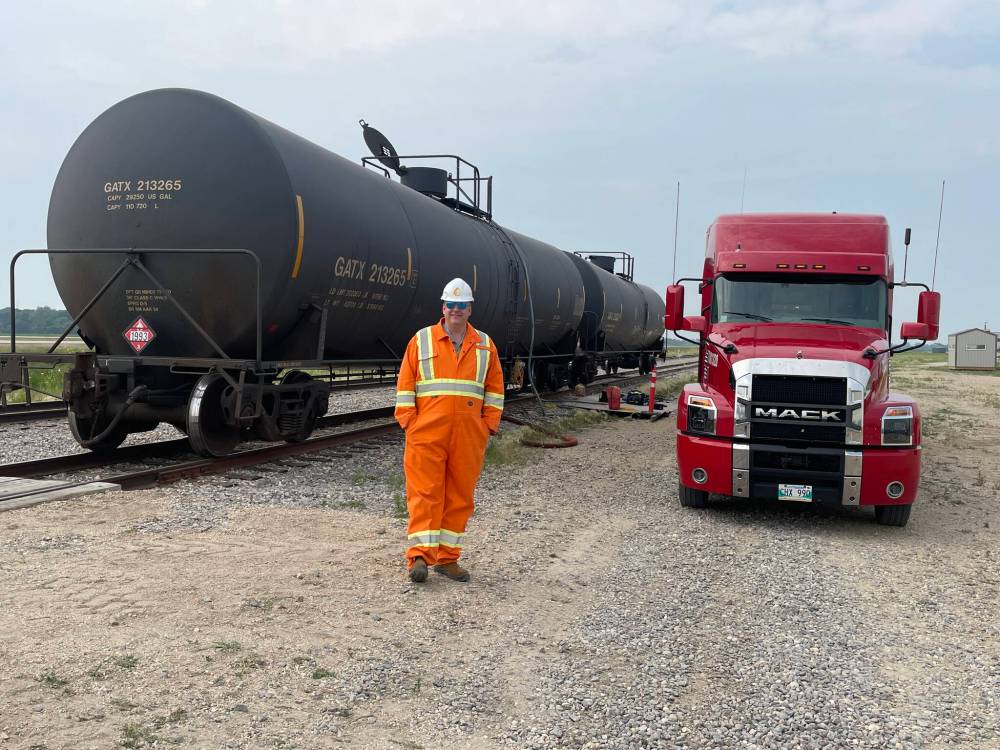
EnerPure CEO and founder Todd Habicht. The Winnipeg company has recently converted used motor oil into one million litres of marine-grade motor oil.
Although the Winnipeg company has raised about $40 million over the last 15 years — Habicht believes EnerPure is the only company in the province to max out on access to both the Small Business Venture Capital Tax Credit program and the Community Enterprise Development Tax Credit program — Habicht knew he had to complete all the engineering design details before he would be able to commercialize the technology.
But he’s there now.
“This is a massive milestone for us,” said Habicht, EnerPure’s founder and CEO. “We had to get the engineering complete.”
Now the company’s goal is to have 21 plants built in North America over the next six years.
It has an 80 per cent-scale pilot plant operating just south of Morris, where it has produced more than one million L of marine-grade motor oil that has been sold to international shipping company Maersk.
“Maersk has said in writing that they would take every drop we could produce that could be accessed from any port in the world,” Habicht said.
The first commercial plant is slated to be built in Alberta. Habicht would not say exactly where, but added the environmental licence application is underway and arrangements have been made for access to the UMO feed stock.
In addition to the environmental benefits of having regional micro refining of UMO (internal estimates are each EnerPure plant will reduce annual greenhouse gas emissions by 16,000 tonnes), the costs of EnerPure’s tech is said to be about five per cent of current technologies.
(There are couple of very large UMO recycling operations in Canada: Safety-Kleen operates one in Breslau, Ont.; GFL has one in West Vancouver.)
Each EnerPure plant will cost about $15 million to develop, the company said.
“Our financing and engineering focus remains very much on the deployment of our full-scale commercial recycling plants, after our pilot plant proved our processes, technology and business model,” said Damian Towns, EnerPure chief financial officer.
“Our next capital raise has the potential to be a defining moment for the company by providing the required capital to complete and commission its Alberta recycling plant, generating a recurring revenue stream for the first time in EnerPure’s history.”
While there has been massive subsidization for the production of bio-fuels, EnerPure never qualified for any such funds.
“We as an entity have always been a round peg in square hole,” Towns said. “We are not a bio-fuel company.”
Habicht said he long resisted the suggestion to do a public offering because he was well-aware of the R&D necessary before there would be any chance for returns.
He believes the company is now at the point where he can go to more sophisticated investors seeking larger sums. “There’s just no way I could have spent time worrying about returns when I knew I needed to get the engineering completed.”
Originally, the design was to produce diesel fuel from UMO, but, about five years ago (around the time the company changed its name from HD Petroleum), there were changes made to the international standards for diesel.

Habicht said the company undertook an internal study and determined marine fuel was the most appropriate target market for its technology.
Jurisdictions around the world have various types of collection systems in place for UMO.
In Manitoba, it’s the Manitoba Association for Resource Recovery Corp. No one was available from MARRC for comment Monday.
Habicht believes throughout North America, only about 20 per cent of UMO is actually recycled. The rest is disposed of in all sorts of ways that cause pollution, including the contamination of fresh water.
martin.cash@freepress.mb.ca