

Indigenous fishers, co-operatives are winners in Ottawa’s shuffle of baby eel quotas
Advertisement
Read this article for free:
or
Already have an account? Log in here »
To continue reading, please subscribe:
Monthly Digital Subscription
$0 for the first 4 weeks*
- Enjoy unlimited reading on winnipegfreepress.com
- Read the E-Edition, our digital replica newspaper
- Access News Break, our award-winning app
- Play interactive puzzles
*No charge for 4 weeks then price increases to the regular rate of $19.00 plus GST every four weeks. Offer available to new and qualified returning subscribers only. Cancel any time.
Monthly Digital Subscription
$4.75/week*
- Enjoy unlimited reading on winnipegfreepress.com
- Read the E-Edition, our digital replica newspaper
- Access News Break, our award-winning app
- Play interactive puzzles
*Billed as $19 plus GST every four weeks. Cancel any time.
To continue reading, please subscribe:
Add Free Press access to your Brandon Sun subscription for only an additional
$1 for the first 4 weeks*
*Your next subscription payment will increase by $1.00 and you will be charged $16.99 plus GST for four weeks. After four weeks, your payment will increase to $23.99 plus GST every four weeks.
Read unlimited articles for free today:
or
Already have an account? Log in here »
Hey there, time traveller!
This article was published 28/01/2025 (311 days ago), so information in it may no longer be current.
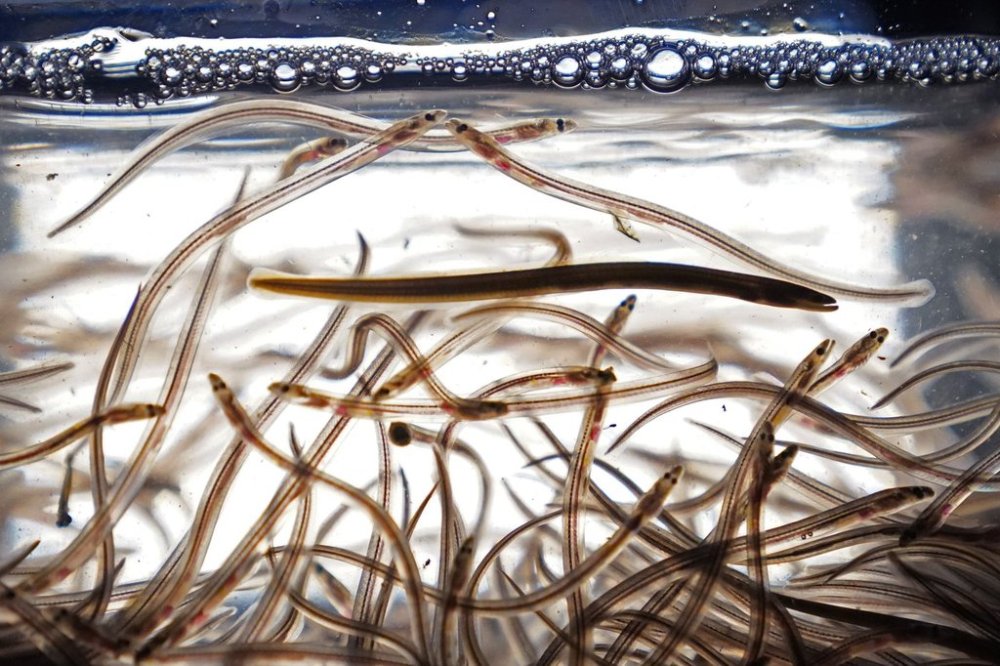
HALIFAX – Ottawa has issued the latest version of how it is proposing to distribute licences for the lucrative baby eel fishery in the Maritimes.
In a letter to stakeholders on Monday, the Fisheries Department says it is maintaining its plan to shift half the quota of close to 10,000 kilograms of elvers away from nine large licence holders to new entrants from Indigenous communities.
However, Ottawa confirms it is backing away from a pilot project to redistribute 27 per cent of the catch of the nine licence holders to 120 fishers who used to work for them.
That old pilot proposal, introduced in December, drew strong criticism from the potential recipients, who said they preferred to remain employees and felt safer on the rivers under the existing arrangement.
The Fisheries Department says two of the nine licence holders — Waycobah First Nation in Cape Breton and Shelburne Elver Ltd., a non-Indigenous co-operative — would receive larger shares than the other seven.
The department says Waycobah and Shelburne Elver are both getting more because Ottawa wants to increase the participation of Indigenous and “co-operative-like” operations.
Meanwhile, Brunswick Aquaculture Ltd. would receive 317 kg, and Wine Harbour Fisheries Ltd. would be allocated 343 kg. Both of those licence holders previously had quotas of 1,200 kg. Atlantic Canada Eels Inc. would fall slightly to 310 kg from 360 kg, Hamilton’s Eel Fishery is down to 416 kg, 3349659 Canada Inc. is set at 486kg, South Shore Trading Co. is down to 509 kg, and Atlantic Elver Fishery is at 529 kg.

The department’s letter said it cut the allocations for some licence holders because they had fished fewer than their quotas in previous seasons.
Michel Samson, a lawyer who works for Wine Harbour, said a system of “fisheries officials picking winners and losers” shouldn’t be linking reductions to whether companies caught their entire quota in earlier years.
“It’s unheard of that licence holders are punished for not catching their quota. That is fishing. No licence holder starts a season saying what they will catch at the end of the season,” he wrote in an email Tuesday.
“Use fairness and give all licence holders 50 per cent (of their original quota), which would be 600 kg each,” he wrote.
This report by The Canadian Press was first published Jan. 28, 2025.