

Loonie falls, S&P/TSX composite closes down nearly 300 points on tariff threat
Advertisement
Read this article for free:
or
Already have an account? Log in here »
To continue reading, please subscribe:

Digital Subscription
One year of digital access for only $205*
- Enjoy unlimited reading on winnipegfreepress.com
- Read the E-Edition, our digital replica newspaper
- Access News Break, our award-winning app
- Play interactive puzzles
*First annual payment billed as $205.00 + GST for one year. This annual subscription will automatically renew at $233.00 + GST every 52 weeks (10% off the regular annual price of $259.35). Offer available to new and qualified returning subscribers only. Cancel any time.
To continue reading, please subscribe:
Add Free Press access to your Brandon Sun subscription for only an additional
$1 for the first 4 weeks*
- Enjoy unlimited reading on winnipegfreepress.com
- Read the E-Edition, our digital replica newspaper
- Access News Break, our award-winning app
- Play interactive puzzles
*Your next Brandon Sun subscription payment will increase by $1.00 and you will be charged $17.95 plus GST for four weeks. After four weeks, your payment will increase to $24.95 plus GST every four weeks.
Read unlimited articles for free today:
or
Already have an account? Log in here »
Hey there, time traveller!
This article was published 03/02/2025 (580 days ago), so information in it may no longer be current.
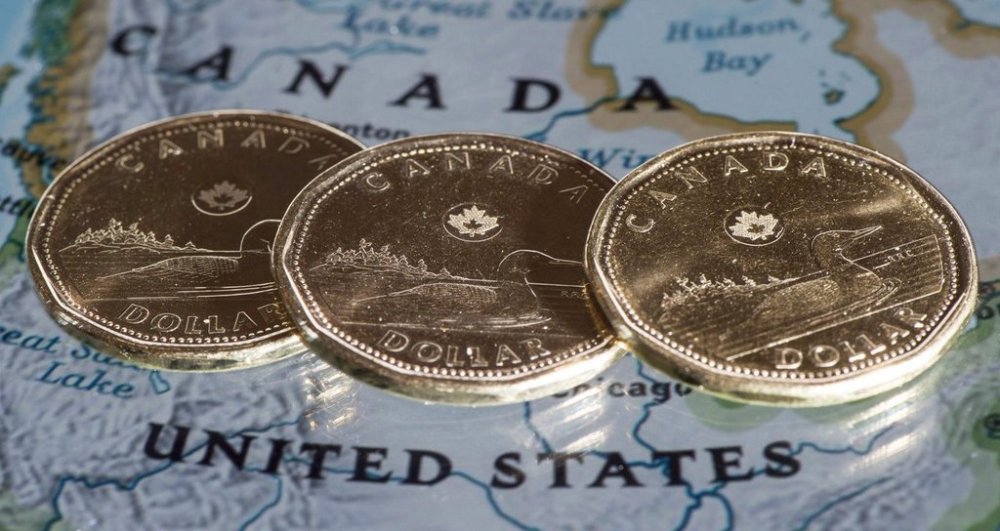
TORONTO – Canada’s main stock index closed down nearly 300 points while the loonie fell to its lowest level in more than two decades on the impending threat of tariffs that wasn’t lifted until after market close.
Markets in both Canada and the U.S. opened sharply lower Monday, including the TSX down more than 800 points early on, after U.S President Donald Trump confirmed on the weekend the tariffs were coming starting Tuesday.
“Obviously the news over the weekend, and the way it opened this morning was, you know, major to the downside,” said John Zechner, chairman and lead equity manager at J. Zechner Associates.
However, news that Mexico had secured a one-month reprieve from tariffs saw markets ease up late morning, and gave hope that a later call in the day between Trump and Prime Minister Justin Trudeau could also yield a break.
Canada did secure its last-minute reprieve, but not until after markets closed for the day.
Without the boost of the sought-for news, the S&P/TSX composite index ended down 291.34 points at 25,241.76 as sectors like industrials and financials were especially under pressure.
Big manufacturers, potentially the most vulnerable to tariffs, took some of the biggest hits. Auto parts maker Magna International closed down more than six per cent and Linamar Corp was down almost five per cent. The railways also lost ground.
Canadian banks were also under pressure after Trump falsely claimed that U.S. banks don’t have access to Canada. CIBC was down 4.6 per cent, Scotiabank down 3.1 per cent and RBC was down 2.3 per cent.
Making sense of the news has been a challenge, said Zechner.
“Where people aren’t working with actual facts, it’s hard to apply logic.”
He said that given the wild swings based on unknowns, he’s trying not to react to the news flow.
“An investor, you can’t change a lot. We’ve been reticent anyway, a little nervous about the markets and the way they’ve run, and we’ve been sort of defensive in our positions. So I haven’t done anything today to change any of that.”
The Canadian dollar was also under pressure Monday, trading at lows against the U.S. dollar not seen since 2003. It recovered somewhat after the Mexico news but overall traded for 68.48 cents US compared with 69.04 cents US on Friday.
The loonie is already undervalued, but given how many short positions there are against it the currency could fall further, said Zechner.
“It’s well below fair value if you use the old purchasing power parity or anything like that, but you know, when you get speculators and all of that, you get larger flows, they can overshoot to the downside as well as the upside.”
In New York, markets regained a fair bit of the lost ground after the mid-morning news that Mexico had secured a reprieve on tariffs.

The Dow Jones industrial average was down 122.75 points at 44,421.91, the S&P 500 index was down 45.96 points at 5,994.57 and the Nasdaq composite was down 235.49 points at 19,391.96.
The March crude oil contract was up 63 cents at US$73.16 per barrel and the March natural gas contract was up 31 cents at US$3.35 per mmBTU.
The April gold contract was up US$22.10 at US$2,857.10 an ounce and the March copper contract was up three cents at US$4.31 a pound.
This report by The Canadian Press was first published Feb. 3, 2025.
Companies in this story: (TSX:GSPTSE, TSX:CADUSD)