

US Postal Service flip-flops on Hong Kong-China packages, lifting a ban imposed a day earlier
Advertisement
Read this article for free:
or
Already have an account? Log in here »
To continue reading, please subscribe:
Monthly Digital Subscription
$1 per week for 24 weeks*
- Enjoy unlimited reading on winnipegfreepress.com
- Read the E-Edition, our digital replica newspaper
- Access News Break, our award-winning app
- Play interactive puzzles
*Billed as $4.00 plus GST every four weeks. After 24 weeks, price increases to the regular rate of $19.95 plus GST every four weeks. Offer available to new and qualified returning subscribers only. Cancel any time.
Monthly Digital Subscription
$4.99/week*
- Enjoy unlimited reading on winnipegfreepress.com
- Read the E-Edition, our digital replica newspaper
- Access News Break, our award-winning app
- Play interactive puzzles
*Billed as $19.95 plus GST every four weeks. Cancel any time.
To continue reading, please subscribe:
Add Free Press access to your Brandon Sun subscription for only an additional
$1 for the first 4 weeks*
*Your next subscription payment will increase by $1.00 and you will be charged $16.99 plus GST for four weeks. After four weeks, your payment will increase to $23.99 plus GST every four weeks.
Read unlimited articles for free today:
or
Already have an account? Log in here »
Hey there, time traveller!
This article was published 05/02/2025 (414 days ago), so information in it may no longer be current.
HONG KONG (AP) — The U.S. Postal Service is reversing course a day after placing a ban on all inbound packages from China and Hong Kong.
The post office had announced Tuesday that it would no longer accept parcels from the China and Hong Kong after the U.S. imposed an additional 10% tariff on Chinese goods and ended a customs exception that allowed small value parcels to enter the U.S. without paying tax.
The Postal Service reversed course Wednesday but gave no reason. It said it would work with Customs and Border Protection to implement a collection process for the new China tariffs to avoid delivery disruptions.
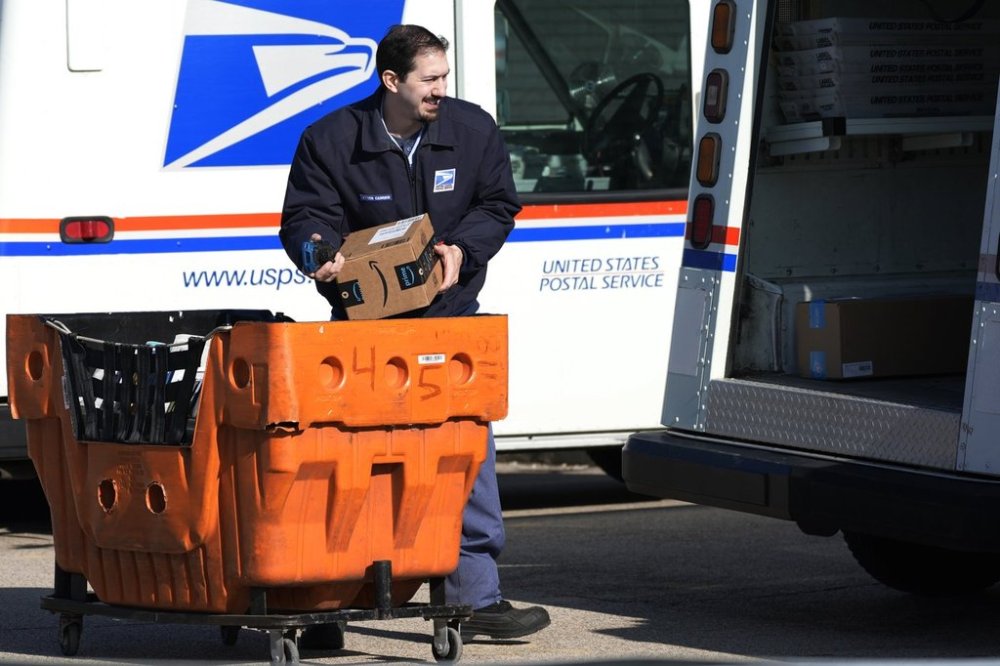
The post office pointed to the short prepared statement on the reversal when asked for more details about the reversal Wednesday by The Associated Press.
The ban had the potential to create massive disruptions for online shopping platforms like Shein and Temu, popular with younger shoppers in the U.S. for cheap clothing and other products, usually shipped directly from China.
Cheap, direct postal service helps these companies keep costs low, as did the “de minimis” exemption that previously allowed shipments to go tax-free if their value is under $800.
The suspension by USPS would have likely have created delays in shipments and potentially higher prices for the companies that rely on rock-bottom pricing for huge sales.
What exactly did the USPS announce?
One day after the U.S. Postal Service said in a notice that it would stop accepting inbound parcels from the China and Hong Kong Posts until further notice, it said Wednesday that would “continue accepting all international inbound mail and packages from China and Hong Kong.”
Letters and flats — mail that measures up to 15 inches (38 centimeters) long or 3/4 inches (1.9 centimeters) thick — were not included in the brief ban.
Why did it happen?
The USPS did not give a reason for the ban Tuesday, but the suspension came after Trump closed the “de minimis” customs exemption this week for China that allowed shoppers and importers to avoid duties on packages worth below $800.
The exemption was removed as part of an executive order to levy a 10% tariff on Chinese goods.
U.S. Customs and Border Protection previously stated that it processes an average of over 4 million “de minimis” imports each week.
It also gave no reason for its decision on Wednesday and did not immediately respond to requests from The Associated Press for comment.
What’s likely to happen next?
Under the new tariffs imposed by Trump on Chinese imports, analysts say consumers are likely to see price hikes and potential delays in shipments from companies like Shein and Temu.
Chinese exports of low-value packages soared to $66 billion in 2023, up from $5.3 billion in 2018, according to report released last week by the Congressional Research Service. In the U.S., Temu, which is owned by China’s PDD Holdings, and Shein comprise about 17% of the discount market for fast fashion, toys and other consumer goods, the report said.

Alibaba’s AliExpress has also commonly used the trade loophole. Neil Saunders, a managing director with research firm GlobalData, noted some businesses who sell through Shopify and other e-commerce platforms, such as Etsy, also ship packages to consumers directly from China. Amazon does the same for a subset of products sold through Amazon Haul, a low-cost online storefront it launched last year to better compete with Shein and Temu, which rely more heavily on de minimis.
Shein and Temu did not immediately comment on the USPS policy changes. On its website, Temu says it also works with private shipping companies such as FedEx and UPS. Shein notes customers can return their packages through USPS and FedEx.
In general, the U.S. imported about $427 billion worth of goods from China in 2023, the most recent year with complete data, according to the U.S. Census Bureau. Consumer electronics, including cellphones, computers and other tech accessories, make up the biggest import categories.
____
Associated Press writers Haleluya Hadero in Charlotte, North Carolina and Matt Ott, in Washington, contributed to this report