

Bank of Canada’s Tiff Macklem says tariff threat adds to central bank challenges
Advertisement
Read this article for free:
or
Already have an account? Log in here »
To continue reading, please subscribe:
Monthly Digital Subscription
$1 per week for 24 weeks*
- Enjoy unlimited reading on winnipegfreepress.com
- Read the E-Edition, our digital replica newspaper
- Access News Break, our award-winning app
- Play interactive puzzles
*Billed as $4.00 plus GST every four weeks. After 24 weeks, price increases to the regular rate of $19.95 plus GST every four weeks. Offer available to new and qualified returning subscribers only. Cancel any time.
Monthly Digital Subscription
$4.99/week*
- Enjoy unlimited reading on winnipegfreepress.com
- Read the E-Edition, our digital replica newspaper
- Access News Break, our award-winning app
- Play interactive puzzles
*Billed as $19.95 plus GST every four weeks. Cancel any time.
To continue reading, please subscribe:
Add Free Press access to your Brandon Sun subscription for only an additional
$1 for the first 4 weeks*
*Your next subscription payment will increase by $1.00 and you will be charged $16.99 plus GST for four weeks. After four weeks, your payment will increase to $23.99 plus GST every four weeks.
Read unlimited articles for free today:
or
Already have an account? Log in here »
Hey there, time traveller!
This article was published 06/02/2025 (413 days ago), so information in it may no longer be current.
Bank of Canada governor Tiff Macklem says central banks face an increasingly difficult job as the country faces a maelstrom of potential U.S. tariffs, technological disruptions, extreme weather and global political upheaval.
“President Donald Trump’s threats of new tariffs are already affecting business and household confidence, particularly in Canada and Mexico,” said Macklem.
“The longer this uncertainty persists, the more it will weigh on economic activity in our countries.”
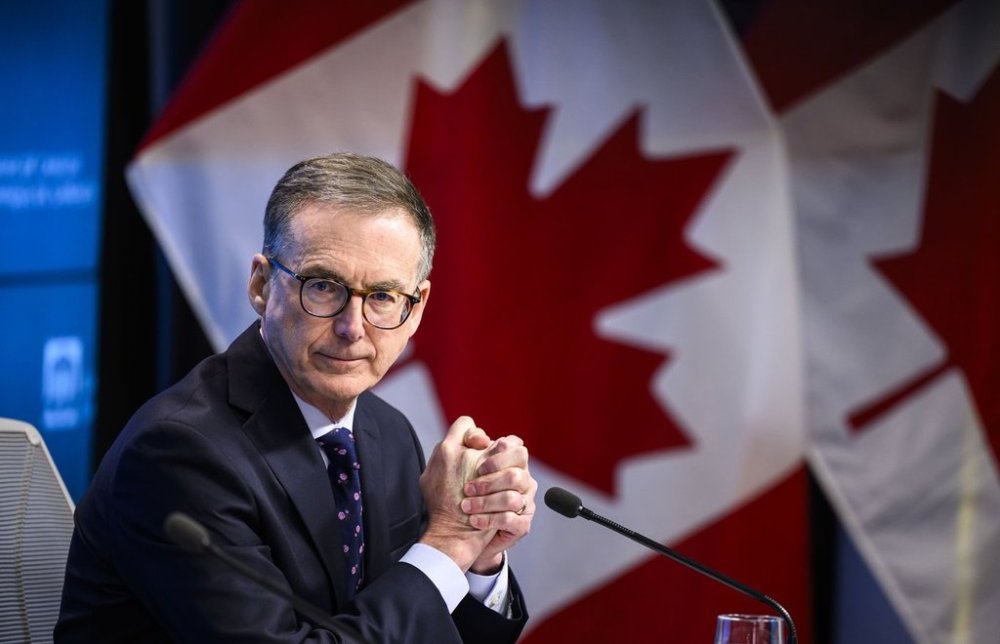
Macklem made the comments virtually as part of a panel at a global central banking conference in Mexico City.
Monetary policy can help mitigate the short-term impacts of tariffs, but can’t address every challenge facing an economy, Macklem said.
“Monetary policy has to strike a balance,” he said.
“Significant, broad-based tariffs will sharply reduce demand for our exports. At the same time, a weaker exchange rate, retaliatory tariffs and supply chain disruptions will raise import prices, putting upward pressure on inflation.”
Central banks can’t address weaker output and higher inflation at the same time, he said.
“We will need to carefully assess the downward pressure on inflation from weaker economic activity, and weigh that against the upward pressures from higher input prices and supply chain disruptions.”
The Bank of Canada has been cutting its key interest rate since the middle of last year to spur spending and boost the economy.
However, the country faces significant uncertainty in the coming months amid a month-long truce on tariffs from the U.S. as the federal government seeks to prevent Trump from enacting punishing duties.
Macklem said the world is increasingly vulnerable to shocks amid higher long-term interest rates, slower economic growth, war and rising trade protectionism, as well as the rise of artificial intelligence technology and more frequent catastrophic weather events.
He also spoke about the importance of public trust during this increasingly uncertain time.
“In a world with more structural change and more negative supply shocks, central banks will be faced with harder choices. And harder choices bring risks of public disappointment and frustration,” he said.
“We will face criticism about our decisions, and about how well monetary policy is seen to have worked when confronted with forces that are mostly out of our hands. We will be called ineffective or criticized for not doing enough. And some will challenge our independence.”
Macklem said central bankers need to be clear about what monetary policy can and can’t do, and recognize that the world has changed but remain confident in the effectiveness of their frameworks.
“We didn’t get everything right through the pandemic, and elevated inflation and higher interest rates have been difficult for our citizens,” he said.

“But in Canada, as in many other countries, inflation has come down. And we restored low inflation without causing a recession or major job losses.”
He also called for central banks to remain free from political influence.
“Being independent and accountable and continuously learning is how we build trust,” Macklem said.
U.S. Federal Reserve chairman Jerome Powell has faced comments from Trump, who claimed that diversity, equity and inclusion practices got in the way of the central bank’s fight against inflation.
This report by The Canadian Press was first published Feb. 6, 2025.