

Judge rules Georgia railroad can seize land as landowners vow to fight
Advertisement
Read this article for free:
or
Already have an account? Log in here »
To continue reading, please subscribe:

Digital Subscription
One year of digital access for only $205*
- Enjoy unlimited reading on winnipegfreepress.com
- Read the E-Edition, our digital replica newspaper
- Access News Break, our award-winning app
- Play interactive puzzles
*First annual payment billed as $205.00 + GST for one year. This annual subscription will automatically renew at $233.00 + GST every 52 weeks (10% off the regular annual price of $259.35). Offer available to new and qualified returning subscribers only. Cancel any time.
To continue reading, please subscribe:
Add Free Press access to your Brandon Sun subscription for only an additional
$1 for the first 4 weeks*
- Enjoy unlimited reading on winnipegfreepress.com
- Read the E-Edition, our digital replica newspaper
- Access News Break, our award-winning app
- Play interactive puzzles
*Your next Brandon Sun subscription payment will increase by $1.00 and you will be charged $17.95 plus GST for four weeks. After four weeks, your payment will increase to $24.95 plus GST every four weeks.
Read unlimited articles for free today:
or
Already have an account? Log in here »
Hey there, time traveller!
This article was published 06/02/2025 (608 days ago), so information in it may no longer be current.
ATLANTA (AP) — A judge has ruled that a Georgia railroad can buy land against the will of property owners to build a track, rebuffing a challenge that a libertarian group hoped could make it harder to use eminent domain to take property.
Fulton County Superior Court Judge Craig Schwall Sr. ruled Tuesday that the Sandersville Railroad could condemn a 200-foot (60-meter) wide strip of property running 4.5 miles (7.3 kilometers) to build a rail line serving a rock quarry and other users. Landowners fighting the railroad had appealed a Georgia Public Service Commission ruling allowing the land taking.
Schwall kept a freeze on construction for now, with landowners saying they would appeal to the Georgia Supreme Court.
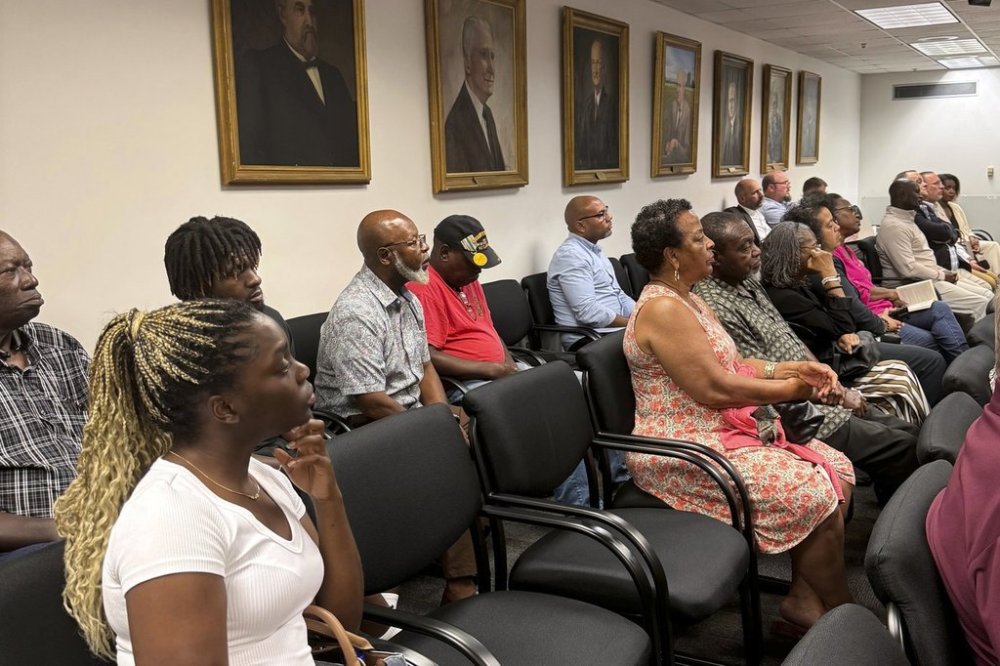
The case matters because private entities need to condemn private land for railroads and facilities including pipelines and electric transmission lines.
The Sandersville Railroad, owned by an influential Georgia family, wants to connect the quarry to the CSX railroad at Sparta, allowing products to be shipped widely. Sparta is a mostly Black rural town about 85 miles (135 kilometers) southeast of Atlanta in one of Georgia’s poorest counties.
Sandersville has agreements to buy some of the 18 parcels it needs. But other owners say losing a strip of property would spoil land they treasure, and that some families have owned for a century.
“Every day that Sandersville isn’t coming onto our land and starting to build is a good day,” Diane Smith, one of the owners, said in a statement. “But we won’t rest easy until we know for sure that they’ll never be able to take our land from us.”
Brian Brodrick, a lawyer for the railroad, urged opposed property owners in a Thursday statement “to return to the negotiating table so we can bring new opportunities and channels of trade to all the citizens of Hancock County and the region.” He said the spur would have “minimal impacts” on neighbors.
Some people in the rural neighborhood think the railroad would enable expansion at a quarry owned by Heidelberg Materials, a publicly traded German firm. They dislike the quarry because it generates noise, dust and truck traffic.
Supporters say if the railroad is built, the quarry will move its operation farther from houses, trains will reduce trucks on roads and the railroad will build berms to shield residents.

Railroads have long had the power of eminent domain, but Georgia law says such land seizures must be for “public use.” Opponents targeted the project by saying it would only benefit the quarry. The Sandersville Railroad says there are other users, including a company located at the quarry that blends gravel and asphalt for paving. Several companies have said they would truck products to load them onto the new line, saying they want access to markets served by CSX.
Schwall found the railroad met the public use standard, saying it was necessary for the “functioning” of Sandersville and “also serves a public purpose because it will provide a channel of trade in east middle Georgia.”
The group representing opponents, the Institute for Justice, hoped to use the case to chip away at eminent domain, the power to legally take private land while paying fair compensation.
The libertarian-leaning legal group lost a landmark 2005 case allowing the city of New London, Connecticut, to take land from one private owner and transfer it to another private owner for economic development. Schwall cited that case in his ruling.
“We remain committed to proving to the courts that a private railroad’s desire to build a speculative new line entirely for the benefit of a handful of private companies is not a public use under the U.S. and Georgia constitutions and Georgia’s eminent domain laws,” Institute for Justice attorney Bill Maurer said in statement.