

Championing sovereignty with big dreams

Advertisement
Read this article for free:
or
Already have an account? Log in here »
To continue reading, please subscribe:
Monthly Digital Subscription
$1 per week for 24 weeks*
- Enjoy unlimited reading on winnipegfreepress.com
- Read the E-Edition, our digital replica newspaper
- Access News Break, our award-winning app
- Play interactive puzzles
*Billed as $4.00 plus GST every four weeks. After 24 weeks, price increases to the regular rate of $19.95 plus GST every four weeks. Offer available to new and qualified returning subscribers only. Cancel any time.
Monthly Digital Subscription
$4.99/week*
- Enjoy unlimited reading on winnipegfreepress.com
- Read the E-Edition, our digital replica newspaper
- Access News Break, our award-winning app
- Play interactive puzzles
*Billed as $19.95 plus GST every four weeks. Cancel any time.
To continue reading, please subscribe:
Add Free Press access to your Brandon Sun subscription for only an additional
$1 for the first 4 weeks*
*Your next subscription payment will increase by $1.00 and you will be charged $16.99 plus GST for four weeks. After four weeks, your payment will increase to $23.99 plus GST every four weeks.
Read unlimited articles for free today:
or
Already have an account? Log in here »
Hey there, time traveller!
This article was published 08/02/2025 (411 days ago), so information in it may no longer be current.
On the face of it, pouring another $80 million into reinvigorating the Port of Churchill is illogical. But as events of recent weeks underscore, we’re living in an illogical world.
To be clear: the vision behind the creation of Canada’s only Arctic seaport serviced by rail always made sense for national sovereignty.
Economically, however, it’s a tough sell. The port is small by today’s standards and only open four months per year. The railway supporting it is high maintenance and the grain business, which has historically been its main source of shipping revenue, has fundamentally changed.
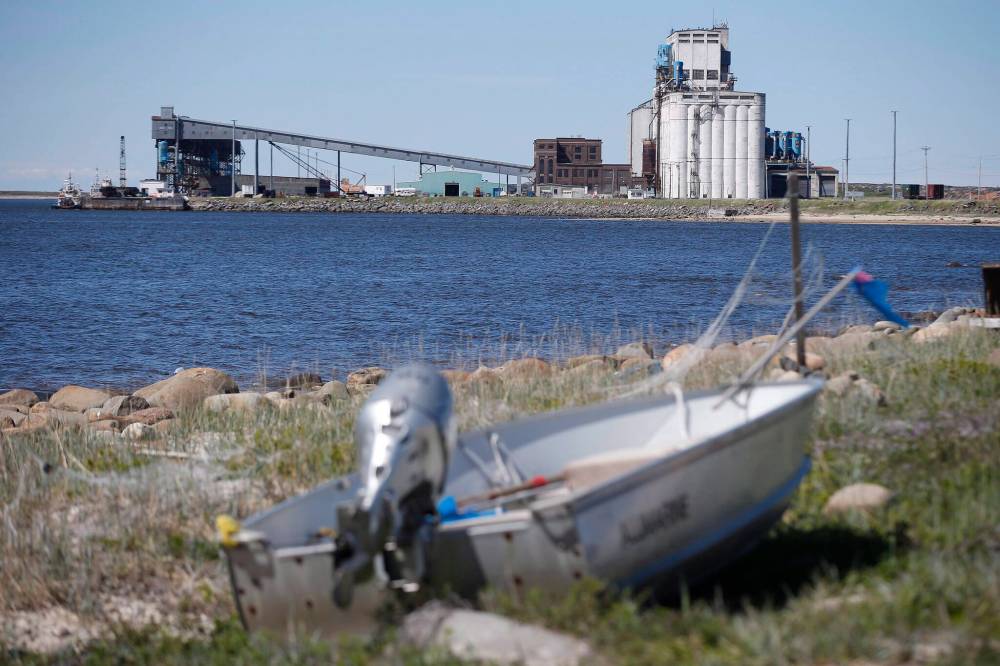
JOHN WOODS / THE CANADIAN PRESS FILES
The Port of Churchill opened in 1931 and is Canada’s only Arctic seaport serviced by rail.
Nothing about this northern Manitoba port has been easy. Even its location remains controversial.
For a host of reasons — politics, money shortages, silty harbours and delays caused by the First World War — the Hudson Bay Railway heads northeast from Gillam, pointing directly towards Port Nelson as per the original plan, but then takes a sharp left turn to track north through boreal forests and boggy tundra to the Port of Churchill.
When it opened in 1931, it initially faced crippling skepticism from the shipping industry, fearful of the northern passage.
Business didn’t start to pick up until E. Cora Hind, the first female Free Press reporter whose writing helped put Prairie wheat on the global map, used her celebrity status to champion the cause. She accompanied a load of grain to England from Churchill, which was big news for the times.
“She is the greatest prophet in the world: fortunes and the future of great industries are affected by her forecasts,” reported the London Sunday Express upon her arrival in October 1932. “Her prophecies are eagerly awaited by government experts, grain traders, transportation companies, insurance houses, banks and manufacturers for they affect the price of wheat, the cost of bread and the purchasing power of Canada.”
The newspaper accounts may have focused on Hind, but her support lent the port needed credibility and its prospects incubated in the glow.
However, it could be argued it only worked as a grain export port because of the Canadian Wheat Board — not because the board subsidized it, as was often alleged, but because the board could manage supply. The single-desk marketing system allowed it to collect grain from the central and northern Prairies and fill the northern terminal before winter so it was ready to load when the first ships arrived late July.
Exporting grain out of that catchment area through the North was cost-effective — although on at least one occasion it led to customer complaints after dockworkers unloading the first ship of the season got frostbite from handling the frozen grain.
Successive attempts by governments to turn the port and the railway over to private enterprise have so far failed.
The CWB was dismantled in 2012. The export customer base has changed and the private grain trade has inland and port investments elsewhere to protect. Plus, as much as global warming may expand the ice-free shipping window, it also adds to the railway’s instability.
The port’s fate appeared sealed in 2017, when the railbed suffered extensive washouts and its American owner, Omnitrax, decided to close it rather than repair.
Enter Arctic Gateway Group, a consortium of 41 First Nations and northern communities, who stepped up to save the only land link to the southern province.
Churchill’s modern-day proponents believe there are new export-import opportunities emerging in mining and fertilizer in addition to the port’s vital role in northern resupply.

Whether or not these pan out, at a time when Canada’s sovereignty is threatened and global powers outside its borders are making new territorial claims, government investment in its iconic northern port sends an important signal.
However, unlike booing the Star-Spangled Banner at hockey games, this expression of the nation’s sovereignty has demonstrated it requires the public’s ongoing commitment if it is to survive.
The Port of Churchill exists because leaders of the past dared to look beyond the impracticalities and public opinion polls to dream big. It survived the past century because of its champions.
Now, more than ever, Canada needs big dreamers and champions.
Laura Rance is executive editor, production content lead for Glacier FarmMedia. She can be reached at lrance@farmmedia.com
Laura Rance is editorial director at Farm Business Communications.
Our newsroom depends on a growing audience of readers to power our journalism. If you are not a paid reader, please consider becoming a subscriber.
Our newsroom depends on its audience of readers to power our journalism. Thank you for your support.
Laura Rance is editorial director at Farm Business Communications.
Our newsroom depends on a growing audience of readers to power our journalism. If you are not a paid reader, please consider becoming a subscriber.
Our newsroom depends on its audience of readers to power our journalism. Thank you for your support.
Advertisement Advertise With Us
Advertisement Advertise With Us