

Canadian canola farmers to feel impact from damaging Chinese tariffs
Advertisement
Read this article for free:
or
Already have an account? Log in here »
To continue reading, please subscribe:

Digital Subscription
One year of digital access for only $205*
- Enjoy unlimited reading on winnipegfreepress.com
- Read the E-Edition, our digital replica newspaper
- Access News Break, our award-winning app
- Play interactive puzzles
*First annual payment billed as $205.00 + GST for one year. This annual subscription will automatically renew at $233.00 + GST every 52 weeks (10% off the regular annual price of $259.35). Offer available to new and qualified returning subscribers only. Cancel any time.
To continue reading, please subscribe:
Add Free Press access to your Brandon Sun subscription for only an additional
$1 for the first 4 weeks*
- Enjoy unlimited reading on winnipegfreepress.com
- Read the E-Edition, our digital replica newspaper
- Access News Break, our award-winning app
- Play interactive puzzles
*Your next Brandon Sun subscription payment will increase by $1.00 and you will be charged $17.95 plus GST for four weeks. After four weeks, your payment will increase to $24.95 plus GST every four weeks.
Read unlimited articles for free today:
or
Already have an account? Log in here »
Hey there, time traveller!
This article was published 08/03/2025 (557 days ago), so information in it may no longer be current.
OTTAWA – Canadian farmers could take a big hit from China’s sudden retaliatory tariffs that take aim at canola, pork and other food commodities.
Chris Davison, president of the Canola Council of Canada, said the tariffs are prohibitively high and the fallout will be felt across his industry.
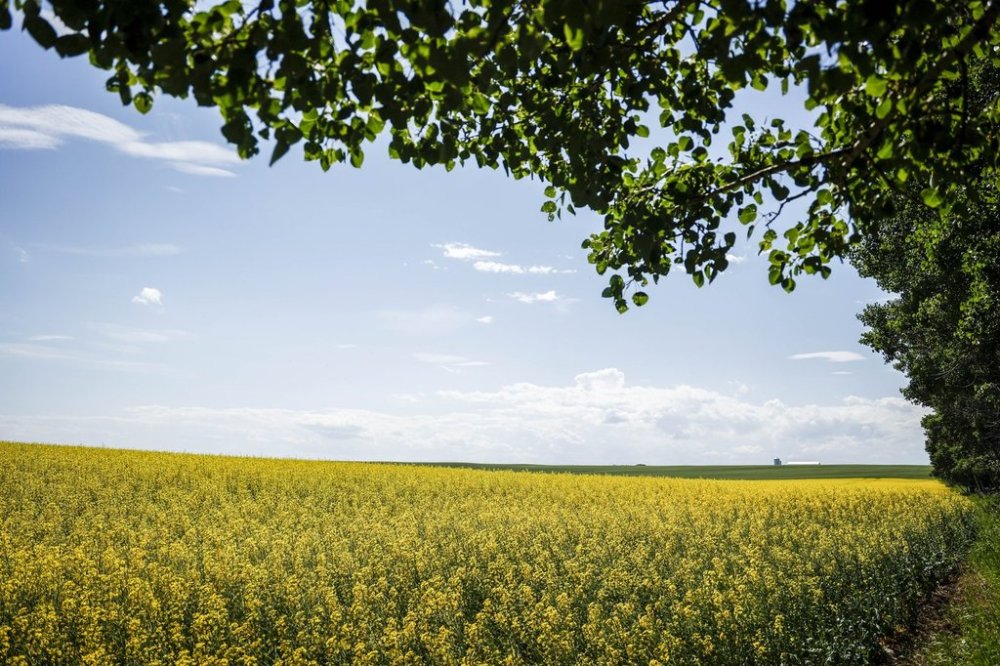
He said China is a top market for Canadian canola that represents close to $5 billion in export value.
“The impacts will be widespread and will be felt across the industry, starting with farmers who grow the crop every year and extending beyond there to the companies that provide them with seeds and inputs … to grain companies and processors and ultimately to exporters,” Davison said.
“We’re expecting to work with the Canadian government very quickly to address the situation we face but also to pursue a resolution to it as expeditiously as possible.”
Beijing announced retaliatory tariffs on select Canadian farm imports in response to Canadian duties levied back in the fall against Chinese-made electric vehicles, as well as steel and aluminum products.
China is hitting Canada with 100 per cent tariffs on canola oil and peas, and 25 per cent tariffs on pork and aquatic products — loosely mirroring Canada’s EV and steel and aluminum levies.
In a joint statement late Saturday night, international trade and economic development minister Mary Ng, agriculture and agri-food minister Lawrence MacAulay and fisheries minister Diane Lebouthillier said they are “deeply disappointed” with China’s announced tariffs.
“Our hard-working farmers and fishers provide world-class food to Canadians and international trading partners,” the statement read.
“We are steadfast in our commitment to defend Canadian workers and we will stand shoulder-to-shoulder in our support for Canada’s hard-working farmers and fishers in the agricultural and fishing sectors.”
Saskatchewan Premier Scott Moe said in a social media post on Saturday that the province’s canola industry is being “put in the line of fire due to tariffs on Chinese EVs, which nobody wants, to protect North American EVs, which few can afford.”

The new tariffs against Canadian agricultural products are expected to kick in on March 20 — widening Canada’s ongoing trade problems as the country seeks to beat back U.S. President Donald Trump’s stop-and-go tariffs.
This is not the first time Beijing has put Canadian canola in its crosshairs.
In 2019, the country targeted canola export licenses as an economically sensitive pressure point — widely viewed in Canada as a political response to the detention of senior Huawei telecom executive Meng Wanzhou.
This report by The Canadian Press was first published March 8, 2025.
— With files from The Associated Press.

Advertisement Advertise With Us
Advertisement Advertise With Us