

Nova Scotia Realtors want province to drop planned increase to deed transfer tax
Advertisement
Read this article for free:
or
Already have an account? Log in here »
To continue reading, please subscribe:
Digital Subscription
One year of digital access for only $1.44 a week*
- Enjoy unlimited reading on winnipegfreepress.com
- Read the E-Edition, our digital replica newspaper
- Access News Break, our award-winning app
- Play interactive puzzles
*Billed as $5.77 plus GST every four weeks. After 52 weeks, price increases to the regular rate of $19.95 plus GST every four weeks. Offer available to new and qualified returning subscribers only. Cancel any time.
To continue reading, please subscribe:
Add Free Press access to your Brandon Sun subscription for only an additional
$1 for the first 4 weeks*
- Enjoy unlimited reading on winnipegfreepress.com
- Read the E-Edition, our digital replica newspaper
- Access News Break, our award-winning app
- Play interactive puzzles
*Your next Brandon Sun subscription payment will increase by $1.00 and you will be charged $17.95 plus GST for four weeks. After four weeks, your payment will increase to $24.95 plus GST every four weeks.
Read unlimited articles for free today:
or
Already have an account? Log in here »
Hey there, time traveller!
This article was published 14/03/2025 (584 days ago), so information in it may no longer be current.
HALIFAX – The Nova Scotia government’s plan to double a deed transfer tax for non-resident homebuyers needs to be reconsidered, says the association for the province’s Realtors.
Increasing the tax would effectively add a “tariff” on Canadian buyers at a time when the country is trying to reduce internal trade barriers, says Suzanne Gravel, who will assume the presidency of the Nova Scotia Association of Realtors at the end of March.
The 2025-26 provincial budget would increase the tax to 10 per cent from five per cent as of April 1, with officials estimating the increase would raise an additional $13 million.
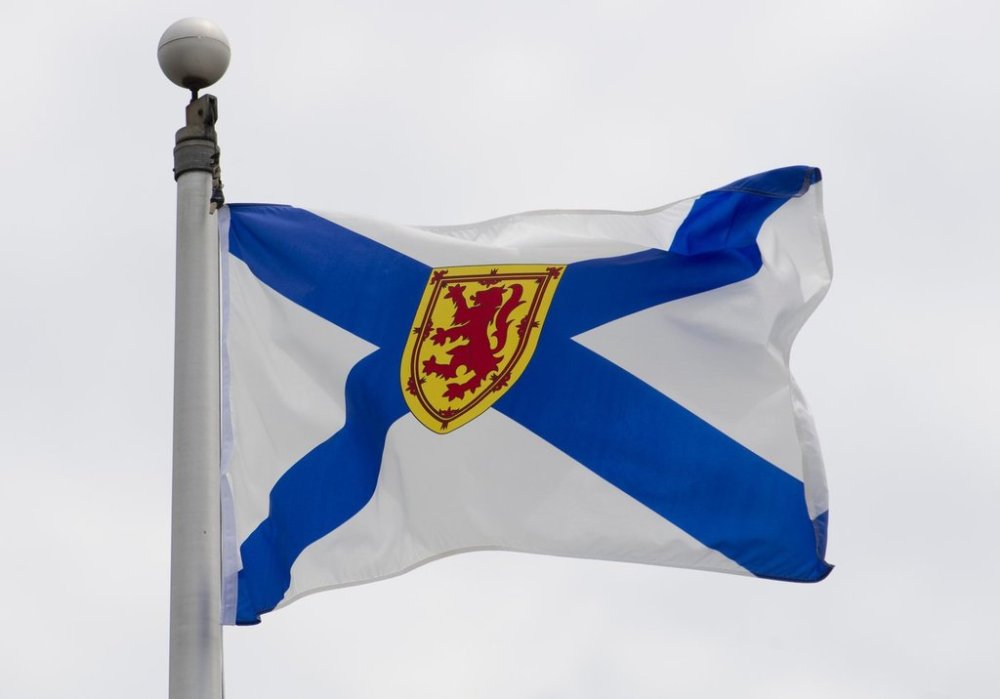
A Nova Scotia judge has referred a convicted murderer to a restorative justice program — a first for the province. Nova Scotia's provincial flag flies on a flag pole in Ottawa, Friday July 3, 2020. THE CANADIAN PRESS/Adrian Wyld
“Nova Scotia has just shut the door” on out-of-province buyers, Gravel said in an interview Friday.
“If they want to buy a cottage property … they are going to think twice about where they are going to go, if not financially then simply on principle.”
Gravel said the tax increase will drive potential buyers away and reduce investment, particularly in rural areas.
She said she is scheduled to appear before a hearing of the legislature’s public bills committee on Monday, where she will voice objections on behalf of the more than 2,000 members of the association.
Earlier this month, Finance Minister John Lohr said the tax increase would give Nova Scotians a “slight advantage” when they bid for properties against out-of-province competition at a time when affordable housing is in short supply.
But Donna Harding, with Engel & Volkers real estate agency in Halifax, takes issue with the minister’s assertion.
Harding said the majority of out-of-province buyers are purchasing seasonal cottage properties or camps situated on lots of land. Many are Nova Scotians living in other provinces who want to buy property so they can retire in their native province.
“They are not buying the Nova Scotia stock of homes that first-time buyers want to buy,” she said, adding that the percentage increase would add $30,000 to the cost of a $300,000 cottage.
“No one can afford that,” said Harding. “The minute that anyone in Canada realizes that Nova Scotia has placed a tariff of 10 per cent … they are not going to come.”
The deed transfer tax applies to all residential properties, or to a portion of a property considered residential with three dwelling units or less. It also applies to residentially zoned vacant land.

Lars Osberg, an economics professor at Dalhousie University, said deed transfers act as a “tax on a transaction.”
“It puts a wedge between the price the buyer pays and the price the seller gets,” said Osberg. “It means that buyers will pay more and sellers will get less.”
He called the tax primarily a “rural phenomenon” that will do little to affect housing shortages that are significantly more pronounced in Halifax, adding that it also spares large property owners at the expense of middle class homeowners.
“It doesn’t touch at all the people who own apartment buildings and that’s the big money,” Osberg said. “It taxes small money but it doesn’t tax big money.”
This report by The Canadian Press was first published March 14, 2025.