

Book of ‘don’ts’
Renowned investing author, veteran money manager Ritholtz pens guide to avoid being own worst enemy
Advertisement
Read this article for free:
or
Already have an account? Log in here »
To continue reading, please subscribe:

Digital Subscription
One year of digital access for only $205*
- Enjoy unlimited reading on winnipegfreepress.com
- Read the E-Edition, our digital replica newspaper
- Access News Break, our award-winning app
- Play interactive puzzles
*First annual payment billed as $205.00 + GST for one year. This annual subscription will automatically renew at $233.00 + GST every 52 weeks (10% off the regular annual price of $259.35). Offer available to new and qualified returning subscribers only. Cancel any time.
To continue reading, please subscribe:
Add Free Press access to your Brandon Sun subscription for only an additional
$1 for the first 4 weeks*
- Enjoy unlimited reading on winnipegfreepress.com
- Read the E-Edition, our digital replica newspaper
- Access News Break, our award-winning app
- Play interactive puzzles
*Your next Brandon Sun subscription payment will increase by $1.00 and you will be charged $17.95 plus GST for four weeks. After four weeks, your payment will increase to $24.95 plus GST every four weeks.
Read unlimited articles for free today:
or
Already have an account? Log in here »
Hey there, time traveller!
This article was published 15/03/2025 (543 days ago), so information in it may no longer be current.
New York money manager Barry Ritholtz has a print by popular New York Times personal finance “Sketch Guy” columnist Carl Richards on the wall of his office, titled “Fear greed.”
Ritholtz mentions it at the start of a chapter in his new book, How Not to Invest: the Ideas, Numbers and Behaviors that Destroy Wealth, which comes out this month. He calls it the “most insightful drawing ever about your biggest investment mistake.”
It’s a simple undulating line with “greed/buy” at a peak, and “fear/sell” at a trough. The line continues with its ups and downs with “Repeat until broke” at the end.
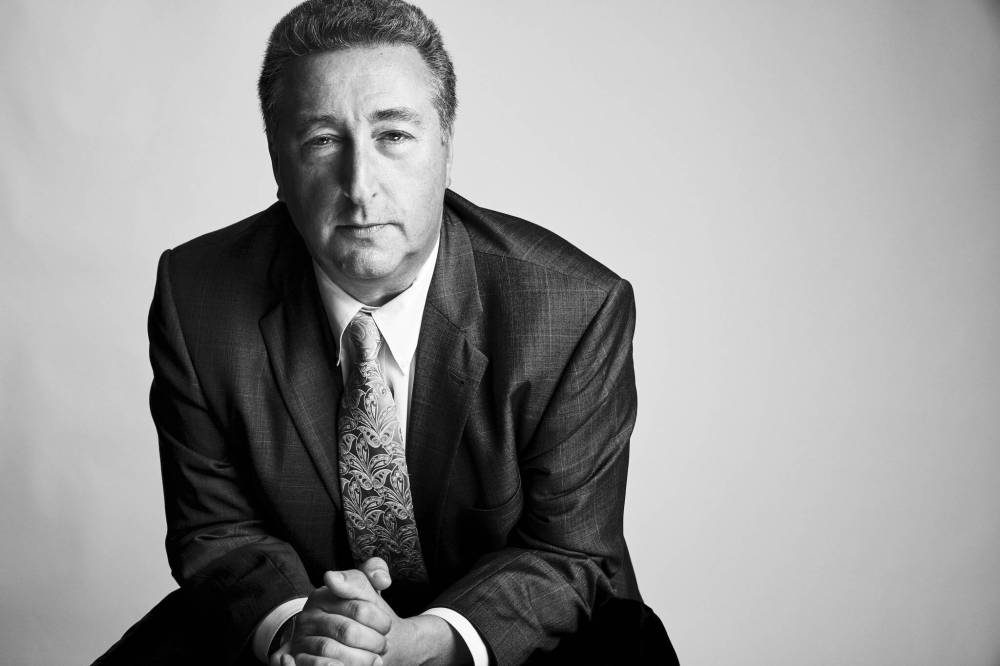
Barry Ritholtz (Supplied)
It might seem obvious, but as Ritholtz says, investors keep repeating the mistake.
“Everything in the book comes from … my many years of debunking a lot of nonsense for clients,” he says in a recent interview with the Free Press.
Simply, we’re our own worst enemies, says Ritholtz, also author of Bailout Nation: How Greed and Easy Money Corrupted Wall Street and Shook the World Economy, published 16 years ago.
That said, Ritholtz suggests you do not lean too thoughtlessly on the industry for guidance either.
It’s not that having a wealth professional build you a financial plan and diversified portfolio is a bad thing. It is often beneficial.
Yet the industry turns on so-called expert prognostications and new investment products that are often noise best to be ignored.
“Are you just blindly listening to fill in the blank — this cable news channel, that Instagram influencer, this TikTok feed?” he says. “It’s shocking how what passes for advice these days is completely lacking … common sense.”
The investment industry is full of predictions of doom and boom.
Sometimes, experts make the right call. Ritholtz has been among them, having said in an interview in March 2009 it was a good time to put money back into the stock market.
It was a day before the market’s bottom, but the prediction’s accuracy was “dumb luck,” he notes.
Even professionals’ predictions are more likely to be wrong than right, Ritholtz adds.
Still, the broad stroke of his suggestion — to buy when everyone else is fearful — is good, evergreen advice, though not novel.
Everyone knows to buy low. The problem is our brains just aren’t set up to let us do it.
“If we’ve learned anything over the last 30 years of behavioural finance, emotions are the enemy of good investing,” he adds.
Ritholtz’s new book contains insights of many behavioural finance experts on why we make the errors we do.
Among them is William Bernstein, who once said: “To the extent you succeed in finance, you succeed by suppressing the limbic system, the very fast moving emotional system. If you cannot suppress that, you’re going to die poor.”
This flight-or-fight mechanism serves us well to avoid physical harm.
“But for investing, it’s terrible because you and everybody else have the same wet-wear, the same operating system,” Ritholtz says.
Collectively, we often get greedy at the same time, and collectively, we often all become fearful at once.
The book even goes beyond emotions’ impact on investing, explaining how they spur less than brilliant behaviour in other aspects of life, including politics.
Emotions drive our political choices — facts be damned.

Of course, perception is important. One person’s stupidity is another’s great idea— be it politics or investing.
Absolutely don’t try to mix the two, Ritholtz adds, pointing to a chapter called “Love Trump or hate Trump, it’s no way to invest.”
Ritholtz notes some investors in 2016 wanted to liquidate their portfolios, fearful U.S. President Donald Trump would blow up the stock market.
In response, Ritholtz showed them data stretching back decades showing stock market performance during Democratic presidents and for Republican presidents.
With a Democratic in the White House, market performance had a slight edge. But an investor who just kept the money in the market through Republican and Democratic presidents outperformed by more than 1,000 per cent at the end of a 74-year period.
More broadly, humans are terrible at predicting the future, which is really the foundation of stock-picking. Even professionals are not especially good at it.
Ritholtz points to the S&P Indices Versus Active (SPIVA) reports, which consistently finds most money managers underperform their benchmark (i.e. S&P TSX Composite) every year.
Over 20-year periods, almost no manager outperforms. Some do, like Peter Lynch and Warren Buffett, but they’re exceptions.
Ritholtz suggests average investors should keep things simple. Buy diversified, low-fee index funds — ideally exchange-traded funds (ETFs) — to form the core of a portfolio.
“If you want to put a few extra ornaments on the tree, you can have a sleeve that is momentum, India, European value or technology — whatever.”
If you have a speculative itch, wanting to pick home run stocks, go ahead and do it. Just keep that “cowboy account” to no more than five per cent of your money, he says.
And beware of success.
“The worst thing that can happen is your big trade is a big win, because then you think, ‘Oh, this is easy.’”

Overconfidence is a true wealth killer.
Rather most investors’ overarching goal should be to make fewer mistakes. Buy and hold the broad markets and let others speculate, panic sell and try to time the market.
“The way to win is letting others beat themselves,” Ritholtz says. “The academic data tells us that they’re going to end up far behind where you will be if you take a basic, simple approach and make fewer mistakes.”
Joel Schlesinger is a Winnipeg-based freelance journalist
joelschles@gmail.com