

UK economy enjoyed unexpected growth spurt in February before Trump tariff turmoil
Advertisement
Read this article for free:
or
Already have an account? Log in here »
To continue reading, please subscribe:
Monthly Digital Subscription
$1 per week for 24 weeks*
- Enjoy unlimited reading on winnipegfreepress.com
- Read the E-Edition, our digital replica newspaper
- Access News Break, our award-winning app
- Play interactive puzzles
*Billed as $4.00 plus GST every four weeks. After 24 weeks, price increases to the regular rate of $19.95 plus GST every four weeks. Offer available to new and qualified returning subscribers only. Cancel any time.
Monthly Digital Subscription
$4.99/week*
- Enjoy unlimited reading on winnipegfreepress.com
- Read the E-Edition, our digital replica newspaper
- Access News Break, our award-winning app
- Play interactive puzzles
*Billed as $19.95 plus GST every four weeks. Cancel any time.
To continue reading, please subscribe:
Add Free Press access to your Brandon Sun subscription for only an additional
$1 for the first 4 weeks*
*Your next subscription payment will increase by $1.00 and you will be charged $16.99 plus GST for four weeks. After four weeks, your payment will increase to $23.99 plus GST every four weeks.
Read unlimited articles for free today:
or
Already have an account? Log in here »
Hey there, time traveller!
This article was published 11/04/2025 (349 days ago), so information in it may no longer be current.
LONDON (AP) — Official figures Friday showed that the British economy, the world’s sixth-largest, enjoyed a growth spurt in February, the month before U.S. President Donald Trump started to roll out tariffs on imported goods.
The Office for National Statistics found that the British economy grew by 0.5% in February, ahead of market expectations for a more modest increase of 0.2%. It also revised up January’s figure to no change from the previous estimate of a 0.1% decline.
Were these more normal times, hopes for the year ahead would be high. But the recent market turmoil prompted by Trump’s tariff policies — and subsequent abrupt changes — is expected to lead to a downturn around the world, as businesses and consumers retrench in the face of the heightened economic uncertainty.
China’s decision to raise tariffs on U.S. goods from 84% to 125% from Saturday has only added to fears that the world’s two biggest economies are heading for a drawn-out and damaging trade war.
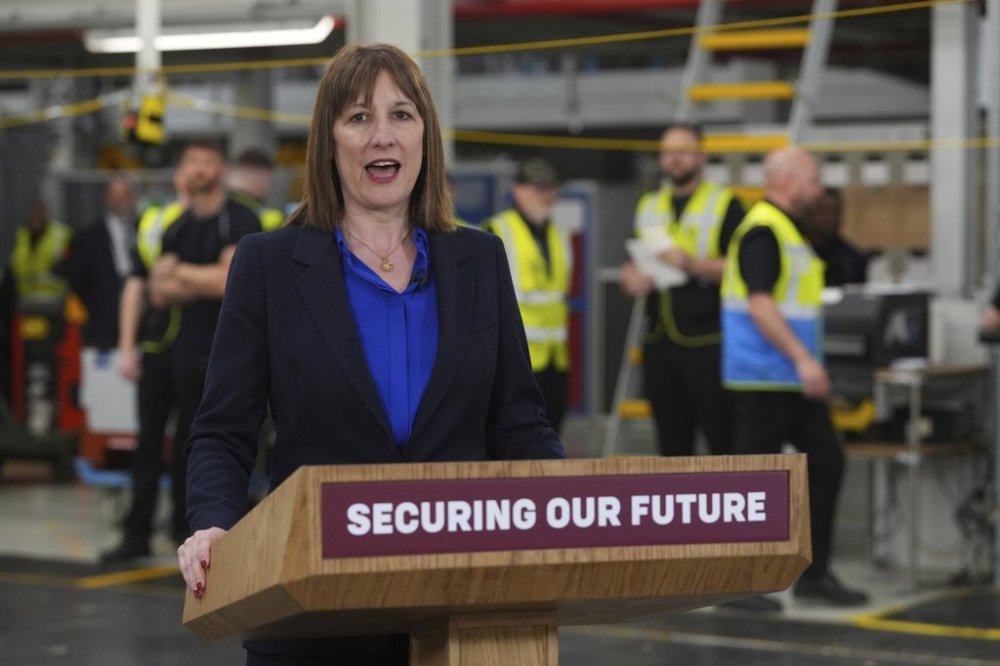
While welcoming Friday’s growth figures, British Treasury chief Rachel Reeves acknowledged the uncertain outlook.

“The world has changed and we have witnessed that change in recent weeks,” she said. “I know this is an anxious time for families who are worried about the cost of living and British businesses who are worried about what this change means for them.”
The Labour government has said raising the U.K.’s economic growth is the number one priority over the next five years. Since the global financial crisis in 2008-9, the British economy’s growth performance has been historically lackluster.