

White House threatens Colombia over regulations affecting US auto exports
Advertisement
Read this article for free:
or
Already have an account? Log in here »
To continue reading, please subscribe:

Digital Subscription
One year of digital access for only $205*
- Enjoy unlimited reading on winnipegfreepress.com
- Read the E-Edition, our digital replica newspaper
- Access News Break, our award-winning app
- Play interactive puzzles
*First annual payment billed as $205.00 + GST for one year. This annual subscription will automatically renew at $233.00 + GST every 52 weeks (10% off the regular annual price of $259.35). Offer available to new and qualified returning subscribers only. Cancel any time.
To continue reading, please subscribe:
Add Free Press access to your Brandon Sun subscription for only an additional
$1 for the first 4 weeks*
- Enjoy unlimited reading on winnipegfreepress.com
- Read the E-Edition, our digital replica newspaper
- Access News Break, our award-winning app
- Play interactive puzzles
*Your next Brandon Sun subscription payment will increase by $1.00 and you will be charged $17.95 plus GST for four weeks. After four weeks, your payment will increase to $24.95 plus GST every four weeks.
Read unlimited articles for free today:
or
Already have an account? Log in here »
Hey there, time traveller!
This article was published 15/04/2025 (512 days ago), so information in it may no longer be current.
BOGOTA, Colombia (AP) — The White House is urging Colombia to halt the implementation of new auto safety regulations that could jeopardize American car exports to Colombia, as both nations prepare to discuss tariffs recently imposed on Colombian products including coffee, avocados, flowers and oil.
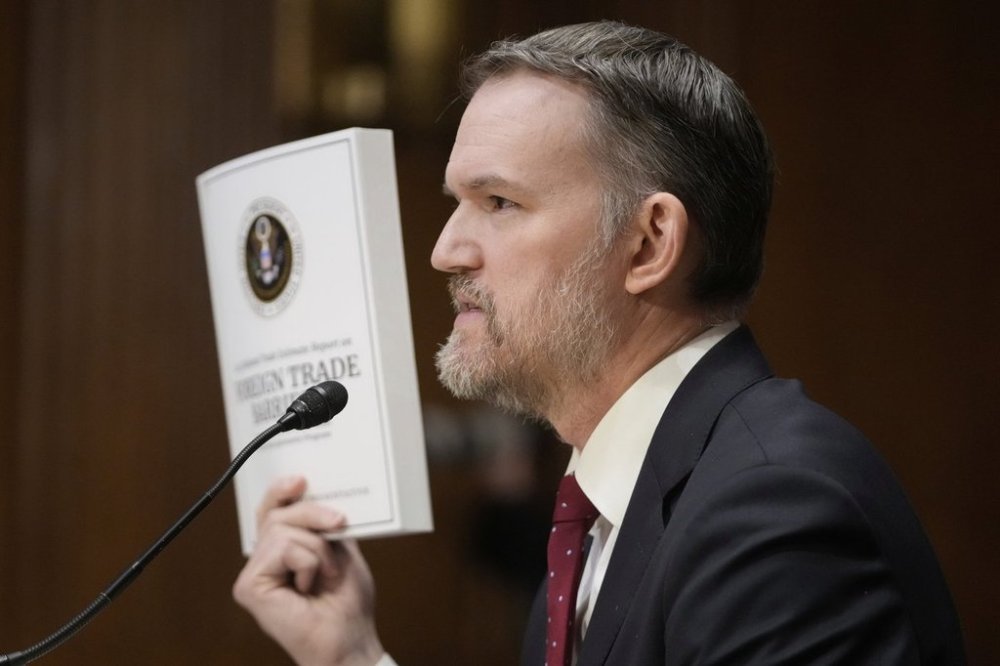
In a letter to Colombia’s Ministry of Commerce, U.S. Trade Representative Jamieson Greer said that plans by Colombia to change certification requirements for cars and auto parts entering the country could lead to the “total cessation” of U.S. automotive exports to Colombia, which were worth almost $700 million last year.
The letter, dated April 11, was leaked to Colombian media outlets Tuesday and a copy was also obtained by The Associated Press. In it Greer warns that if Colombia does not change its plans, it would be conducting an “unfair trading practice that may generate swift enforcement action by the United States.”
Colombian Minister of Commerce Cielo Rusinque refused to comment on the letter, but in a radio interview Tuesday she said the safety regulations would be among several issues that will be up for consideration when representatives of both nations meet to discuss tariffs later this month.
Since 2021, Colombia has been developing new technical requirements for brakes, car windows, tires and seatbelts that are aligned with international safety protocols developed by the United Nations.
Colombia’s government now wants manufacturers who sell cars and car parts to Colombia to get certification from a third party that verifies their products meet these international standards.
The office of the U.S. trade representative argues in its letter that cars manufactured in the United States must already comply with U.S. federal motor safety standards and that Colombia has not provided any proof that these standards are insufficient.
In a report on global trade barriers published earlier this year, the U.S. trade representative’s office said that manufacturers have told the U.S. government that they lack the capacity to obtain third party verification for their auto products.
The dispute over car exports comes just months after Colombia and the United States almost entered a trade war over deportation flights.
In January President Gustavo Petro refused to accept deportation flights from the United States, arguing that Colombian citizens on those flights were being treated in an inhumane manner. In response, Trump threatened to impose 25% tariffs on Colombian exports such as coffee, flowers, avocados and oil.
The dispute was solved in less than 24 hours, with Petro once again accepting deportation flights from the U.S., though most of these are now operated by Colombia’s Air Force.

Colombia was hit with 10% tariffs on its exports to the U.S. earlier this month, when Trump unveiled his new economic emergency measures.
Last week, the Colombian government sent letters to U.S. officials inviting them to start negotiations over the new tariffs, which could seriously hurt the nation’s agricultural exports.
The U.S. is Colombia’s largest trading partner, and purchases about 30% of its annual exports.
Colombia and the U.S. signed a free trade agreement in 2012, that has also boosted Colombian imports of American corn, soy, machinery and chemicals.
In 2024, the U.S. had a 1.3 billion trade surplus with Colombia.