

Yukon’s melting snow brings risk to site of last year’s mine disaster
Advertisement
Read this article for free:
or
Already have an account? Log in here »
To continue reading, please subscribe:

Digital Subscription
One year of digital access for only $205*
- Enjoy unlimited reading on winnipegfreepress.com
- Read the E-Edition, our digital replica newspaper
- Access News Break, our award-winning app
- Play interactive puzzles
*First annual payment billed as $205.00 + GST for one year. This annual subscription will automatically renew at $233.00 + GST every 52 weeks (10% off the regular annual price of $259.35). Offer available to new and qualified returning subscribers only. Cancel any time.
To continue reading, please subscribe:
Add Free Press access to your Brandon Sun subscription for only an additional
$1 for the first 4 weeks*
- Enjoy unlimited reading on winnipegfreepress.com
- Read the E-Edition, our digital replica newspaper
- Access News Break, our award-winning app
- Play interactive puzzles
*Your next Brandon Sun subscription payment will increase by $1.00 and you will be charged $17.95 plus GST for four weeks. After four weeks, your payment will increase to $24.95 plus GST every four weeks.
Read unlimited articles for free today:
or
Already have an account? Log in here »
Hey there, time traveller!
This article was published 17/04/2025 (531 days ago), so information in it may no longer be current.
WHITEHORSE – Crews in Yukon are working to prepare for an influx of extra water as snow melts at the site of last year’s disaster at the Eagle Gold mine.
An update from the territorial government says the main risk as temperatures warm is that snow and ice melts faster than water can be treated or stored, leading to the possibility of an uncontrolled release of water containing cyanide.
The update says the receiver and contractors on the site, about 480 kilometres north of Whitehorse, are building sumps, ditches and pipelines to divert melt water away from water that contains cyanide and areas impacted by cyanide.
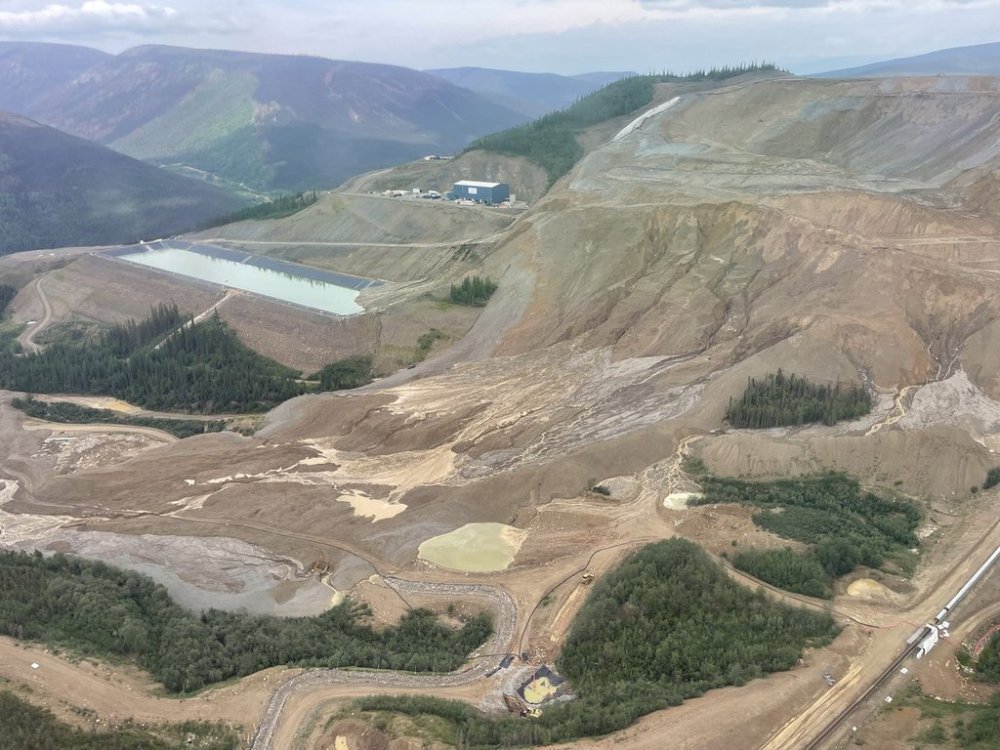
The Eagle Gold mine was the site of a disaster on June 24, 2024, after a heap leach containment facility failed, dumping millions of tonnes of cyanide-soak ore into the environment.
The update says snowpack is “average” at the mine site and weather in the coming weeks will play a significant role in the speed of melt.
The government statement says two additional storage ponds are also being built to help hold water containing cyanide until it can be treated, with one expected to be completed “soon” and a second expected to be finished in May.

The statement says the ponds will provide more than 200,000 cubic metres of additional storage space — roughly 80 Olympic-sized swimming pools.
This report by The Canadian Press was first published April 17, 2025.