

Wild market swings make planning and safe havens important for investors
Advertisement
Read this article for free:
or
Already have an account? Log in here »
To continue reading, please subscribe:

Digital Subscription
One year of digital access for only $205*
- Enjoy unlimited reading on winnipegfreepress.com
- Read the E-Edition, our digital replica newspaper
- Access News Break, our award-winning app
- Play interactive puzzles
*First annual payment billed as $205.00 + GST for one year. This annual subscription will automatically renew at $233.00 + GST every 52 weeks (10% off the regular annual price of $259.35). Offer available to new and qualified returning subscribers only. Cancel any time.
To continue reading, please subscribe:
Add Free Press access to your Brandon Sun subscription for only an additional
$1 for the first 4 weeks*
- Enjoy unlimited reading on winnipegfreepress.com
- Read the E-Edition, our digital replica newspaper
- Access News Break, our award-winning app
- Play interactive puzzles
*Your next Brandon Sun subscription payment will increase by $1.00 and you will be charged $17.95 plus GST for four weeks. After four weeks, your payment will increase to $24.95 plus GST every four weeks.
Read unlimited articles for free today:
or
Already have an account? Log in here »
Hey there, time traveller!
This article was published 01/05/2025 (511 days ago), so information in it may no longer be current.
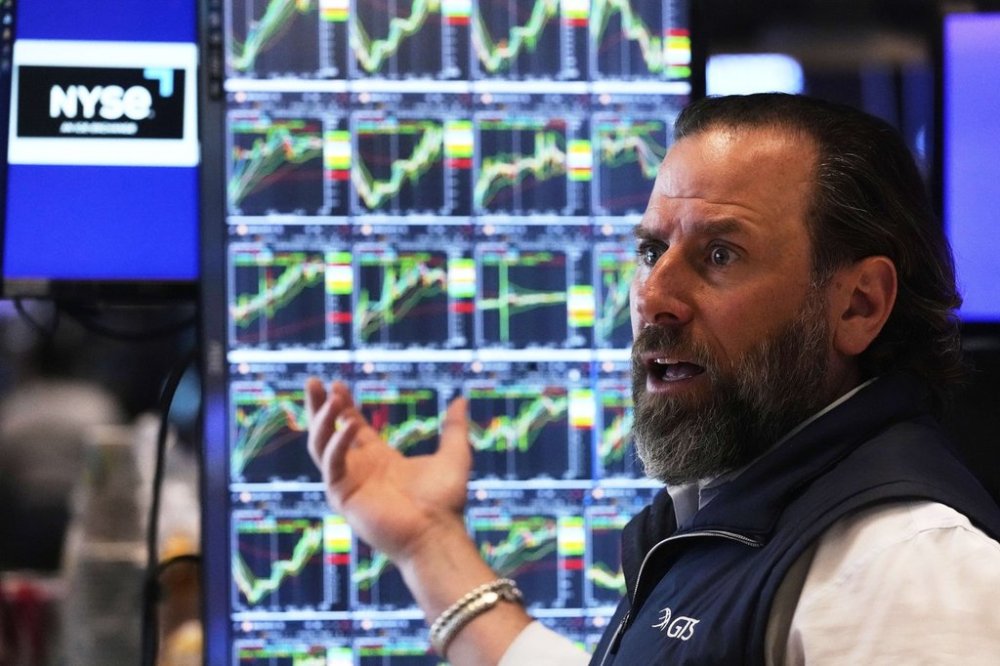
OTTAWA – Stock markets have taken a wild ride in recent weeks as U.S. President Donald Trump’s on-again, off-again tariffs have created massive uncertainty for companies and the economy at large.
Posts from Trump on social media have been causing big swings in the markets, with the blue-chip Dow Jones industrial average moving up and down more than 1,000 points, depending on the day.
Musings by the president about firing the head of the U.S. Federal Reserve sent stocks tumbling, only to see markets reverse themselves after Trump said he had no plans to do so.
The volatility has also extended beyond stocks with the U.S. dollar weakening, interest rates on U.S. government treasuries rising and gold hitting record levels, making it hard to know where the safe havens are.
Short term
If you know you are going to need money for something soon such as a down payment on a home, a new car, or tuition for your kids, experts say it shouldn’t be in the stock market.
Gabriel Lalonde, a certified financial planner and firm principal at MDL Financial Group in Ottawa, said it is all about your time horizon and risk tolerance.
“For ultimate safety, if you know you’re going to be buying a house in a couple of years, don’t put your money in the market; keep it safe,” Lalonde said.
High-interest savings accounts, term deposits or guaranteed interest certificates will be where you want to have your money if you know you’re going to be needing it in the near term. While the investment gains will be limited, the money will be there when you need it.
But Lalonde said it is important to consult your financial plan.
“If someone’s first reaction when they see a red day is to sell everything, I mean, the issue might not be the market. It’s the fact that they didn’t pressure test their financial plan to handle the volatility,” he said.
Stocks and bonds
Graham Priest, an investment adviser and portfolio manager at BlueShore Financial in North Vancouver, B.C., said a diversified portfolio with a combination of asset classes should offer some protection from the volatility of the equity market.
Priest said stocks in the consumer staples sector and utilities can offer some shelter if the economy comes under pressure and heads into a recession. Think companies that make or sell things you use every day and can’t give up.
But they have a downside, he said, as their returns have lagged lately.
“If you look at what has been driving, let’s say, the U.S. stock market over the last number of years, it’s been the big technology companies which the returns of those have outpaced utilities over the last few years,” he said.
Bonds carry risk too. In addition to the possibility of a default by the bond issuer, they carry risk related to interest rates if you need to sell the bond before it reaches maturity. When interest rates went up in 2022, the bond prices dropped, taking a bite out of portfolios.
Gold
Gold, which has hit record high prices in recent weeks while stocks have swung wildly, may also be attractive.
Priest said gold could offer some protection from uncertainty as part of a larger portfolio, but he noted it can be volatile too.

“It is a good complement for a balanced portfolio, but you wouldn’t necessarily want to be having it as just a sole holding in a portfolio,” he said.
“I don’t want to get too technical, but there is a low correlation, let’s say, with the stock market and with fixed income like bonds. So it is good for diversifying the portfolio.”
Lalonde said some clients just need a comforting voice and reminder of how they are doing compared with their financial plan.
“Planning is key in these times,” he said.
This report by The Canadian Press was first published May 1, 2025.