

Neccessary, positive step for province
Important for Manitoba to align with peers on human rights protections for gender expression

Advertisement
Read this article for free:
or
Already have an account? Log in here »
To continue reading, please subscribe:

Digital Subscription
One year of digital access for only $205*
- Enjoy unlimited reading on winnipegfreepress.com
- Read the E-Edition, our digital replica newspaper
- Access News Break, our award-winning app
- Play interactive puzzles
*First annual payment billed as $205.00 + GST for one year. This annual subscription will automatically renew at $233.00 + GST every 52 weeks (10% off the regular annual price of $259.35). Offer available to new and qualified returning subscribers only. Cancel any time.
To continue reading, please subscribe:
Add Free Press access to your Brandon Sun subscription for only an additional
$1 for the first 4 weeks*
- Enjoy unlimited reading on winnipegfreepress.com
- Read the E-Edition, our digital replica newspaper
- Access News Break, our award-winning app
- Play interactive puzzles
*Your next Brandon Sun subscription payment will increase by $1.00 and you will be charged $17.95 plus GST for four weeks. After four weeks, your payment will increase to $24.95 plus GST every four weeks.
Read unlimited articles for free today:
or
Already have an account? Log in here »
Hey there, time traveller!
This article was published 03/05/2025 (466 days ago), so information in it may no longer be current.
The Manitoba government took a significant and necessary step in March toward expanding equality by introducing legislation that would explicitly protect gender expression under the province’s human rights code. While gender identity has been protected for years, adding gender expression ensures people are also protected based on their outward appearance, clothing, behaviour and preferred pronouns.
Justice Minister Matt Wiebe emphasized the move would bring Manitoba in line with most other Canadian provinces. As the bill advances through the legislature, it’s important to recognize why this alignment is critical — not just legally, but socially, economically and culturally.
Closing gap in human rights protections
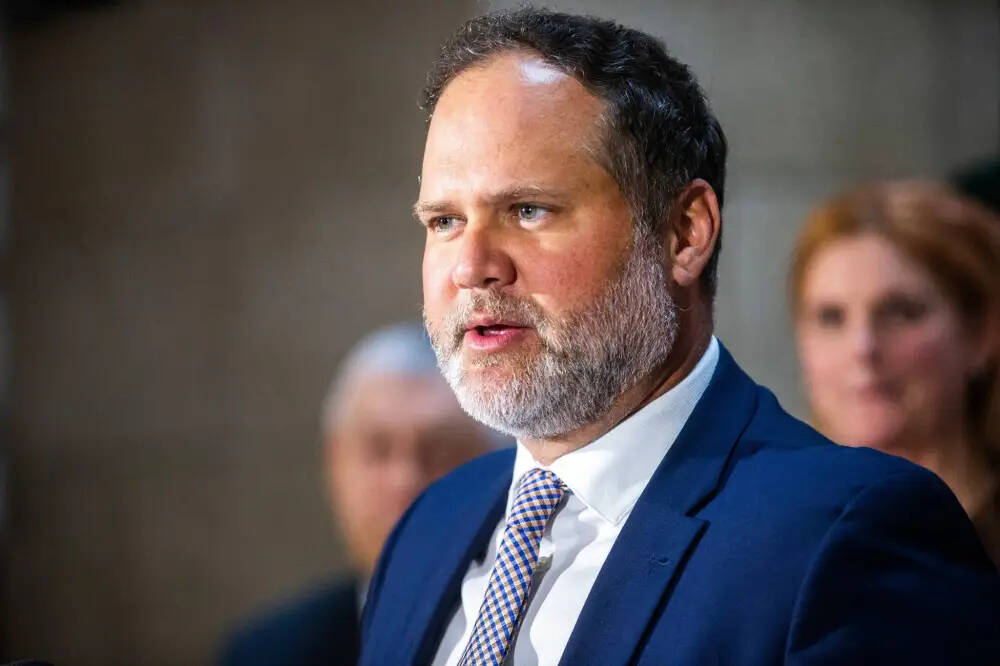
Mikaela MacKenzie / Free Press
Manitoba Justice Minister Matt Wiebe
Human rights codes must evolve to meet the realities people face every day. Manitoba’s existing code protects individuals from discrimination based on gender identity, yet it leaves an important gap when it comes to gender expression — how people outwardly present their gender to the world.
This gap is not academic. Across Manitoba, trans and gender non-conforming individuals regularly face discrimination when accessing basic services simply because of their appearance or mannerisms. Being visibly gender non-conforming can lead to precarious housing situations or even loss of employment.
By explicitly protecting gender expression, Manitoba will ensure individuals are not forced to hide who they are to access employment, housing and services. Clear legal protection matters because it empowers people to live authentically without fear of unjust treatment.
Aligning with rest of Canada
Most provinces have already amended their human rights legislation to include gender expression. Ontario, British Columbia, Alberta and Nova Scotia, among others, have recognized gender identity and expression, while related, are distinct and both need explicit protection.
Aligning Manitoba’s human rights code with other provinces promotes consistency and fairness across the country. People moving for work, school or family reasons should not have to navigate a patchwork of protections. It also signals Manitoba takes equality seriously and stands shoulder-to-shoulder with the rest of Canada in defending the rights of marginalized communities.
Falling behind the national standard could isolate Manitoba and discourage people and businesses who prioritize inclusive environments from investing in the province.
Reinforcing commitment to inclusion
When governments expand human rights protections, it sends a strong signal about the kind of community they are building. Wiebe spoke of “one Manitoba” — a vision of unity that embraces diversity and ensures everyone feels they belong.
Legal protections do more than provide remedies after harm has occurred. They shape social expectations and culture by declaring who is valued and protected. Expanding the human rights code to include gender expression reflects a vision of a province that celebrates all its citizens, regardless of how they choose to express themselves.
This kind of affirmation is particularly important at a time when visible minorities, including trans and gender-diverse people, still face social stigma and systemic barriers.
Supporting economic growth, talent attraction
Beyond the moral and social imperatives, updating Manitoba’s code makes strong economic sense. In today’s labour market, skilled workers — particularly younger generations — expect and demand inclusive environments. They want to live and work in places where diversity is not just tolerated but embraced.
A province that demonstrates a real commitment to inclusion is far more likely to attract and retain top talent. Conversely, jurisdictions that appear to lag behind on human rights protections risk losing workers to places perceived as more progressive and welcoming.
Building an inclusive environment also directly benefits organizations. Studies consistently show diverse workplaces are more innovative, resilient and successful. Employees who feel safe and respected are more engaged, more productive and more loyal. By expanding protections, Manitoba is not only doing the right thing socially — it is positioning itself for long-term economic success.
Protecting vulnerable communities
Trans and gender non-conforming individuals experience disproportionately high rates of unemployment, housing insecurity, mental health struggles and violence. These vulnerabilities are exacerbated when discrimination based on outward appearance goes unaddressed.
Explicitly adding gender expression to Manitoba’s human rights code will provide a vital layer of protection against some of the root causes of these disparities. It makes it clear no one should lose their job, be denied housing or face service discrimination because their appearance or presentation does not conform to traditional gender norms.
Human rights protections cannot eliminate prejudice overnight, but they establish a powerful foundation for greater safety, opportunity and dignity.
Reflection of modern values
Society’s understanding of gender has evolved significantly over recent decades. Modern human rights laws must reflect this evolution by recognizing gender is not solely about biological markers or legal documents — it is also about expression, lived identity and daily experience.
Adding gender expression to the Manitoba human rights code brings the law into alignment with current understandings of human dignity and respect. It recognizes people’s right to express themselves is inseparable from their right to exist free from discrimination.
Manitoba has a proud history of human rights leadership, from being home to the Canadian Museum for Human Rights to past legislative advances on issues such as marriage equality and anti-racism efforts. Expanding protections for gender expression continues that legacy.
Conclusion

The decision to expand Manitoba’s human rights code to include gender expression is more than a legal technicality. It is an affirmation of the province’s commitment to equality, inclusion, and human dignity.
It closes critical gaps in protection for vulnerable communities, brings Manitoba into alignment with national standards, strengthens the province’s appeal to talented workers and fosters a society where everyone can live authentically and safely.
By acting now, Manitoba is taking an important step toward a future where all citizens — regardless of how they dress, speak, or present themselves — are recognized, respected and protected. This move is not just about aligning with other provinces; it is about leading with courage and compassion.
The proposed bill deserves strong support — because a Manitoba that protects and uplifts all its people is a stronger Manitoba for everyone.
Tory McNally, CPHR, BSc., vice-president, professional services, is a human resource consultant, radio personality and problem solver. She can be reached at tory@legacybowes.com
Tory McNally, CPHR, BSc., vice-president, professional services at TIPI Legacy HR+ (formerly Legacy Bowes), is a human resource consultant, strategic thinker and problem solver. Read more about Tory.
Our newsroom depends on a growing audience of readers to power our journalism. If you are not a paid reader, please consider becoming a subscriber.
Our newsroom depends on its audience of readers to power our journalism. Thank you for your support.
Tory McNally, CPHR, BSc., vice-president, professional services at TIPI Legacy HR+ (formerly Legacy Bowes), is a human resource consultant, strategic thinker and problem solver. Read more about Tory.
Our newsroom depends on a growing audience of readers to power our journalism. If you are not a paid reader, please consider becoming a subscriber.
Our newsroom depends on its audience of readers to power our journalism. Thank you for your support.
Advertisement Advertise With Us
Advertisement Advertise With Us