

AP and others challenge an Indiana law barring reporters from witnessing executions
Advertisement
Read this article for free:
or
Already have an account? Log in here »
To continue reading, please subscribe:
Monthly Digital Subscription
$1 per week for 24 weeks*
- Enjoy unlimited reading on winnipegfreepress.com
- Read the E-Edition, our digital replica newspaper
- Access News Break, our award-winning app
- Play interactive puzzles
*Billed as $4.00 plus GST every four weeks. After 24 weeks, price increases to the regular rate of $19.95 plus GST every four weeks. Offer available to new and qualified returning subscribers only. Cancel any time.
Monthly Digital Subscription
$4.99/week*
- Enjoy unlimited reading on winnipegfreepress.com
- Read the E-Edition, our digital replica newspaper
- Access News Break, our award-winning app
- Play interactive puzzles
*Billed as $19.95 plus GST every four weeks. Cancel any time.
To continue reading, please subscribe:
Add Free Press access to your Brandon Sun subscription for only an additional
$1 for the first 4 weeks*
*Your next subscription payment will increase by $1.00 and you will be charged $16.99 plus GST for four weeks. After four weeks, your payment will increase to $23.99 plus GST every four weeks.
Read unlimited articles for free today:
or
Already have an account? Log in here »
Hey there, time traveller!
This article was published 06/05/2025 (328 days ago), so information in it may no longer be current.
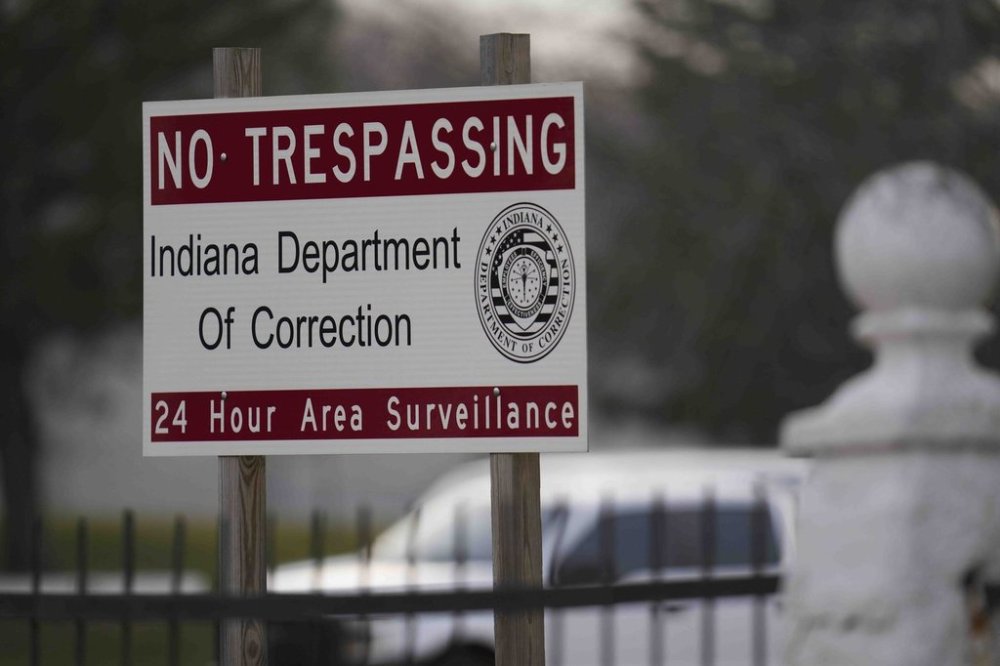
The Associated Press and four other media companies argue in a federal lawsuit that Indiana’s ban on reporters attending state-sanctioned executions violates the public’s constitutional right to an independent and unsanitized description of a sensitive and contentious government action.
The complaint, filed Monday in U.S. District Court in Indianapolis, comes two weeks before the scheduled execution of Benjamin Ritchie, who was condemned for the September 2000 fatal shooting of Beech Grove Police Officer Bill Toney during a foot chase.
It maintains that the law omitting news media from the state’s list of permitted witnesses improperly prevents the taxpayers from receiving an unbiased review of the death penalty’s implementation.
“I don’t think it’s about wanting to witness this act — I’m sure it’s not a pleasant experience,” said Kristopher Cundiff of the Reporters Committee for Freedom of the Press, which is representing the plaintiffs. “It’s about having a representative standing in the shoes of the public to provide an account of what happened that comes from a neutral party.”
Named as defendants are Ron Neal, superintendent of Indiana State Prison in Michigan City, which houses the death chamber, and Lloyd Arnold, commissioner of the Indiana Department of Correction.
Department spokesperson Annie Goeller said she cannot comment on pending lawsuits.
Among 27 states with death penalty laws, Indiana is one of two that bar media witnesses. The other, Wyoming, has conducted just one execution in the last half-century.
The AP aims to attend every execution in the U.S. to provide an accurate and unconstrained description for taxpayers. The news organization has repeatedly been on hand to report botched attempts.
In December, Joseph Corcoran became the first person put to death in Indiana in 15 years because of a nationwide scarcity of lethal-injection drugs. Ritchie is scheduled for the death chamber on May 20. Five more await execution in Indiana, according to the lawsuit.
The media groups contend that the Indiana law violates the First Amendment’s guarantee that the public has “a qualified right of access to certain government proceedings.”
It also notes that the law, which allows attendance by as many as five friends or relatives chosen by the condemned and up to eight members of the victim’s family, improperly treats them more favorably than the media.
A hearing has not been scheduled.

Joining the AP in pressing the lawsuit are Gannett Co., the nation’s largest local newspaper operation with Indiana outlets in Indianapolis, Lafayette, Bloomington and South Bend; and TEGNA Inc., which operates WTHR-13 in Indianapolis.
The other plaintiffs are Circle Broadcasting, whose WISH-TV is a statewide network, and States Newsroom, which operates the nonprofit Indiana Capital Chronicle.
It was the Capital Chronicle that ensured media representation at the December execution, as Corcoran chose one of its reporters as a witness.
___
This story was first published on May 6, 2025. It was updated on May 9, 2025, to correct the name of the lead plaintiffs’ attorney. He is Kristopher Cundiff, not Kristopher Cundriff.