

China rolls out more stimulus and agrees to trade talks with the US as tariffs hit economy
Advertisement
Read this article for free:
or
Already have an account? Log in here »
To continue reading, please subscribe:
Monthly Digital Subscription
$1 per week for 24 weeks*
- Enjoy unlimited reading on winnipegfreepress.com
- Read the E-Edition, our digital replica newspaper
- Access News Break, our award-winning app
- Play interactive puzzles
*Billed as $4.00 plus GST every four weeks. After 24 weeks, price increases to the regular rate of $19.95 plus GST every four weeks. Offer available to new and qualified returning subscribers only. Cancel any time.
Monthly Digital Subscription
$4.99/week*
- Enjoy unlimited reading on winnipegfreepress.com
- Read the E-Edition, our digital replica newspaper
- Access News Break, our award-winning app
- Play interactive puzzles
*Billed as $19.95 plus GST every four weeks. Cancel any time.
To continue reading, please subscribe:
Add Free Press access to your Brandon Sun subscription for only an additional
$1 for the first 4 weeks*
*Your next subscription payment will increase by $1.00 and you will be charged $16.99 plus GST for four weeks. After four weeks, your payment will increase to $23.99 plus GST every four weeks.
Read unlimited articles for free today:
or
Already have an account? Log in here »
Hey there, time traveller!
This article was published 06/05/2025 (324 days ago), so information in it may no longer be current.
BEIJING (AP) — China announced a barrage of measures meant to counter the blow to its economy from U.S. President Donald Trump ’s trade war, as the two sides prepared for talks later this week.
Beijing’s central bank governor and other top financial officials outlined plans Wednesday to cut interest rates and reduce bank reserve requirements to help free up more funding for lending. They also said the government would increase the amount of money available for factory upgrades and other innovation and for elder care and other service businesses.
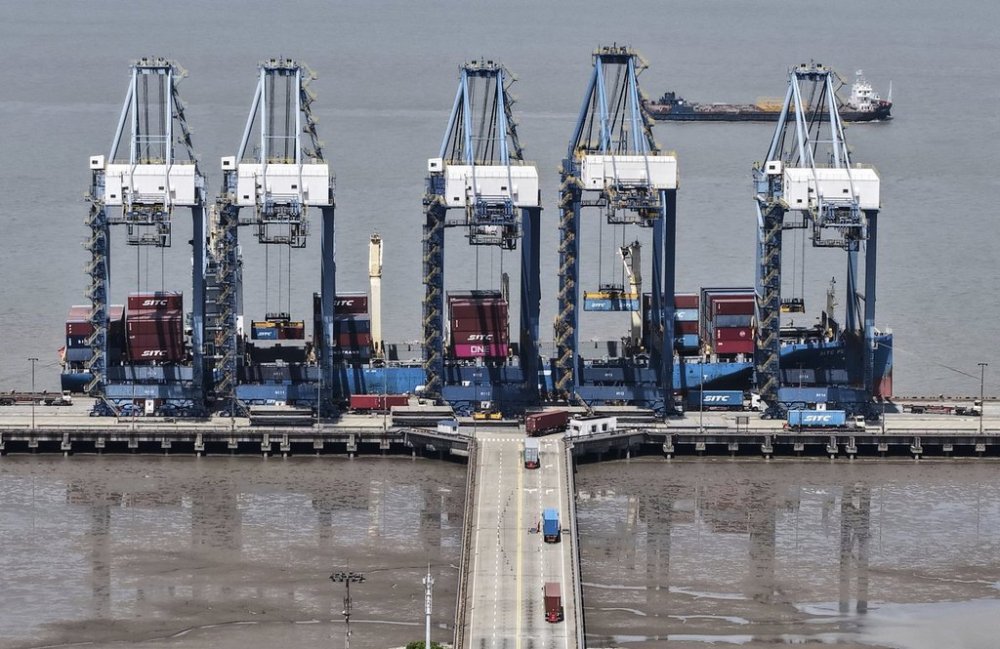
Trump’s tariffs, set as high as 145% on imports from China, have begun to take a toll on its export-dependent economy at a time when it’s already under pressure from a prolonged downturn in the property sector. China has retaliated with tariff hikes of up to 125% on U.S. goods and stopped buying most American farm products.
Late Tuesday, China and the U.S. announced plans for talks between Treasury Secretary Scott Bessent, U.S. Trade Representative Jamieson Greer and Chinese Vice Premier He Lifeng later this week in Geneva, Switzerland.
The agreement to talk comes at a time when both sides have remained adamant, at least in public, about not compromising on the tariffs.
“The U.S. has recently expressed a desire to negotiate with China. This meeting is being held at the request of the U.S. side,” Foreign Ministry spokesperson Lin Jian told reporters in Beijing.
“Any form of pressure or coercion against China will not work,” Lin said. “China will firmly safeguard its legitimate interests and uphold international fairness and justice. Please stay tuned for the specific details of the dialogue.”
By easing credit, China’s leaders are providing a “policy buffer” for exporters as Beijing prepares for the talks, economists at ANZ Research said in a report.
“The authorities are prepared to have a protracted negotiation and hold a strong stance against protectionism,” the report said.
Both the U.S. and Chinese economies have been showing signs of strain, after a spurt of activity as companies and consumers rushed to beat the tariff hikes.
The meetings in Switzerland could offer an opportunity for both sides to dial down the current prohibitively high level of tariffs, which Bessent has described as unsustainable, while they work on a deal. But the process is likely to take time.
“A durable resolution remains elusive, in our view, given the wide scope of issues in the bilateral relationship,” Morgan Stanley said in a commentary.
The U.S. economy contracted by 0.3% in January-March. The Chinese economy grew at a 5.4% annual pace in the first quarter of the year, as factories ramped up production to fill a spike in orders. But economists question the validity of the statistics, and more recent reports show a deterioration in new export orders and business sentiment.
Among the support measures announced by China on Wednesday:
People’s Bank of China Gov. Pan Gongsheng said China’s reverse repo rate, the rate on commercial banks’ deposits with the central bank, was reduced to 1.4% from 1.5%.
The PBOC’s lending rate to commercial banks was cut by 0.25 percentage points to 1.5%.

The required reserve ratio, or portion of funds banks must hold in their reserves, was cut by 0.5%. Pan said that would free up 1 trillion yuan ($137.6 billion) in extra cash.
The central bank also reduced interest rates on five-year housing loans.
Financial markets have been reeling as the world’s two largest economies remained embroiled in the trade standoff.
The news of the extra boost for the economy and markets, plus the plans for China-U.S. trade talks, initially pushed share prices higher in Hong Kong and Shanghai early Wednesday. Shanghai’s benchmark Composite index built on those gains, but the rally faded in Hong Kong.
A key factor dragging on the economy is a lack of consumer and business demand, and easing lending conditions will not necessarily change that, Julian Evans-Pritchard of Capital Economics said in a report, adding that “today’s moves are no substitute for an expansion in fiscal support.”