

China’s exports to US sink, offset by trade with other economies, as US tariffs hit global trade
Advertisement
Read this article for free:
or
Already have an account? Log in here »
To continue reading, please subscribe:
Digital Subscription
One year of digital access for only $1.44 a week*
- Enjoy unlimited reading on winnipegfreepress.com
- Read the E-Edition, our digital replica newspaper
- Access News Break, our award-winning app
- Play interactive puzzles
*Billed as $5.77 plus GST every four weeks. After 52 weeks, price increases to the regular rate of $19.95 plus GST every four weeks. Offer available to new and qualified returning subscribers only. Cancel any time.
To continue reading, please subscribe:
Add Free Press access to your Brandon Sun subscription for only an additional
$1 for the first 4 weeks*
- Enjoy unlimited reading on winnipegfreepress.com
- Read the E-Edition, our digital replica newspaper
- Access News Break, our award-winning app
- Play interactive puzzles
*Your next Brandon Sun subscription payment will increase by $1.00 and you will be charged $17.95 plus GST for four weeks. After four weeks, your payment will increase to $24.95 plus GST every four weeks.
Read unlimited articles for free today:
or
Already have an account? Log in here »
Hey there, time traveller!
This article was published 08/05/2025 (394 days ago), so information in it may no longer be current.
China’s exports to the United States tumbled in April while its trade with other economies surged, suggesting that President Donald Trump’s tariffs offensive is hastening a shakeup in global supply chains.
Total exports from China rose 8.1% last month from a year earlier, much faster than the 2% pace most economists had been expecting. That was much slower than the 12.4% year-on-year increase in March. Imports fell 0.2% in April from the year before.
Shipments to the U.S. sank 21% in dollar terms as Trump’s tariffs on most Chinese exports rose to as high as 145%. With Chinese tariffs on U.S. goods at 125%, business between the two biggest economies has grown increasingly uncertain.
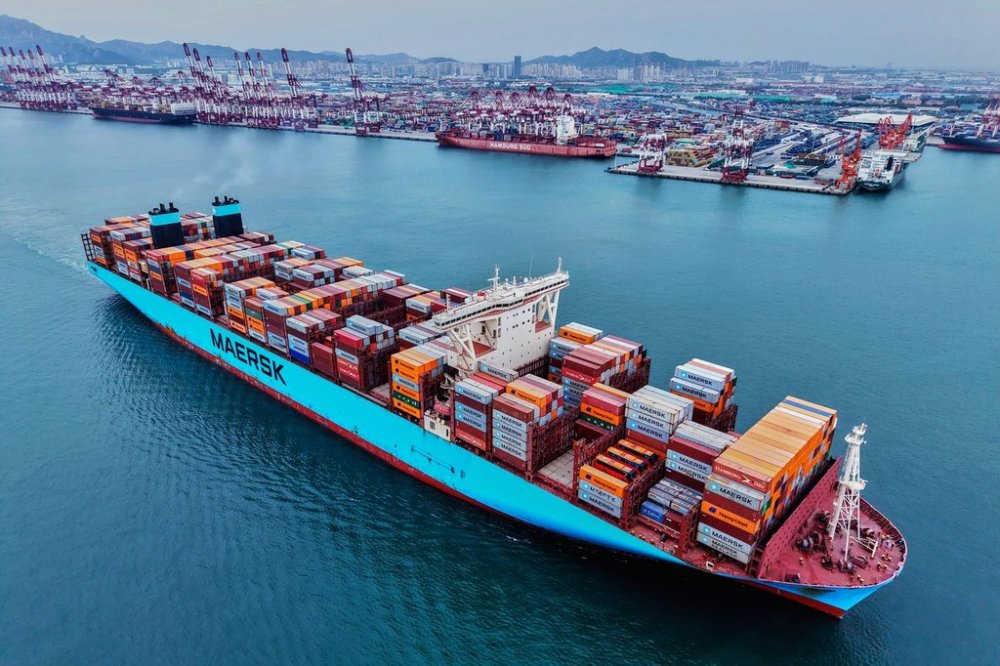
China’s imports from the U.S. dropped more than 13% from a year earlier, while its politically sensitive trade surplus with the United States was nearly $20.5 billion in April, down from about $27.2 billion a year earlier.
In the first four months of the year, China’s exports to the United States fell 2.5% from a year earlier, while imports from the U.S. fell 4.7%.
A potential break in the tariffs stalemate could come as soon as this weekend. Treasury Secretary Scott Bessent and other senior trade officials are due to meet with Chinese officials in Geneva on Saturday. But Beijing and Washington are at odds over a raft of issues, including colliding strategic interests that will may impede progress in the talks.
Some of the punitive tariffs, including Beijing’s retaliatory 125% tariffs on U.S. exports, could be rolled back, but a full reversal is unlikely, Zichun Huang of Capital Economics said in a report.
“This means China’s exports to the U.S. are set for further declines over the coming months, not all of which will be offset by increased trade with other countries. We still expect export growth to turn negative later this year,” Huang said.
Whatever the outcome of those discussions, the rapid increase in Chinese exports to other countries reflects a restructuring that began years ago but has gained momentum as Trump has raised barriers to exporting to the U.S.
Global manufacturers have been looking for alternatives to a near total reliance on manufacturing in China after disruptions from the COVID-19 pandemic highlighted the need for more diverse options.
The need for more versatile supply chains grew more apparent as Trump hiked tariffs on Chinese exports during his first term in office. Most of those remained during former President Joe Biden’s term.
Exports to the United States accounted for about a tenth of China’s total exports in April and the U.S. is still China’s largest single-country market. But the European Union and Southeast Asia are larger regional export markets.
Trade with a broader grouping, the 15-nation Regional Comprehensive Economic Partnership (RCEP), which does not include the United States, is still bigger. And exports to countries participating in China’s “Belt and Road Initiative,” a vast network of Beijing-supported infrastructure projects, are bigger still.

In the first four months of the year, exports to the 10-nation Association of Southeast Asian Nations rose 11.5% from a year earlier, and those to Latin America also climbed 11.5%. Shipments to India jumped nearly 16% by value, and exports to Africa surged 15%.
Some of the fastest growth was in Asia, reflecting moves by Chinese and other manufacturers to diversify their supply chains outside of the Chinese mainland. Most notable were exports to Vietnam, which jumped 18% year-on-year. Exports to Thailand were up 20%.
Back in China, preliminary data have shown a sharp decline in shipping and other trade activity. Earlier this week, Beijing announced a barrage of measures meant to counter the impact of the trade war on its economy, which was already struggling to regain momentum after the pandemic and a lengthy downturn in its housing sector.
___
Associated Press researcher Yu Bing in Beijing contributed.