

Georgia becomes second US state to shield maker of Roundup weed killer from some cancer claims
Advertisement
Read this article for free:
or
Already have an account? Log in here »
To continue reading, please subscribe:

Digital Subscription
One year of digital access for only $205*
- Enjoy unlimited reading on winnipegfreepress.com
- Read the E-Edition, our digital replica newspaper
- Access News Break, our award-winning app
- Play interactive puzzles
*First annual payment billed as $205.00 + GST for one year. This annual subscription will automatically renew at $233.00 + GST every 52 weeks (10% off the regular annual price of $259.35). Offer available to new and qualified returning subscribers only. Cancel any time.
To continue reading, please subscribe:
Add Free Press access to your Brandon Sun subscription for only an additional
$1 for the first 4 weeks*
- Enjoy unlimited reading on winnipegfreepress.com
- Read the E-Edition, our digital replica newspaper
- Access News Break, our award-winning app
- Play interactive puzzles
*Your next Brandon Sun subscription payment will increase by $1.00 and you will be charged $17.95 plus GST for four weeks. After four weeks, your payment will increase to $24.95 plus GST every four weeks.
Read unlimited articles for free today:
or
Already have an account? Log in here »
Hey there, time traveller!
This article was published 12/05/2025 (491 days ago), so information in it may no longer be current.
In a victory for global agrochemical maker Bayer, Georgia has become the second state to shield pesticide manufacturers from some lawsuits claiming that they failed to warn customers of potential dangers.
The legislation signed Friday by Georgia Gov. Brian Kemp is designed to protect Bayer from lawsuits claiming that it failed to tell customers that its popular weed killer Roundup could cause cancer. It’s written broadly enough to provide legal protection in Georgia to any pesticide manufacturer that follows federal labeling requirements.
North Dakota’s governor signed the first such law last month, and similar measures have been considered this year in at least nine other states.
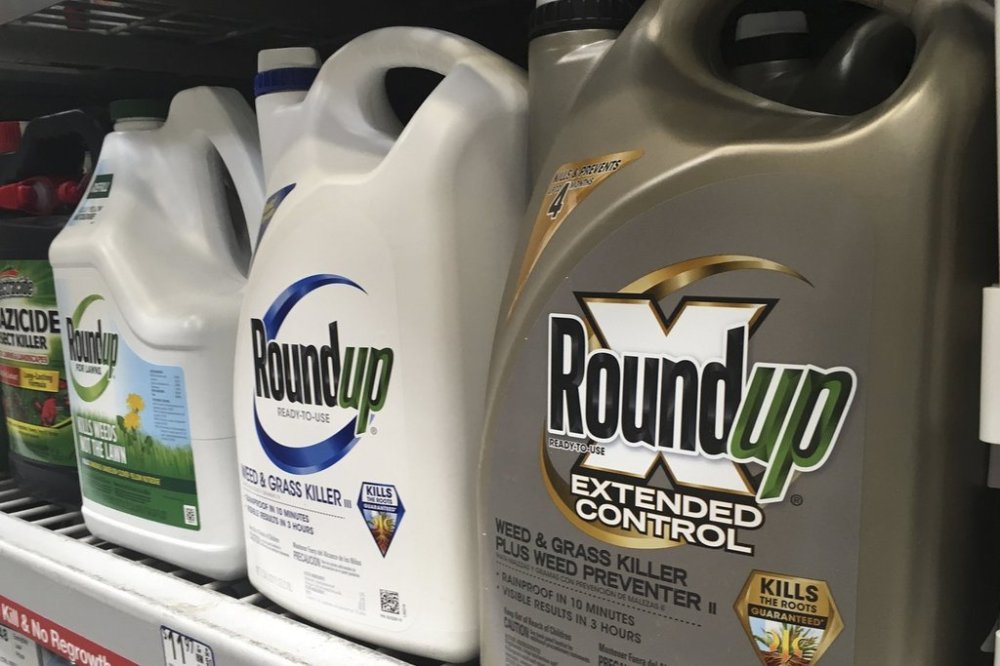
Bayer, based in Germany, acquired Roundup with the 2018 purchase of St. Louis-based Monsanto. But it quickly was hit with an onslaught of lawsuits alleging that Roundup’s key ingredient, glyphosate, causes non-Hodgkin lymphoma. More than 67,000 of a total 181,000 claims involving Roundup remain outstanding, but a Bayer spokesperson said Monday that he didn’t have specifics about how many of those are in Georgia.
Though some studies associate glyphosate with cancer, the U.S. Environmental Protection Agency has said it is not likely to be carcinogenic to humans when used as directed.
Bayer insists glyphosate is safe. But it has stopped using the ingredient in its residential version of Roundup and has set aside $16 billion to settle cases. It continues to use glyphosate in its agricultural version of Roundup but has warned that it might have to stop doing so if the legal costs keep mounting.
The new Georgia law is to take effect Jan. 1. That means it won’t effect existing cases, such as a March decision by a Georgia jury to award nearly $2.1 billion in damages to a man who alleged Roundup caused his cancer.
Kemp decided to sign the legislation after hearing from farmers and others in the agricultural community, spokesperson Garrison Douglas said Monday.
Bayer has teamed up with a coalition of agricultural industry groups to mount a multiprong campaign. In addition to pursuing legislation in states and Congress, it also has asked the U.S. Supreme Court to intervene and has run ads on billboards, newspapers, TV and radio stations and internet sites touting the importance of glyphosate in agriculture.

Glyphosate has for decades been used an efficient way to control weeds with less tilling, which helps prevent soil erosion. For some crops, such as corn, soybeans and cotton, Roundup is designed to work with genetically modified seeds that resist glyphosate’s deadly effect.
Without glyphosate, weeds could become harder to control, crop yields could decline and groceries could become more costly, Bayer said.
The new law “demonstrates that Georgia stands with its farmers, who work tirelessly to produce safe and affordable food,” said Brian Naber, president of Bayer’s crop sciences in North America, Australia and New Zealand.
___
Associated Press writer Jeff Amy contributed to this report.