

Japan’s economy shrinks as Trump’s trade war hits exports and shakes confidence
Advertisement
Read this article for free:
or
Already have an account? Log in here »
To continue reading, please subscribe:
Digital Subscription
One year of digital access for only $1.44 a week*
- Enjoy unlimited reading on winnipegfreepress.com
- Read the E-Edition, our digital replica newspaper
- Access News Break, our award-winning app
- Play interactive puzzles
*Billed as $5.77 plus GST every four weeks. After 52 weeks, price increases to the regular rate of $19.95 plus GST every four weeks. Offer available to new and qualified returning subscribers only. Cancel any time.
To continue reading, please subscribe:
Add Free Press access to your Brandon Sun subscription for only an additional
$1 for the first 4 weeks*
- Enjoy unlimited reading on winnipegfreepress.com
- Read the E-Edition, our digital replica newspaper
- Access News Break, our award-winning app
- Play interactive puzzles
*Your next Brandon Sun subscription payment will increase by $1.00 and you will be charged $17.95 plus GST for four weeks. After four weeks, your payment will increase to $24.95 plus GST every four weeks.
Read unlimited articles for free today:
or
Already have an account? Log in here »
Hey there, time traveller!
This article was published 15/05/2025 (520 days ago), so information in it may no longer be current.
TOKYO (AP) — The Japanese economy contracted at an annual rate of 0.7% in the first quarter, according to government data released Friday, as U.S. President Donald Trump’s trade war hurt exports and dented consumer confidence.
Japan’s real gross domestic product, or the measure of a nation’s goods and services, shrank at a greater-than-expected 0.2% in January-March compared to the previous quarter in the first contraction in a year, the Cabinet Office’s seasonally adjusted preliminary data showed.
Exports declined at an annual rate of 2.3%. Consumer spending remained flat, while capital investment grew 5.8%.
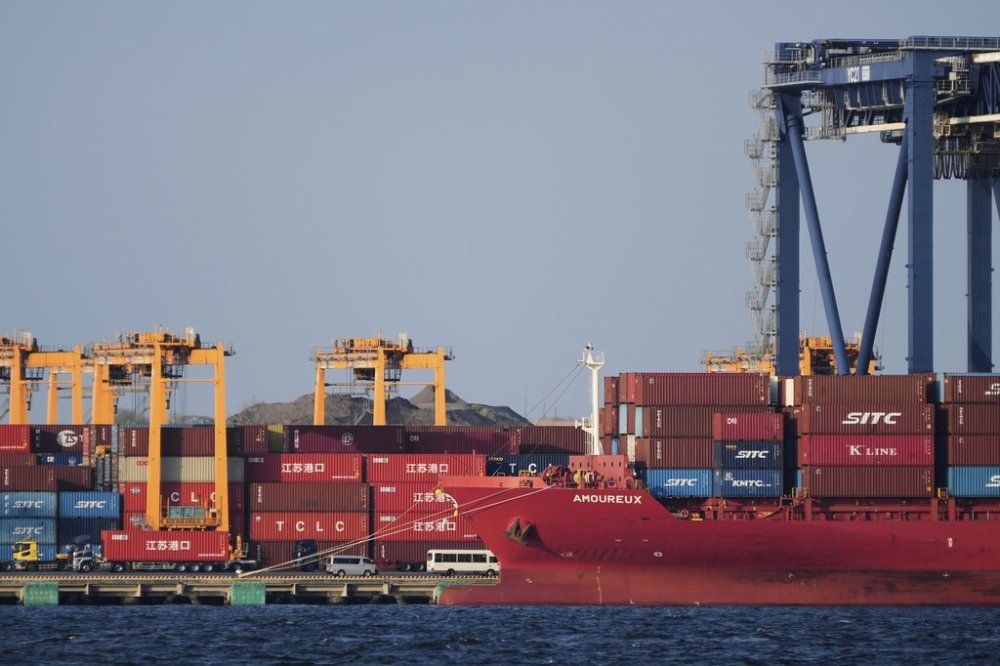
Trump’s tariffs are likely to hurt Japan’s giant exporters, especially the automakers, not only for products shipped from Japan, but from other nations, like Mexico and Canada. Officials acknowledge planning a response is a challenge because Trump keeps changing his mind.
“Regional automakers face increased operating costs and potential revenue losses because their U.S. sales depend on diverse production bases and supply chains,” S&P Global Ratings said in a report.
“Even companies with minimal sales in the U.S. could face indirect but meaningful impacts as tariffs affect global economy and consumer demand,” it said.
The Japanese economy has been struggling for years, plagued by weak demand as the population ages and declines, as more people stay single and have fewer children.
The Bank of Japan, which kept interest rates at zero or minus levels for years, has been gradually raising the benchmark rate, noting wages are holding up and prices are gradually rising.
The latest findings, which seem to highlight the fragility of the economy, make it more likely the central bank might hold off on further rate hikes.

Some analysts are advocating lowering the 10% consumption tax, which is similar to the sales tax in other nations, to help alleviate people’s hardships.
But so far Prime Minister Shigeru Ishiba hasn’t said he supports the idea. Japan’s national finances are under severe strain due to ballooning social welfare costs.
The economy grew an annual rate of 2.4% in the last quarter of 2024.
___
Yuri Kageyama is on Threads: https://www.threads.com/@yurikageyama