

Australian central bank reduces benchmark interest rate to 3.85% in second cut this year
Advertisement
Read this article for free:
or
Already have an account? Log in here »
To continue reading, please subscribe:

Digital Subscription
One year of digital access for only $205*
- Enjoy unlimited reading on winnipegfreepress.com
- Read the E-Edition, our digital replica newspaper
- Access News Break, our award-winning app
- Play interactive puzzles
*First annual payment billed as $205.00 + GST for one year. This annual subscription will automatically renew at $233.00 + GST every 52 weeks (10% off the regular annual price of $259.35). Offer available to new and qualified returning subscribers only. Cancel any time.
To continue reading, please subscribe:
Add Free Press access to your Brandon Sun subscription for only an additional
$1 for the first 4 weeks*
- Enjoy unlimited reading on winnipegfreepress.com
- Read the E-Edition, our digital replica newspaper
- Access News Break, our award-winning app
- Play interactive puzzles
*Your next Brandon Sun subscription payment will increase by $1.00 and you will be charged $17.95 plus GST for four weeks. After four weeks, your payment will increase to $24.95 plus GST every four weeks.
Read unlimited articles for free today:
or
Already have an account? Log in here »
Hey there, time traveller!
This article was published 19/05/2025 (475 days ago), so information in it may no longer be current.
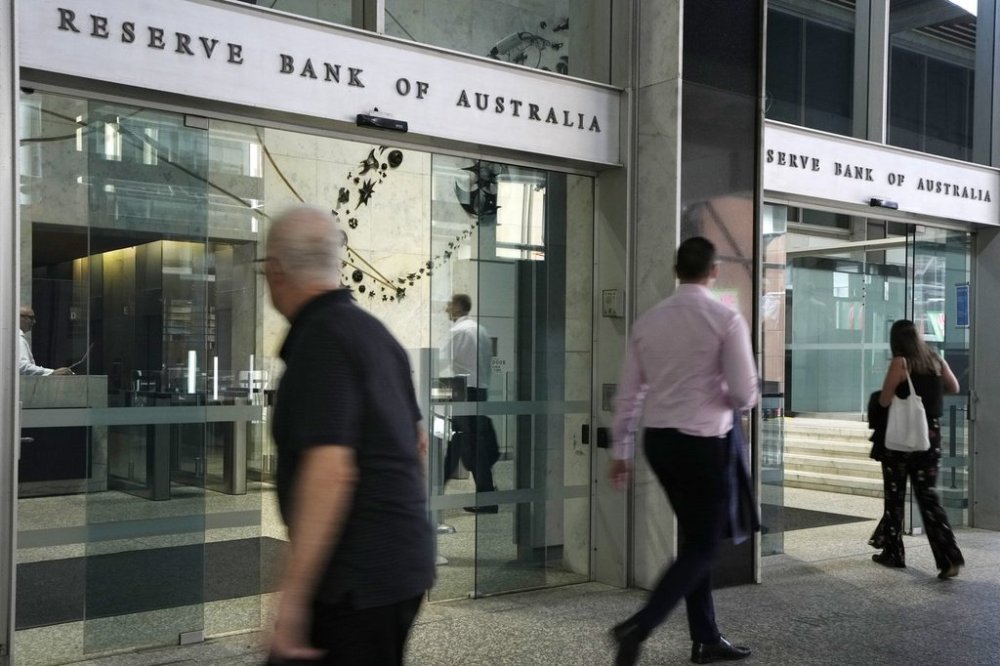
MELBOURNE, Australia (AP) — Australia’s central bank on Tuesday reduced its benchmark interest rate by a quarter percentage for a second time this year, to 3.85% after inflation fell within a target range.
The Reserve Bank of Australia reduced its cash rate from 4.1%. The reduction from 4.35% at its February board meeting was Australia’s first rate cut since October 2020.
The rate cut was anticipated, although expectations had declined slightly after the United States and China agreed last week to cut back recent tariff hikes for 90 days, reviving stalled trade between the world two biggest economies.
Bank Governor Michele Bullock said inflation had fallen to her board’s target band as “internal developments are expected to weigh on the economy.”
World trade policy was changing rapidly, subjecting central forecasts to “considerable uncertainty,” she said.
“Uncertainty in the world economy has increased over the past three months and volatility in financial markets rose sharply for a time. While recent announcements on tariffs have resulted in a rebound in financial market prices, there is still considerable uncertainty about the final scope of the tariffs and policy responses in other countries,” Bullock said in a statement.
“Geopolitical uncertainties also remain pronounced. These developments are expected to have an adverse effect on global economic activity, particularly if households and firms delay expenditure pending greater clarity on the outlook,” she added.

The bank adjusts interest rates to steer inflation toward a target band of between 2% and 3%.
During the March quarter, annual inflation was 2.4%. The trimmed mean –- a gauge of underlying inflation which is the bank’s preferred measure –- was 2.9%.
Inflation was also steady at 2.4% in the previous three months. But the underlying figure, which strips out the smallest and largest values, was 3.2% in the last quarter of 2024.
Inflation has gradually declined after it peaked at 7.8% in the last quarter of 2022.
Unemployment inched up to 4.1% in January-March from 4.0% in the December quarter but remains relatively low. Economists fear a shortage of workers could fuel further inflation.