

Equatorial Guinea prevails in dispute with neighboring Gabon over oil-rich islands
Advertisement
Read this article for free:
or
Already have an account? Log in here »
To continue reading, please subscribe:

Digital Subscription
One year of digital access for only $205*
- Enjoy unlimited reading on winnipegfreepress.com
- Read the E-Edition, our digital replica newspaper
- Access News Break, our award-winning app
- Play interactive puzzles
*First annual payment billed as $205.00 + GST for one year. This annual subscription will automatically renew at $233.00 + GST every 52 weeks (10% off the regular annual price of $259.35). Offer available to new and qualified returning subscribers only. Cancel any time.
To continue reading, please subscribe:
Add Free Press access to your Brandon Sun subscription for only an additional
$1 for the first 4 weeks*
- Enjoy unlimited reading on winnipegfreepress.com
- Read the E-Edition, our digital replica newspaper
- Access News Break, our award-winning app
- Play interactive puzzles
*Your next Brandon Sun subscription payment will increase by $1.00 and you will be charged $17.95 plus GST for four weeks. After four weeks, your payment will increase to $24.95 plus GST every four weeks.
Read unlimited articles for free today:
or
Already have an account? Log in here »
Hey there, time traveller!
This article was published 19/05/2025 (501 days ago), so information in it may no longer be current.
THE HAGUE, Netherlands (AP) — Judges at the top U.N. court sided with the West African country of Equatorial Guinea in a fight with neighboring Gabon over which treaty settled the ownership of three largely uninhabited oil-rich islands.
The decision effectively hands the islands to Equatorial Guinea.
The countries brought their dispute to The International Court of Justice in 2021, asking judges to determine what legal agreement settles the possession of the oil-rich islands.
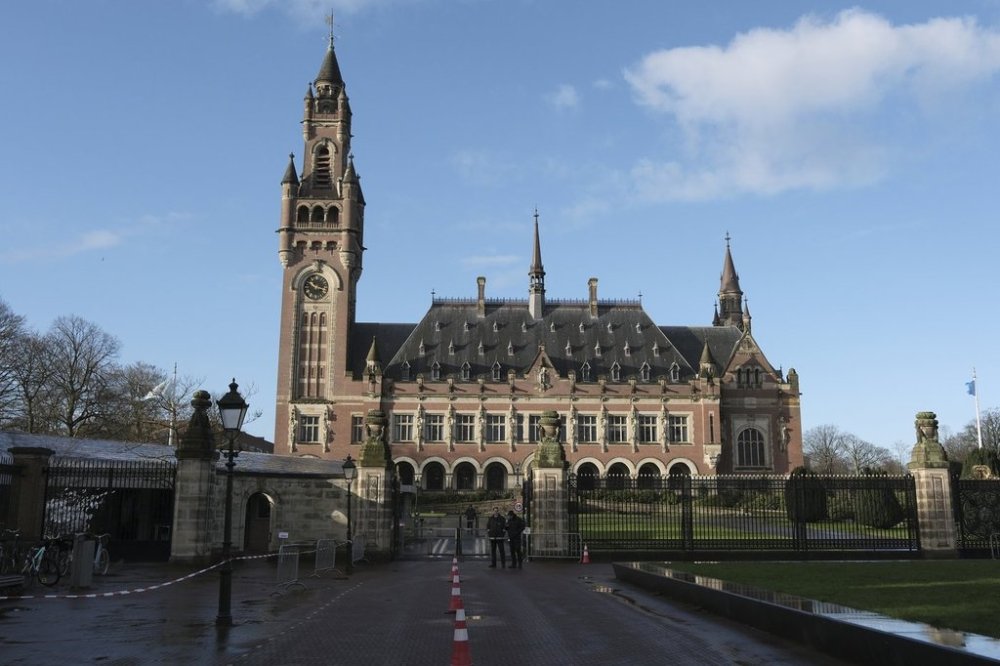
The 15-judge panel found a 1900 treaty between Spain and France, which divided up colonial holdings, to be the ultimate authority.
A later agreement, known as the 1974 Bata Convention, which gives the islands to Gabon, was dismissed as “not a treaty having the force of law,” Judge Julia Sebutinde said.
The document was contested by Equatorial Guinea and Gabon did not produce an original copy for the court.
Equatorial Guinea had control of the territory until 1972, when Gabon took over the largest island, Mbanie, in a military skirmish. When oil was discovered in coastal waters, the dispute reignited.

The economies of both countries are highly dependent on oil, but production from existing areas has been in decline in recent years.
The countries asked the court to settle the ownership question after repeatedly failing in efforts to find a diplomatic solution.