

Germany’s economy will stagnate this year as tariffs cast a shadow, advisers say
Advertisement
Read this article for free:
or
Already have an account? Log in here »
To continue reading, please subscribe:
Monthly Digital Subscription
$1 per week for 24 weeks*
- Enjoy unlimited reading on winnipegfreepress.com
- Read the E-Edition, our digital replica newspaper
- Access News Break, our award-winning app
- Play interactive puzzles
*Billed as $4.00 plus GST every four weeks. After 24 weeks, price increases to the regular rate of $19.95 plus GST every four weeks. Offer available to new and qualified returning subscribers only. Cancel any time.
Monthly Digital Subscription
$4.99/week*
- Enjoy unlimited reading on winnipegfreepress.com
- Read the E-Edition, our digital replica newspaper
- Access News Break, our award-winning app
- Play interactive puzzles
*Billed as $19.95 plus GST every four weeks. Cancel any time.
To continue reading, please subscribe:
Add Free Press access to your Brandon Sun subscription for only an additional
$1 for the first 4 weeks*
*Your next subscription payment will increase by $1.00 and you will be charged $16.99 plus GST for four weeks. After four weeks, your payment will increase to $23.99 plus GST every four weeks.
Read unlimited articles for free today:
or
Already have an account? Log in here »
Hey there, time traveller!
This article was published 21/05/2025 (309 days ago), so information in it may no longer be current.
BERLIN (AP) — Germany’s economy will stagnate this year as the country faces headwinds from U.S. President Donald Trump’s tariffs and trade threats, the government’s panel of independent economic advisers said Wednesday.
Germany has Europe’s biggest economy, but hasn’t seen significant economic growth in five years and the gross domestic product shrank in each of the last two years.
The advisory panel, in its first forecast since new Chancellor Friedrich Merz’s government took office earlier this month, predicted the economy will stagnate this year and grow by 1% in 2026. Its previous forecast, in November, was for 0.4% growth this year.
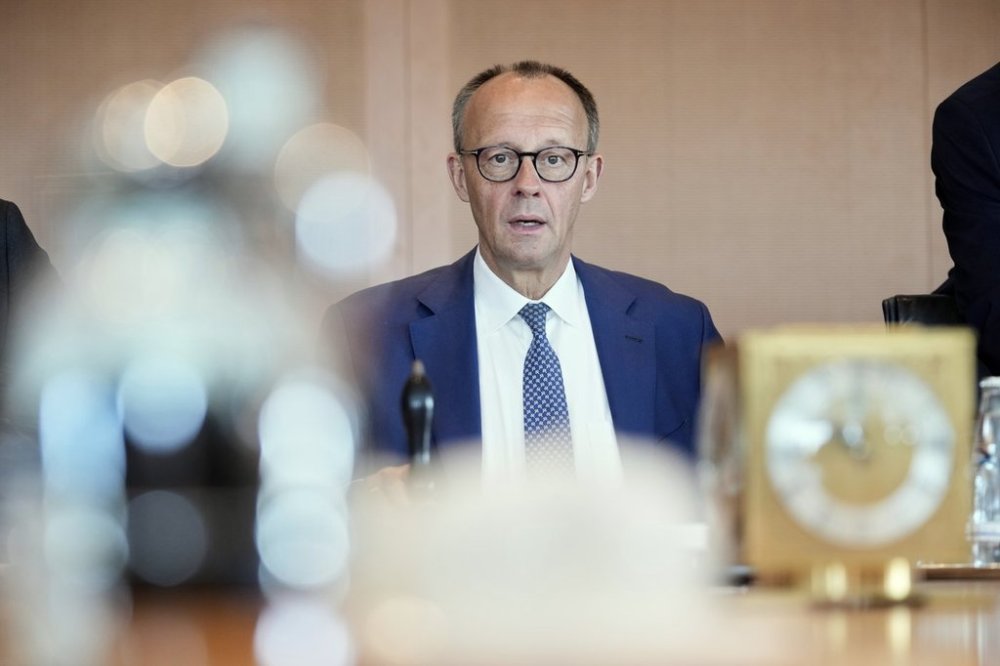
The new outlook is in line with the forecast made a month ago by Germany’s last government.
Merz, who took office on May 6, has pledged to roll back bureaucracy, advance digitization, provide tax breaks for companies and promote more European trade agreements.
“Trump’s tariff policy is increasing uncertainty and endangering economic growth worldwide,” said Monika Schnitzer, the head of the panel. But she said that a huge investment package put together by Merz’s coalition “offers opportunities for a modernization of infrastructure in Germany and a return to a higher path of growth,” meaning a better outlook for next year.

Germany for years expanded exports and dominated world trade in engineered products such as industrial machinery and luxury cars. But it has suffered from increasing competition from Chinese companies, along with many other factors, and Trump’s tariffs have added a further risk to German exports.
Last year, the United States was Germany’s biggest single trading partner for the first time since 2015, displacing China from the top spot as exports to the Asian power declined.