

South Korea’s central bank cuts borrowing costs to nurse the sluggish economy
Advertisement
Read this article for free:
or
Already have an account? Log in here »
To continue reading, please subscribe:
Monthly Digital Subscription
$0 for the first 4 weeks*
- Enjoy unlimited reading on winnipegfreepress.com
- Read the E-Edition, our digital replica newspaper
- Access News Break, our award-winning app
- Play interactive puzzles
*No charge for 4 weeks then price increases to the regular rate of $19.95 plus GST every four weeks. Offer available to new and qualified returning subscribers only. Cancel any time.
Monthly Digital Subscription
$4.99/week*
- Enjoy unlimited reading on winnipegfreepress.com
- Read the E-Edition, our digital replica newspaper
- Access News Break, our award-winning app
- Play interactive puzzles
*Billed as $19.95 plus GST every four weeks. Cancel any time.
To continue reading, please subscribe:
Add Free Press access to your Brandon Sun subscription for only an additional
$1 for the first 4 weeks*
*Your next subscription payment will increase by $1.00 and you will be charged $16.99 plus GST for four weeks. After four weeks, your payment will increase to $23.99 plus GST every four weeks.
Read unlimited articles for free today:
or
Already have an account? Log in here »
Hey there, time traveller!
This article was published 28/05/2025 (224 days ago), so information in it may no longer be current.
SEOUL, South Korea (AP) — South Korea’s central bank cut its key interest rate and sharply lowered its growth outlook for the country’s economy in 2025, as it moved Thursday to counter U.S. President Donald Trump’s tariff hikes and weak domestic demand worsened by recent political turmoil.
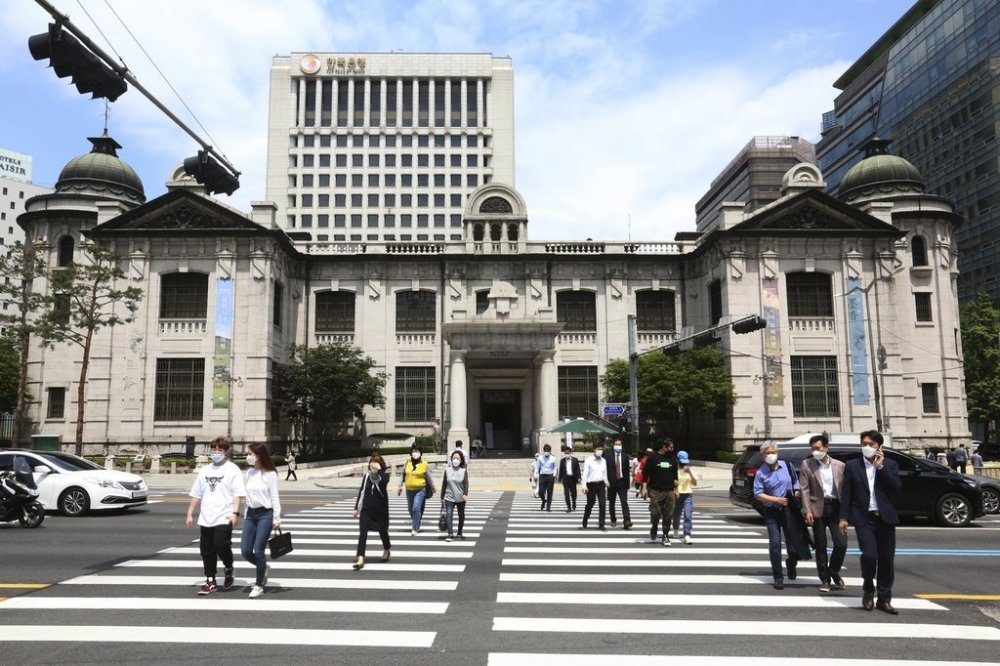
Following a monetary policy meeting, the Bank of Korea cut its benchmark interest rate by a quarter percentage point to 2.5%. It was its fourth cut since October, when it began lowering borrowing costs for the first time in years to support a weakening economy. The bank slashed its 2025 growth outlook to 0.8%, nearly halving its previous projection of 1.5% announced in February.
Share prices jumped, with the Kospi gaining 1.7%.
Although trade tensions have recently eased, the global economy is still expected to slow due to the lingering effects of increased tariffs. U.S.-China friction over trade and geopolitical uncertainties will continue to weigh on markets, the bank said in a statement.
South Korea’s domestic economic activity remained sluggish in April following a contraction in the first quarter driven by weak consumption and business investment, the bank said. It said job creation in manufacturing and other sectors was slow.
Bank of Korea Governor Rhee Chang Yong said there could be additional rate cuts in coming months, citing the worsened outlook for the economy. But he also cautioned against lowering borrowing costs too quickly, given the country’s high household debt and real estate prices.

“If rates are lowered too quickly, there’s a high risk that liquidity will flow into asset prices like housing rather than boosting the real economy,” he said in a news conference. “Any base rate adjustment must take into account its impact on the real estate prices and household debt in the Seoul region,” he said, referring to the country’s capital area where house prices are highest.
Since beginning his second term, Trump has vowed to slap huge new tariffs on foreign products entering the United States, including those from Mexico, Canada and China, which he insists will create more domestic jobs and shrink the federal deficit.
In recent weeks, South Korea has sent trade officials to Washington to discuss the Trump administration’s trade measures, including reciprocal tariffs and potential product-specific duties on semiconductors and cars, which are major exports for the country’s trade-dependent economy.
A decision by a U.S. federal court saying Trump lacks the legal authority to impose such tariffs could upset his plans, but the White House has appealed and it’s unclear what will happen in the longer run.
Experts say South Korea’s leverage in trade talks and its ability to tackle domestic economic challenges have been undermined by political instability after former President Yoon Suk Yeol’s ill-fated imposition of martial law in December. Yoon was formally ousted from office in April, setting the stage for a snap presidential election next week.