

Trump rejects claim he’s ‘chickening out’ on tariffs just because he keeps changing rates
Advertisement
Read this article for free:
or
Already have an account? Log in here »
To continue reading, please subscribe:
Monthly Digital Subscription
$0 for the first 4 weeks*
- Enjoy unlimited reading on winnipegfreepress.com
- Read the E-Edition, our digital replica newspaper
- Access News Break, our award-winning app
- Play interactive puzzles
*No charge for 4 weeks then price increases to the regular rate of $19.00 plus GST every four weeks. Offer available to new and qualified returning subscribers only. Cancel any time.
Monthly Digital Subscription
$4.75/week*
- Enjoy unlimited reading on winnipegfreepress.com
- Read the E-Edition, our digital replica newspaper
- Access News Break, our award-winning app
- Play interactive puzzles
*Billed as $19 plus GST every four weeks. Cancel any time.
To continue reading, please subscribe:
Add Free Press access to your Brandon Sun subscription for only an additional
$1 for the first 4 weeks*
*Your next subscription payment will increase by $1.00 and you will be charged $16.99 plus GST for four weeks. After four weeks, your payment will increase to $23.99 plus GST every four weeks.
Read unlimited articles for free today:
or
Already have an account? Log in here »
Hey there, time traveller!
This article was published 28/05/2025 (194 days ago), so information in it may no longer be current.
WASHINGTON (AP) — President Donald Trump wants the world to know he’s no “chicken” just because he’s repeatedly backed off high tariff threats.
The U.S. Republican president’s tendency to levy extremely high import taxes and then retreat has created what’s known as the “TACO” trade, an acronym coined by The Financial Times’ Robert Armstrong that stands for “Trump Always Chickens Out.” Markets generally sell off when Trump makes his tariff threats and then recover after he backs down.
Trump was visibly offended when asked about the phrase Wednesday and rejected the idea that he’s “chickening out,” saying that the reporter’s inquiry was “nasty.”
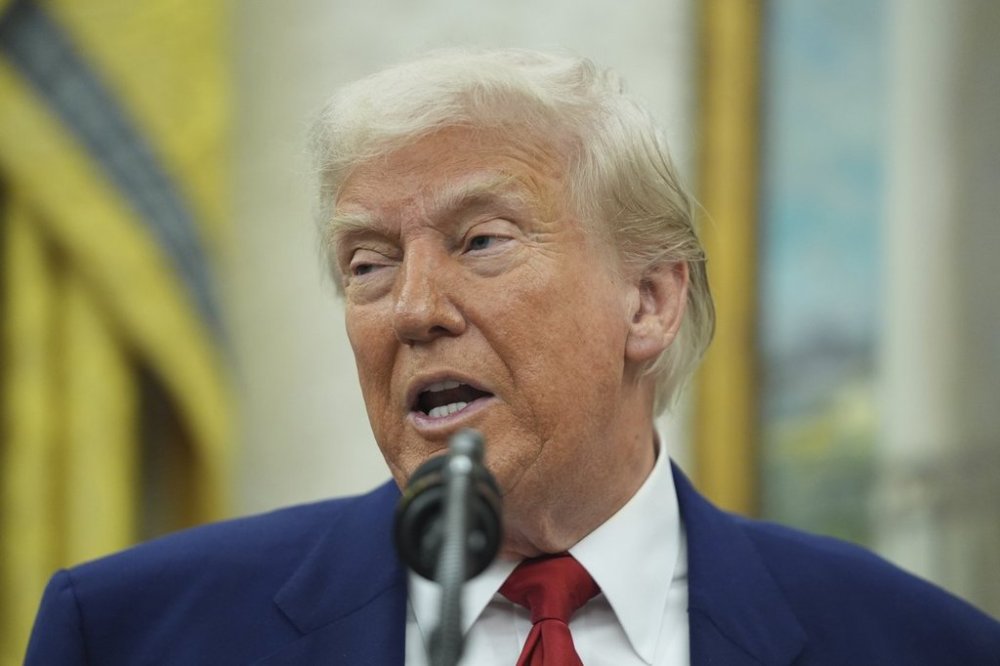
“You call that chickening out?” Trump said. “It’s called negotiation,” adding that he sets a “ridiculous high number and I go down a little bit, you know, a little bit” until the figure is more reasonable.
Trump defended his approach of jacking up tariff rates to 145% on Chinese goods, only to pull back to 30% for 90 days of negotiations. He similarly last week threatened to impose a 50% tax on goods from the European Union starting in June, only to delay the tariff hike until July 9 so that negotiations can occur while the baseline 10% tariff continues to be charged. Similar dramas have played out over autos, electronics and the universal tariffs that Trump announced on April 2 that were based in part on individual trade deficits with other countries.
In each case, Trump generally took the stock market on a roller coaster. Investors sold-off when the tariff threats were announced as they implied slower economic growth and higher prices, which would hurt companies’ profits. Stocks then rebounded after Trump stepped back.
As of Wednesday afternoon, the S&P 500 stock index was up slightly so far this year. But the index was down as much as 15% on the year on April 8, a reflection of the volatility that Trump’s changing policies have created.
He said that approach has led to $14 trillion in new investment in the U.S., a figure that appears to be artificially high and has not been fully verified by economic data.

“Don’t ever say what you said,” Trump said with regard to the notion of him chickening out. “To me, that’s the nastiest question.”
Trump said that EU officials would not be negotiating if not for his 50% tariff, saying he usually has the opposite problem of being “too tough.”