

Bulgarian nationalists protest government plans to adopt the euro currency
Advertisement
Read this article for free:
or
Already have an account? Log in here »
To continue reading, please subscribe:
Digital Subscription
One year of digital access for only $1.44 a week*
- Enjoy unlimited reading on winnipegfreepress.com
- Read the E-Edition, our digital replica newspaper
- Access News Break, our award-winning app
- Play interactive puzzles
*Billed as $5.77 plus GST every four weeks. After 52 weeks, price increases to the regular rate of $19.95 plus GST every four weeks. Offer available to new and qualified returning subscribers only. Cancel any time.
To continue reading, please subscribe:
Add Free Press access to your Brandon Sun subscription for only an additional
$1 for the first 4 weeks*
- Enjoy unlimited reading on winnipegfreepress.com
- Read the E-Edition, our digital replica newspaper
- Access News Break, our award-winning app
- Play interactive puzzles
*Your next Brandon Sun subscription payment will increase by $1.00 and you will be charged $17.95 plus GST for four weeks. After four weeks, your payment will increase to $24.95 plus GST every four weeks.
Read unlimited articles for free today:
or
Already have an account? Log in here »
Hey there, time traveller!
This article was published 31/05/2025 (508 days ago), so information in it may no longer be current.
SOFIA, Bulgaria (AP) — Thousands of flag-waving Bulgarians took to the streets of the capital, Sofia, and other major cities on Saturday to protest government plans to adopt the euro and to demand a referendum on the new currency.
The protesters, led by civic groups and nationalist parties, sang patriotic songs and shouted slogans like “Freedom for the Bulgarian lev” and “The future belongs to sovereign states.” The anti-euro rally came four days before the Balkan country is expected to receive green light from Brussels to enter the eurozone.
The demonstrators in Sofia carried flags of the pro-Russian Vazrazhdane party and a huge banner that read “The battle for the Bulgarian lev is the last battle for Bulgaria.”
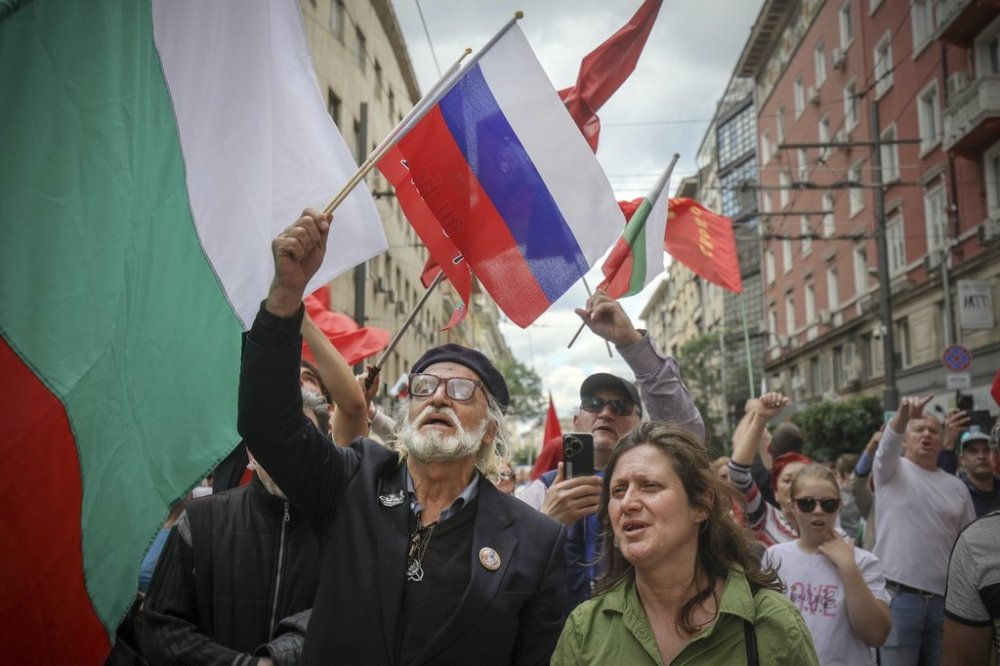
An increased police presence kept the protest peaceful.
Bulgaria joined the European Union in 2007 and remains of its poorest members, plagued by years of instability that has fueled euroscepticism among its 6.4 million citizens. Disinformation campaigns from home and abroad have added fears of economic changes that could bring more poverty.

President Rumen Radev encouraged the anti-euro voices by proposing earlier this month a referendum on the currency, citing public concerns over inflation and purchasing power.
The proposal was turned down by the pro-European majority in parliament, which accused Radev of acting in favor of Moscow with his last-minute attempt to sabotage the euro adoption, aimed at deepening European integration amid growing geopolitical tensions.