

China’s factory activity contracts in May, but there are signs of improvement
Advertisement
Read this article for free:
or
Already have an account? Log in here »
To continue reading, please subscribe:

Digital Subscription
One year of digital access for only $205*
- Enjoy unlimited reading on winnipegfreepress.com
- Read the E-Edition, our digital replica newspaper
- Access News Break, our award-winning app
- Play interactive puzzles
*First annual payment billed as $205.00 + GST for one year. This annual subscription will automatically renew at $233.00 + GST every 52 weeks (10% off the regular annual price of $259.35). Offer available to new and qualified returning subscribers only. Cancel any time.
To continue reading, please subscribe:
Add Free Press access to your Brandon Sun subscription for only an additional
$1 for the first 4 weeks*
- Enjoy unlimited reading on winnipegfreepress.com
- Read the E-Edition, our digital replica newspaper
- Access News Break, our award-winning app
- Play interactive puzzles
*Your next Brandon Sun subscription payment will increase by $1.00 and you will be charged $17.95 plus GST for four weeks. After four weeks, your payment will increase to $24.95 plus GST every four weeks.
Read unlimited articles for free today:
or
Already have an account? Log in here »
Hey there, time traveller!
This article was published 31/05/2025 (495 days ago), so information in it may no longer be current.
BEIJING (AP) — China’s factory activity contracted in May, according to an official survey released on Saturday, although the decline slowed from April as the country reached a deal with the U.S. to slash President Donald Trump’s sky-high tariffs.
China’s purchasing managers index rose from 49.0 in April to 49.5 in May, the National Bureau of Statistics said. PMI is measured on a scale from 0 to 100, where 50 marks the cutoff between expansion and contraction.
Meanwhile, the manufacturing index showed growth in the sector, although the index measuring new orders remained under 50 despite some improvement.
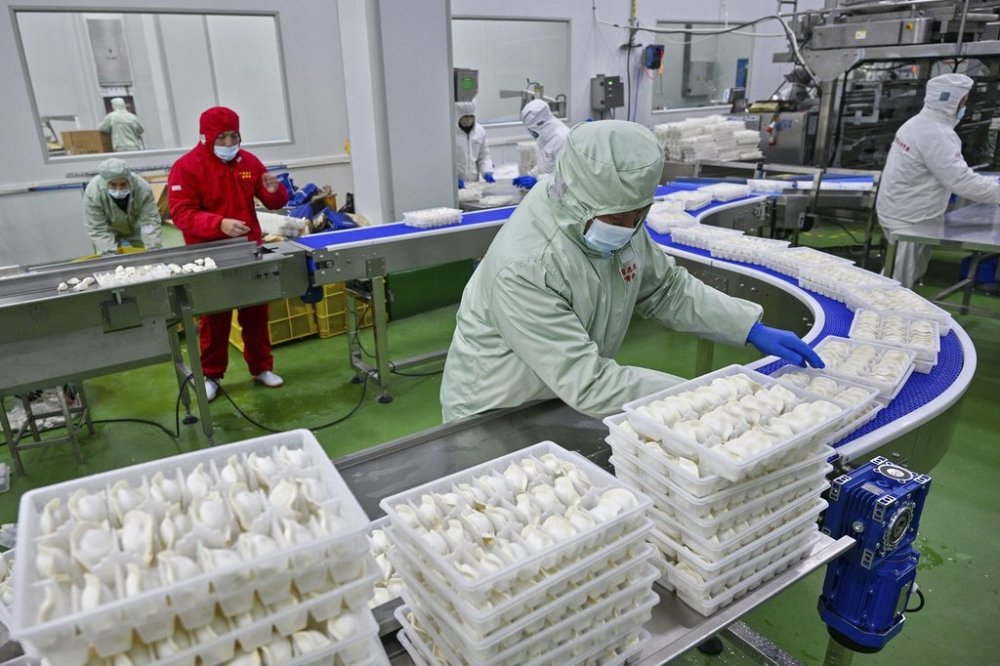
National Bureau of Statistics senior statistician Zhao Qinghe said some companies with U.S. business reported accelerated resumption of foreign trade orders, and there was an improvement in import and export conditions.
The U.S.-China deal, reached earlier this month, cuts Trump’s tariffs from 145% to 30% for 90 days, creating time for negotiators from both sides to reach a more substantive agreement. China also reduced its taxes on U.S. goods from 125% to 10%.
But the remaining tariffs are still higher than they were before Trump took office, and businesses and investors face uncertainty about whether the truce will last.
Trump said Friday that he will no longer be “Mr. NICE GUY” with China on trade, declaring in a social media post that the country had broken an unspecified agreement with the United States.

He later said in the Oval Office that he will speak with Chinese President Xi Jinping and “hopefully we’ll work that out,” while still insisting China had violated the agreement.
Over the past week, tensions between Beijing and Washington also intensified after the U.S. said it would start revoking visas for Chinese students studying in the country. China has lodged a protest with the U.S. over the matter, calling the decision unreasonable.