

Germany’s new government launches a program to encourage investment and boost the economy
Advertisement
Read this article for free:
or
Already have an account? Log in here »
To continue reading, please subscribe:
Monthly Digital Subscription
$1 per week for 24 weeks*
- Enjoy unlimited reading on winnipegfreepress.com
- Read the E-Edition, our digital replica newspaper
- Access News Break, our award-winning app
- Play interactive puzzles
*Billed as $4.00 plus GST every four weeks. After 24 weeks, price increases to the regular rate of $19.95 plus GST every four weeks. Offer available to new and qualified returning subscribers only. Cancel any time.
Monthly Digital Subscription
$4.99/week*
- Enjoy unlimited reading on winnipegfreepress.com
- Read the E-Edition, our digital replica newspaper
- Access News Break, our award-winning app
- Play interactive puzzles
*Billed as $19.95 plus GST every four weeks. Cancel any time.
To continue reading, please subscribe:
Add Free Press access to your Brandon Sun subscription for only an additional
$1 for the first 4 weeks*
*Your next subscription payment will increase by $1.00 and you will be charged $16.99 plus GST for four weeks. After four weeks, your payment will increase to $23.99 plus GST every four weeks.
Read unlimited articles for free today:
or
Already have an account? Log in here »
Hey there, time traveller!
This article was published 04/06/2025 (295 days ago), so information in it may no longer be current.
BERLIN (AP) — Germany’s new government on Wednesday launched a package of tax breaks and eventual tax cuts for companies, moving to encourage investment as it tries to give new momentum to an economy that has shrunk for the past two years and is expected to stagnate this year.
Chancellor Friedrich Merz’s Cabinet approved the so-called growth booster program, which must still be passed by lawmakers. Its central component is a hefty tax write-off on investments in machinery and other equipment over the next three years, followed by a gradual reduction of the corporate tax rate from 15% to 10% between 2028 and 2032.
There will also be tax breaks over the next 2 1/2 years for companies that buy electric cars and measures to encourage investment in research.
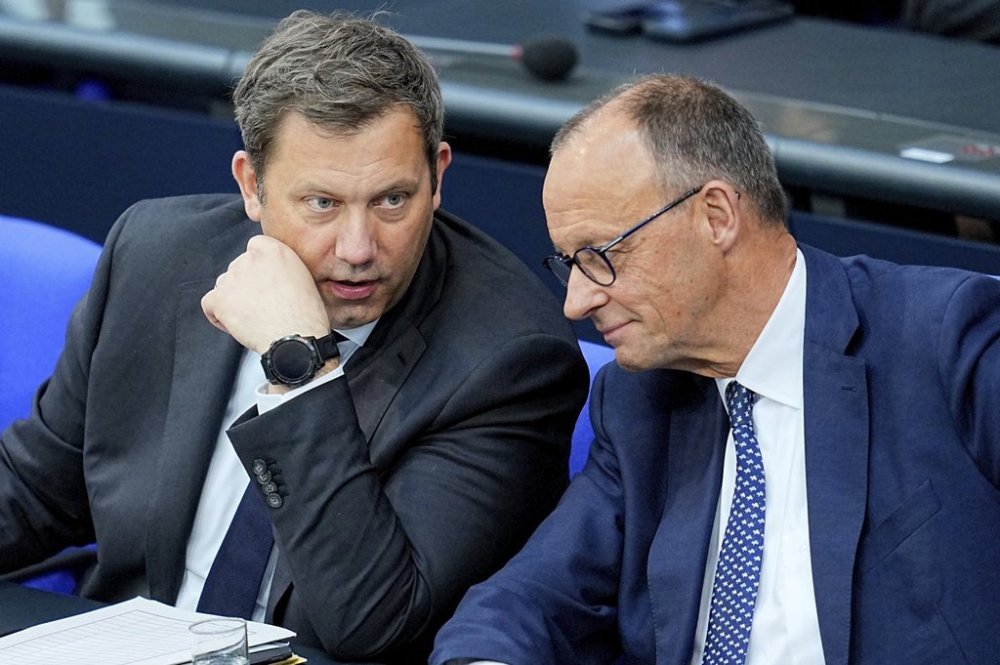
Finance Minister Lars Klingbeil, who is also the vice chancellor, said that “we are making Germany as a location more competitive internationally.” Germany has Europe’s biggest economy.
Several industry associations have already called for more help, for example, in bringing down electricity prices.

The package launched Wednesday is separate from a 500 billion-euro ($570 billion) fund that Merz’s coalition pushed through parliament before it even took office last month to pour money into Germany’s creaking infrastructure over the next 12 years.
Klingbeil said that the government plans to launch legislation formally setting up that fund in late June.