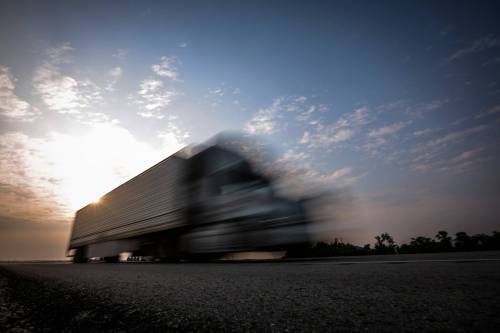
The long haul to trucking safety Tragedies on our highways signal urgent need for driver-training standards and professionalization of the industry
Read this article for free:
or
Already have an account? Log in here »
To continue reading, please subscribe:

Digital Subscription
One year of digital access for only $205*
- Enjoy unlimited reading on winnipegfreepress.com
- Read the E-Edition, our digital replica newspaper
- Access News Break, our award-winning app
- Play interactive puzzles
*First annual payment billed as $205.00 + GST for one year. This annual subscription will automatically renew at $233.00 + GST every 52 weeks (10% off the regular annual price of $259.35). Offer available to new and qualified returning subscribers only. Cancel any time.
To continue reading, please subscribe:
Add Free Press access to your Brandon Sun subscription for only an additional
$1 for the first 4 weeks*
- Enjoy unlimited reading on winnipegfreepress.com
- Read the E-Edition, our digital replica newspaper
- Access News Break, our award-winning app
- Play interactive puzzles
*Your next Brandon Sun subscription payment will increase by $1.00 and you will be charged $17.95 plus GST for four weeks. After four weeks, your payment will increase to $24.95 plus GST every four weeks.
Read unlimited articles for free today:
or
Already have an account? Log in here »
Hey there, time traveller!
This article was published 06/06/2025 (485 days ago), so information in it may no longer be current.
A Humboldt Broncos hockey jersey hangs in the lobby of Jim Campbell’s trucking business, serving as a daily reminder of the omnipresent danger on Canada’s highways.
The memory still lingers in the seven years since 16 members of the junior hockey team died and another 13 were injured when their playoff-game-bound bus collided with a semi-trailer in rural Saskatchewan.
“There’s carnage all across Canada,” Campbell says as he climbs the stairs to his second-storey office at First Class Training Centre.
To offer further proof, he opens Facebook, pulls up a national trucking community page and scrolls through videos of crash scenes and semis in ditches.
MIKE DEAL / FREE PRESS A Humboldt Broncos jersey at Campbell’s truck driver training school serves as a constant reminder of the dangers on Canadian highways.
According to Statistics Canada, there were 307 fatal crashes and 5,851 injury collisions in 2021 involving straight trucks, tractor trailers and buses.
Manitoba, meanwhile, was the site of one of Canada’s worst mass highway casualty crashes in 2023, when a handi-transit bus collided with a semi-trailer near Carberry, killing 17 seniors en route to a casino.
And last November, a mother and her eight-year-old daughter were killed when their vehicle was struck by a semi-trailer near Altona. The Ontario driver, accused of running a stop sign, has been charged with two counts of dangerous driving. He remains wanted after evading police since his release.
A veteran of long-haul trucking, Campbell just shakes his head. He spent 43 years on the road — from northern Manitoba to the southern United States — later opening First Class in 2012 to train a new generation of drivers.
Ten years later, he founded the Professional Truck Training Alliance of Canada. He is part of a nascent movement pushing for trucking to become a Red Seal trade certified program with nationwide standards.
Not everyone is onside with the idea. But industry associations, trucking companies, insurance corporations and drivers seem to be unified on at least one level — there’s a need for better training before a driver gets behind the wheel of an 18-wheeler.
The Mandatory Entry-Level Training (MELT) program for truck drivers took effect in the province in 2019, a year after the Humboldt tragedy.
Manitoba’s MELT programming covers 121.5 hours, split nearly equally between in-class, in-yard and in-cab training. Students get three opportunities to pass their Class 1 licence road test before requiring additional training in order to try again.
Once obtained, drivers join an industry contributing $3.7 billion annually to the provincial GDP. Trucking encompasses more than 28,000 jobs and at least 2,800 employers in Manitoba.
Several private vocational institutions in Manitoba, such as First Class, whose programming preceded MELT, offer double the amount of training, with 244 hours.
Training varies widely by province. Ontario requires at least 103.5 hours of instruction; B.C. seeks 140 hours; and Alberta, previously, 113 hours. It’s a fragmented system which has created an unsafe environment across Canada, Campbell says.
Tired of waiting for change, he began contacting colleagues across the country who shared his concerns. Today, the Professional Truck Training Alliance of Canada has 67 members and four key objectives:
- to make trucking a Red Seal trade;
- to create nationally approved programs for training instructors;
- to improve training funding and assess tuition; and
- to ensure training schools are compliant.
MIKE DEAL / FREE PRESS Jim Campbell and his peers across the country have been pushing for the industry to be trade-certified with nationwide standards. 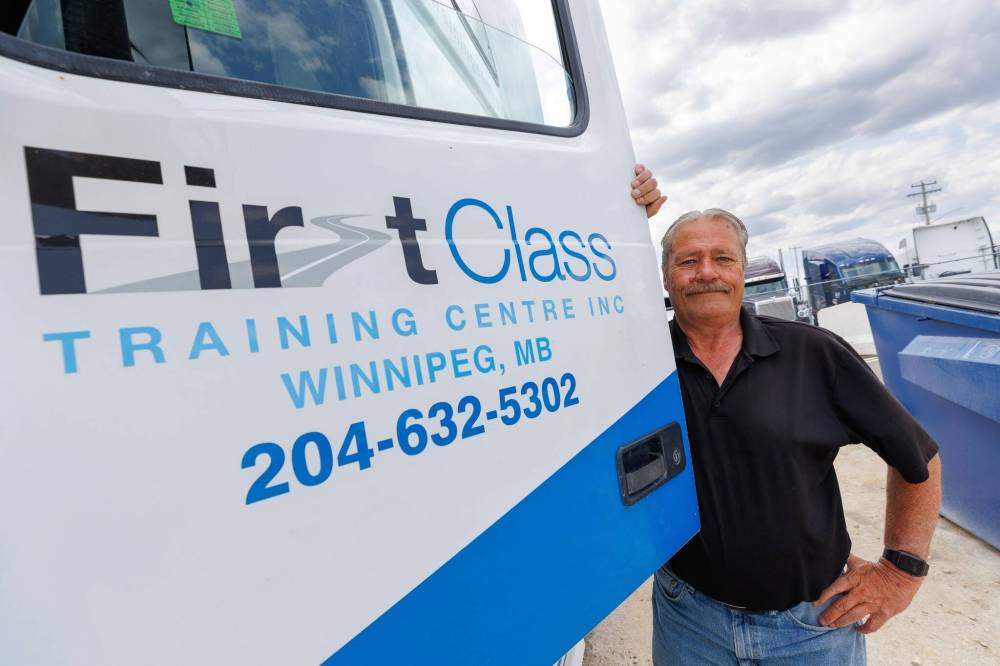
In Manitoba, the number of driver-training schools ballooned during and after the COVID-19 pandemic. In 2019, 21 Class 1 driver-training schools held active permits from Manitoba Public Insurance; by 2023, 34 did.
The growth corresponded with a boom in demand for truckers. It also followed MPI’s creation of the MELT program, which made it easier for operators to open schools.
“If somebody meets all (MPI’s) requirements, they’re basically handed the curriculum,” says Manitoba Trucking Association executive director Aaron Dolyniuk.
Most Manitoba training schools follow the law, Campbell and others stress. But they are concerned some are cutting corners — for example, falsely crediting students for achieving the minimum hours of required training when actual instruction fell short.
According to MPI, five driving instructors and four driving schools (not limited to Class 1) were sanctioned for failing to act with honesty and integrity and for failure to comply with conditions between 2023 and 2024.
Those failures cover a “range of bad behaviours” including fraud, criminal activity, dishonesty and general poor conduct, MPI spokeswoman Tara Seel says.
In those situations, MPI would either decline or cancel a permit, or impose a suspension. As of February, the Crown corporation can also fine schools and instructors, from $250 for a first offence up to $4,500 for third and subsequent infractions.
Since 2022, the year MPI established its MELT compliance program, the insurance body has received approximately 56 complaints about Class 1 academies.
MIKE DEAL / FREE PRESS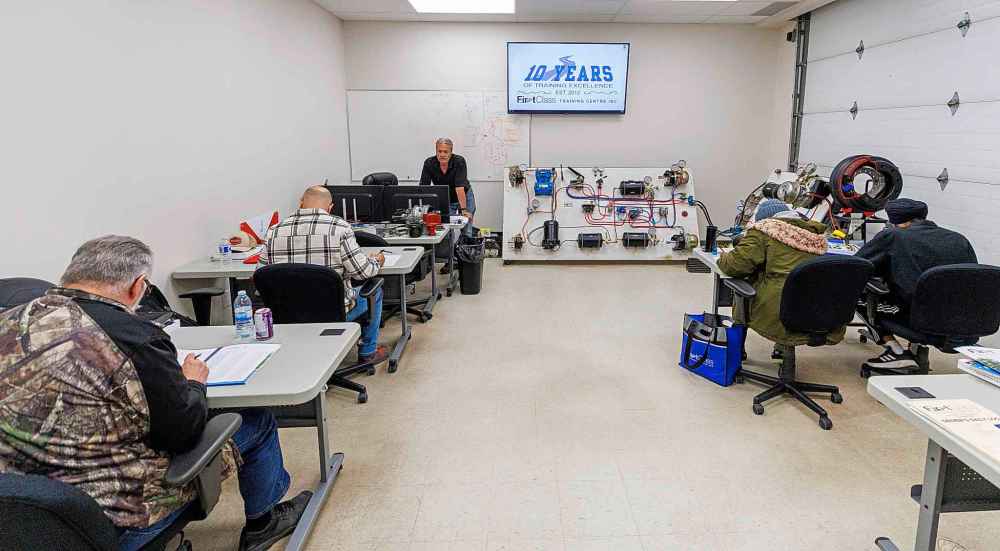
MPI currently has five employees regulating driver-training schools, instructors and training vehicles of all licence classes (Class 1 through 6), a significant improvement from when there were only two employees auditing training schools between 2020-23.
Campbell and others consider MPI’s audit process robust. Records, vehicles, facilities and programs are inspected on-site. Class 1 schools are audited annually while complaints are investigated separately.
However, Campbell notes audits might elicit different results if investigators showed up unannounced rather than in scheduled visits, as is the current practice.
“We need to get a good handle on the schools that are out there and make sure they are complying,” Campbell says.
About 95 per cent of offences flagged during an audit are considered minor or moderate, such as administrative deficiencies that pose limited or no public-safety risk. They typically result in warnings or, as a last resort, suspensions. The new fines help toughen up oversight, Seel says, because warnings can be ignored and suspensions can negatively impact students.
“I’m trying to offer a bigger program for $9,000 … Who’s going to come to a $9,000 program if you can get it faster and cheaper somewhere else?”–Jim Campbell
The disparity in training-hour requirements results in a similar disparity in tuition costs, which, according to Seel, can range from $3,500 to $9,000. Some operators caution you get what you pay for.
First Class is at the higher end because of the additional training provided, but Campbell admits it leaves him at a disadvantage, business-wise.
“I’m trying to offer a bigger program for $9,000,” he says. “Who’s going to come to a $9,000 program if you can get it faster and cheaper somewhere else?”
Says Dolyniuk at the Manitoba Trucking Association: “Companies are using non-compliance as a competitive advantage. MPI is doing what they can, but having a two-tiered system (MELT and the 244-hour), it makes it very hard to regulate.”
On any given day, thousands of truckers cross multiple provincial borders in order to keep Canada’s economic engine running. That border fluidity means poorly trained drivers, regardless of where they’re from, are an always present danger.
A 2024 CBC Marketplace investigation caught Ontario driving instructors who falsified documents for cash, saying students took driving classes when they didn’t. A followup report found the system for testing truck drivers had been compromised by bribes, forged documents and “rigged testing.”
Alberta has suspended about five of its 60 Class 1 driving schools in recent years for similar infractions.
“The largest reason is just not putting in time,” says Alberta Transportation Minister Devin Dreeshen. “Falsified records of things being done when they weren’t done, truckers not actually having the proper time or training on certain things.”
JOHN WOODS / FREE PRESS Many experts believe the various Mandatory Entry-Level Training programs don’t go far enough in preparing drivers for the industry.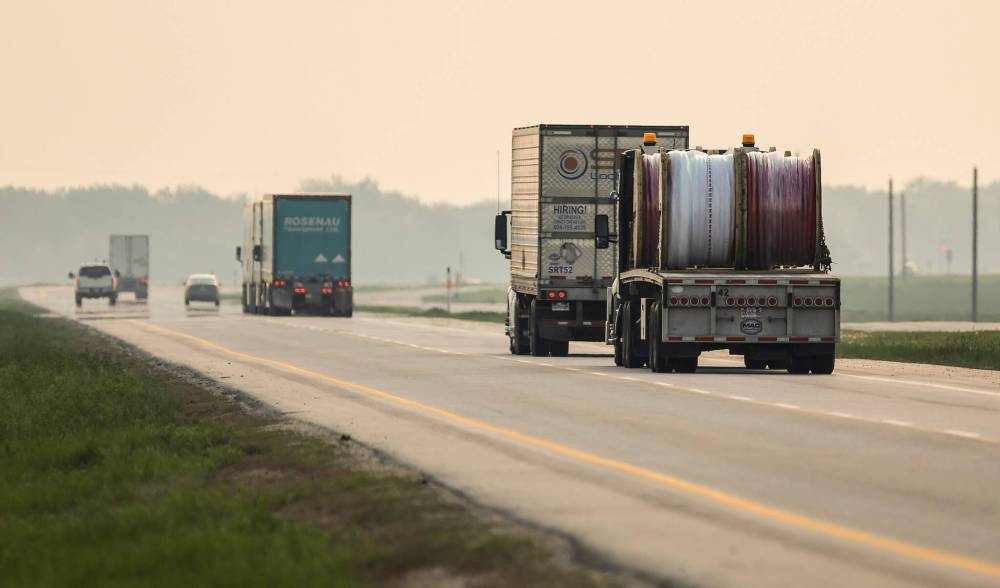
Cecilia Omole, the Insurance Bureau of Canada’s manager of commercial policy, says her organization has documented a link between driver preparedness, claims and accidents over the last five years.
“A lot of truck training schools are very good, and they do a good job at preparing students,” Omole says. “However, there’s a few bad apples in the bunch.”
As a result of its findings, the IBC formed a working group and commissioned a third-party report, which found new, inexperienced drivers were most likely to be involved in accidents and emphasized a need for oversight and enforcement of driver-training standards.
The IBC has clocked a change in provinces’ mandatory training since forming its working group. Last year, both Nova Scotia and Newfoundland and Labrador implemented approximately 112-hour MELT programs, while Ontario is reviewing its process for obtaining a semi-trailer licence.
“I think there’s broad agreement that MELT does not go far enough,” Omole says. “We would love to see a national standard of some sort.”
For Campbell, the solution is simple: make trucking a Red Seal trade.
The Professional Truck Training Alliance of Canada has met with various provincial governments to discuss the idea. Five provinces must be on board before a trade can gain Red Seal status.
Plumbers, carpenters and bakers are among those holding the designation, which is recognized inter-provincially. They must undergo apprenticeship before graduating.
To get there, there’s a curriculum to create, inter-province meetings to endure and an application requiring approval. It’s a “long haul,” Campbell says.
The PTTAC has met with Manitoba, Ontario, Saskatchewan, Alberta and Nova Scotia officials. Alberta, which previously only required 113 hours of training, has been at the forefront in pursuing the designation. It switched its driver-training model to a tiered system in April. The final tier, if other provinces join, would be Red Seal status.
“We didn’t believe the MELT was actually giving the competencies that were needed,” says Robert Harper, president of the Alberta Motor Transport Association. “We believe a lot of people had gotten some rather poor training in the industry.”
“We believe a lot of people had gotten some rather poor training in the industry.”–Robert Harper
Alberta is short about 4,500 truck drivers. Officials believe a Red Seal designation can help keep people in the industry.
“The hope was that it would address the trucking shortage, to get people behind the wheel so they view trucking as a mortgage-paying, good profession … versus just something you do every now and then,” Transportation Minister Dreeshen says.
The executive director of the Manitoba Trucking Association isn’t convinced it’s the answer.
Red Seal trades require extensive training on the job before a licence is received, which is the reverse of truck-driver training, where mentorship typically comes after a licence is awarded, Dolyniuk says.
NIC ADAM / FREE PRESS FILES Aaron Dolyniuk is executive director of the Manitoba Trucking Association.
He envisions an alternative, one where truck driving is a nationally designated trade — “it’d do great things for our industry” —but training is tailored to the sector’s reality.
Such a move would help legitimize on-the-job training and produce safer drivers, he says, although cautioning many companies currently can’t afford to spend much time mentoring new hires.
If a national standard is created, he adds, it’s crucial to “harmonize up.”
“If one province has a lower standard, guess what happens? That’s where those seeking a lower standard go to get their Class 1 licence,” he says. “The lowest common denominator… typically dictates the state of our industry.”
“If one province has a lower standard, guess what happens? That’s where those seeking a lower standard go to get their Class 1 licence.”–Aaron Dolyniuk
Still, some Manitoba companies have extensive onboarding processes. Bison Transport has a phased program including 11 weeks of in-cab instruction, local runs for two months and restrictions on assignments for two years.
Payne Transportation puts its drivers through internationally recognized Smith System Driver Improvement Institute courses and rewards those acting safely on the road. It uses artificial intelligence-equipped cameras in trucks to monitor driving.
The provincial government, MPI and industry stakeholders are part of a joint steering committee the Manitoba Trucking Association co-chairs. The group was struck to study recruitment, training and retention of truck drivers.
A 2023 report, commissioned by the MTA for the committee, found the retention rate of long-haul truckers sponsored for training was “significantly” lower than other trades.
The province would not make a minister available for comment, and instead issued a general statement saying it is committed to evaluating driver training and curriculum standards, improving testing and job retention, and is open to considering alternative training models.
TIM SMITH / BRANDON SUN FILES 
Currently, Quebec is viewed as Canada’s gold standard of truck-driver training. It offers subsidized programs allowing for 24 months of experience before a full Class 1 designation is received. During that time, the driver has a Class 1 learner’s licence.
Alan Warrington has trained hundreds of truckers at Alan’s Driving School, a Portage la Prairie academy. Retirement is on his horizon.
While he says MELT is an adequate program, he believes trucking “certainly should be” a Red Seal profession, but with more focus on road training and less on classroom theory.
Students often come from farms and Hutterite colonies. Some can’t read or write well, but they can drive perfectly, Warrington says, adding success comes from teaching to learners’ capabilities.
Managers at Big Freight Systems and Payne Transportation and drivers interviewed at a Headingley truck stop expressed support for a national program.
“I think the profession would be taken a lot more seriously,” said Scott Warkentine, Big Freight Systems’ director of safety and driver services. “I think people that are in the profession or want to get into it … it would set a higher standard.”
Improved safety would follow, he says, though the cost of putting a driver through a Red Seal or similar program could be a challenge for some.
Employers would need to be willing to pay more for staff, cautions Thomas McKee, Payne Transportation’s vice-president of driver services and innovation.
“Red Seal would be such a blessing,” he says, noting it could protect truckers from low wages. “It would just elevate the whole industry.”
“There are a lot of untrained and unskilled people driving semi-trucks, which they should not be doing.”–Sandeep Dhaliwal
Trucker Sandeep Dhaliwal went through the MELT program several years ago. Improving training may improve driver skill, but it could also detract people from entering the profession, he says, and also might force out established drivers if they have to go back to school.
“There are a lot of untrained and unskilled people driving semi-trucks, which they should not be doing,” he says. “It’s a hard career. It’s not an easy job.”
The onus shouldn’t just be placed on training schools. Sometimes there’s a lack of willingness to learn and a “disregard for others’ safety” on the driver’s part, he says, noting he has also encountered unsafe truckers on the highways.
“Every day, you run into good ones and bad ones,” Dhaliwal says. “I don’t know. I try to do the job honestly.”
gabrielle.piche@winnipegfreepress.com

Related
Staff-reporting subterfuge still rife in trucking, say advocates
Posted:
It’s one of the worst-kept secrets of the road — some trucking firms under-report payrolls to gain a financial and competitive advantage.

Gabrielle Piché reports on business for the Free Press. She interned at the Free Press and worked for its sister outlet, Canstar Community News, before entering the business beat in 2021. Read more about Gabrielle.
Every piece of reporting Gabrielle produces is reviewed by an editing team before it is posted online or published in print — part of the Free Press‘s tradition, since 1872, of producing reliable independent journalism. Read more about Free Press’s history and mandate, and learn how our newsroom operates.
Our newsroom depends on a growing audience of readers to power our journalism. If you are not a paid reader, please consider becoming a subscriber.
Our newsroom depends on its audience of readers to power our journalism. Thank you for your support.