

Winnipeggers witness unveiling of Japanese Canadian monument in B.C.

Advertisement
Read this article for free:
or
Already have an account? Log in here »
To continue reading, please subscribe:

Digital Subscription
One year of digital access for only $205*
- Enjoy unlimited reading on winnipegfreepress.com
- Read the E-Edition, our digital replica newspaper
- Access News Break, our award-winning app
- Play interactive puzzles
*First annual payment billed as $205.00 + GST for one year. This annual subscription will automatically renew at $233.00 + GST every 52 weeks (10% off the regular annual price of $259.35). Offer available to new and qualified returning subscribers only. Cancel any time.
To continue reading, please subscribe:
Add Free Press access to your Brandon Sun subscription for only an additional
$1 for the first 4 weeks*
- Enjoy unlimited reading on winnipegfreepress.com
- Read the E-Edition, our digital replica newspaper
- Access News Break, our award-winning app
- Play interactive puzzles
*Your next Brandon Sun subscription payment will increase by $1.00 and you will be charged $17.95 plus GST for four weeks. After four weeks, your payment will increase to $24.95 plus GST every four weeks.
Read unlimited articles for free today:
or
Already have an account? Log in here »
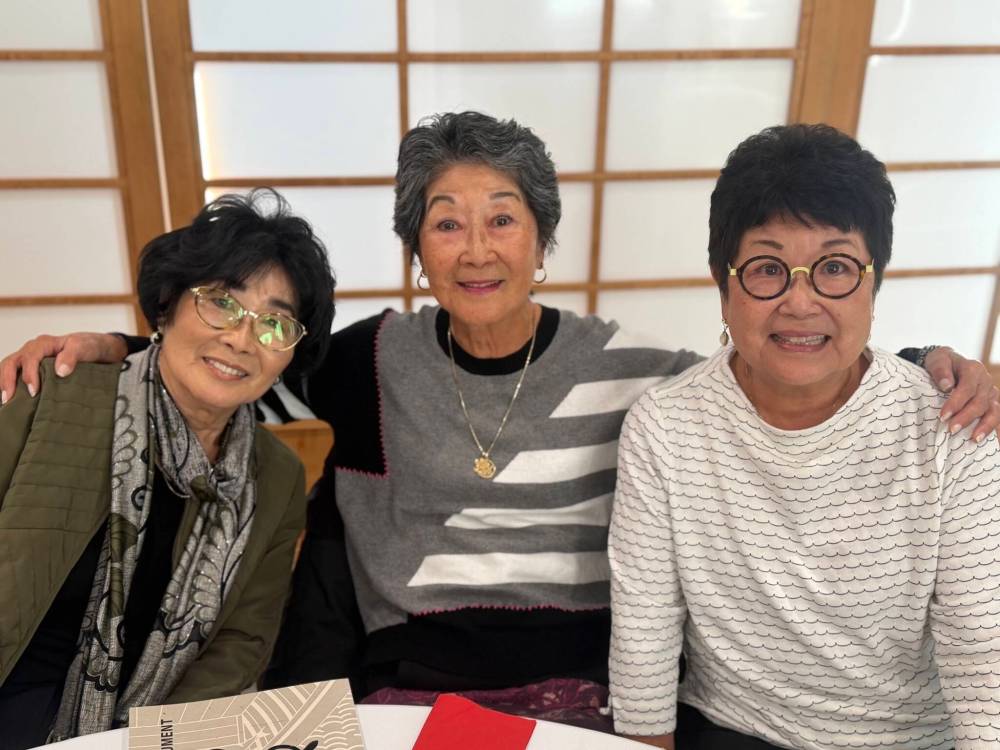
As Miki Stewart gathered with her family at the Japanese Cultural Association of Manitoba on Saturday afternoon, she was thinking of her parents, Yoshimaru and Yoshi Abe.
Both Stewart, 80, and her sister Yumi Falk, 81, alongside an older brother, were born in the Tashme internment camp in British Columbia. They were among more than 2,600 Japanese Canadians who were forcefully removed and interned at the camp following the bombing of Pearl Harbour and Canada’s declaration of war on Japan in 1941.
“They didn’t talk much about how they suffered,” Stewart said of her parents. “But they did.”
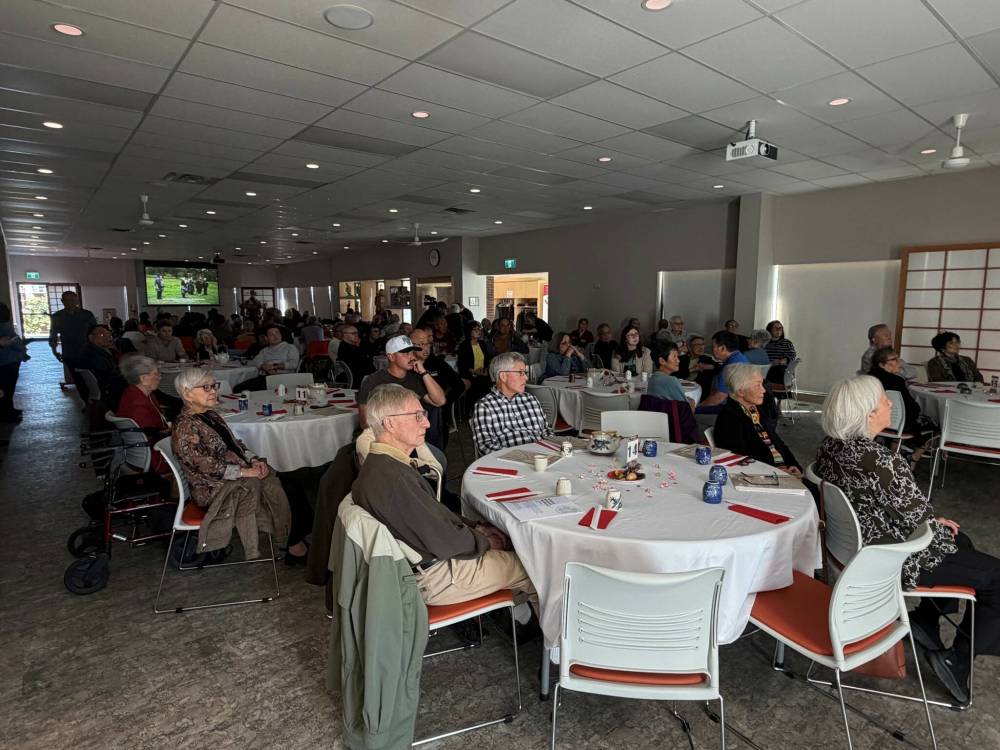
She was amongst a group of more than 150 people who gathered at the association’s McPhillips headquarters on Saturday afternoon to watch the unveiling of the Japanese Canadian Monument in Victoria B.C.
Consisting of 100 granite slabs and surrounded by a traditional Japanese garden, the monument carries the names of the more than 22,000 Japanese Canadians who were interned under the government measure, which saw restrictions on the community’s movements until 1949.
The siblings recalled how their parents sometimes shared stories about how people banded together inside the camp and everyday life; their parents’ strength, something that defined them.
“How we are today is because of our parents,” Falk said.
The sisters said their family never expressed bitterness or shame, about being interned, which was something many community members grappled with, saying one of the characteristics they inherited from their mother was her resilience.
“My mother was a very strong woman, so all us girls in the family, we became very strong,” Stewart said.
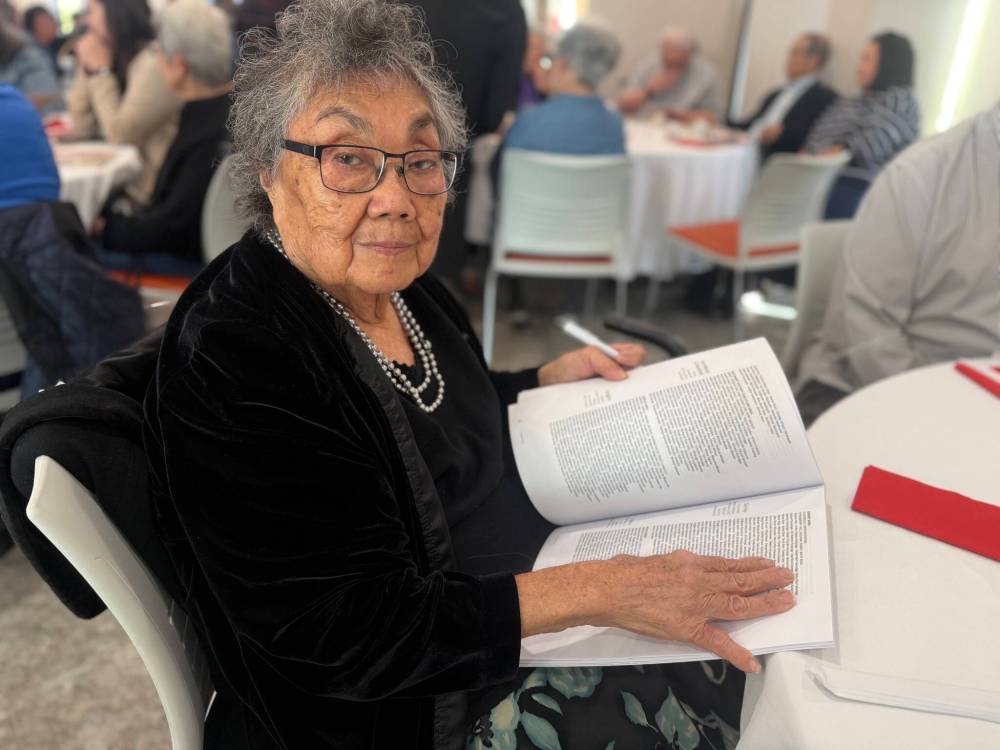
Doreen Amadatsu, now 88, was just three years old when her family was forcefully removed from Vancouver. She still has a photo of her mother in front of the grocery store her family owned, just one asset taken from them.
“We had to leave literally everything,” she said. “All you could carry was in two suitcases.”
Amadatsu said she feels Victoria is the perfect place for the monument to be erected.
She said it’s “spit in their eye” when it comes to the Victoria-and-area loyalists who wanted the Japanese citizens removed from the coast, a group she said were among the most “outspoken” in eviction efforts.
Looking through a booklet containing the names on the memorial, she said it’s important future generations know this part of their history. She said while her son is not interested, she hopes her grandson will someday visit the monument.
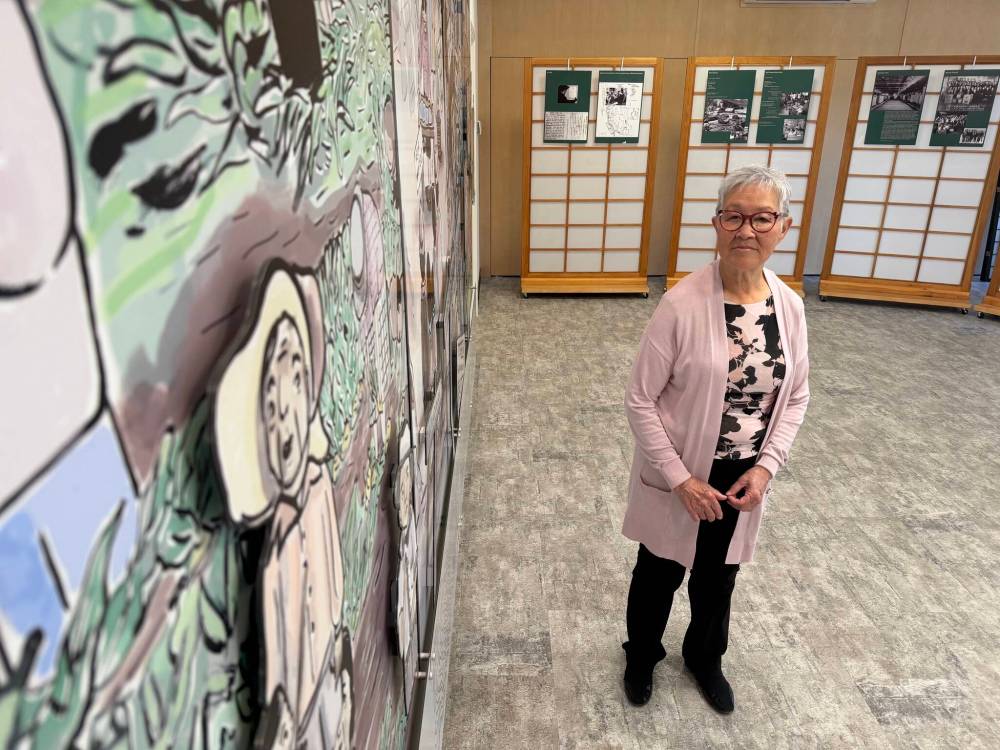
“One day, he will search out his roots,” she said. “He will want to know the Japanese side.”
The watch party was organized by the association’s Horizon Club, which supports 55-plus community members.
Its president Marlene Mori, said the Japanese community in Winnipeg is small, but solid, with many descendants displaced coming from the Maple Ridge area of B.C., ties that still hold strong today.
Patrice Yamada, 73, whose family members are on the Victoria monument, got to tour the site in August months before its official opening and called the experience overwhelming.
“I wasn’t prepared for the emotional wave of seeing my family’s name up in stone,” Yamada said. “And to recall the reason their names appear there is because of all the hardship they went through for no reason; other than being a person of colour.”
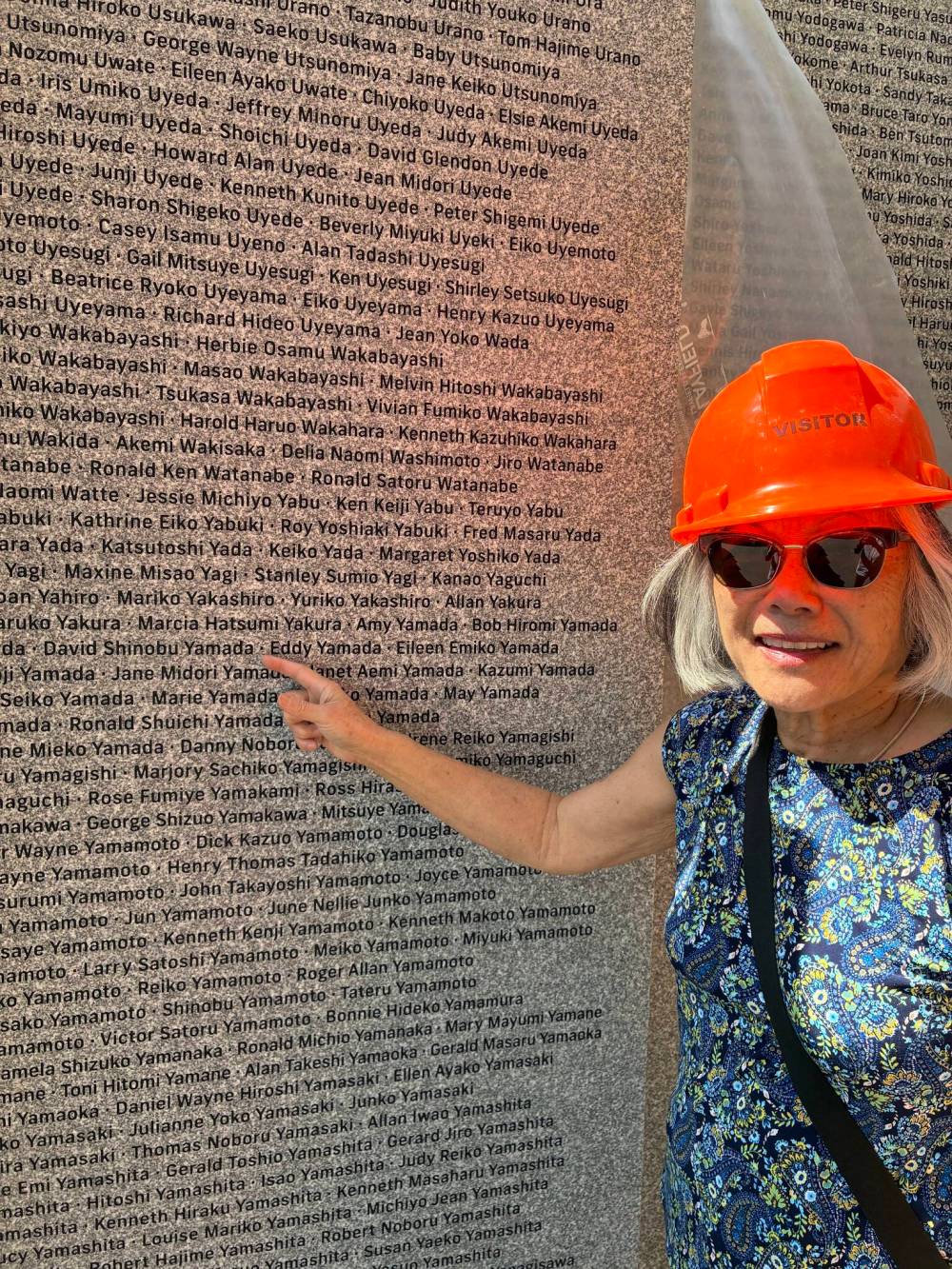
Yamada said when people were expelled from the coast, not only did they lose their possessions and property, but a connection.
“They were Canadians with a community,” Yamada said. “When that was thrown out, because of prejudice, discrimination and fear; that community sense just evaporated.”
She said the event on Saturday is chance for people to come together, re-connect and speak out against a injustice committed by a country they wanted to build.
“We were here in Canada to build a beautiful country together,” she said. “Now, we can raise our hands and say: ‘This was a wrong. Never do it again’ and let us move forward together.”
In Manitoba, it’s unclear how many people actually were displaced from B.C. to the prairie province, an example of how the measure — which government officially apologized for in 1988 — dismantled families’ lives, legacies and lineage.
Sandra Shibata’s eyes welled with tears as she points to her family’s name laid out on a table inside a room separate from the watch party.
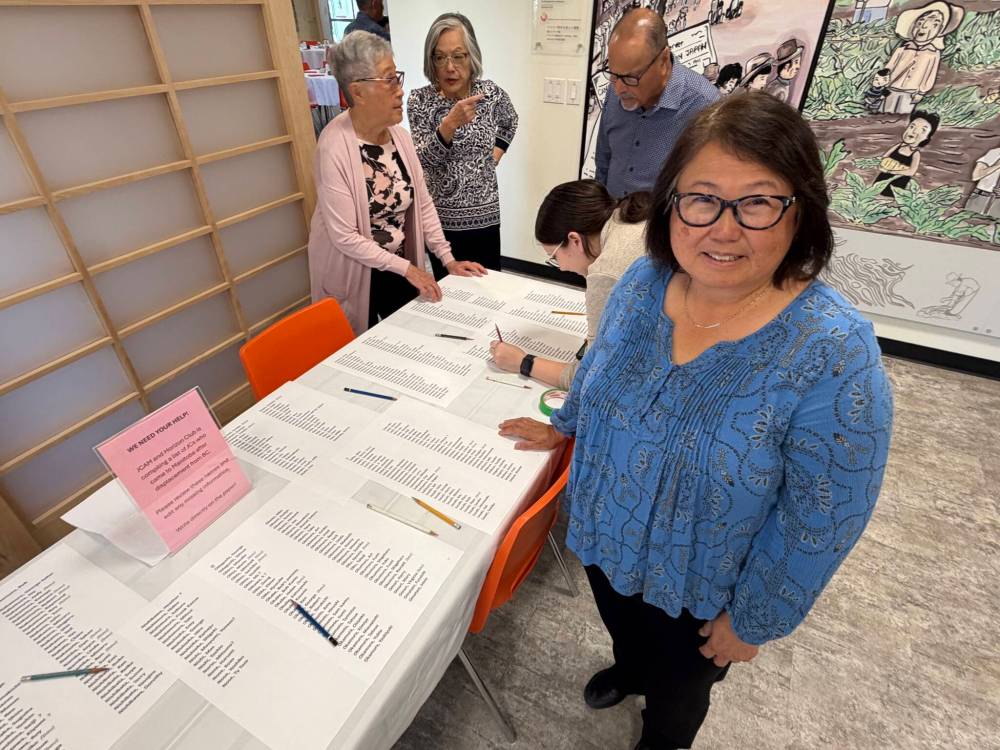
The five names, which includes her dad and other family members, are amongst hundreds spread out across tables at the centre.
They’re part of an effort to locate and accurately list all of the families who landed in Manitoba following the government order.

For her, she said the work being done in B.C. and in Manitoba is critical to honour those who came before and set the foundation for the current Japanese community.
“It recognizes what they’ve done for us in the past,” Shibata said. “We have freedom. Away from discrimination, from harassment. All those things.”
With the older generation living by the Japanese mantra of “saki e susumu,” which means move forward, Shibata said her family never spoke about what they went through. But with the unveiling of the monument, she now feels they would want the story shared and the history honoured.
“I think they’d finally say: ‘It’s time to talk about it,’ Shibata said. “During the war, and shortly thereafter, with us growing up, they didn’t want to talk about it. It was part of the things they wanted to forget, but now that we’ve become proud Canadians integrated into society, I think they’d be pleased to see that.”
morgan.modjeski@freepress.mb.ca
Morgan Modjeski
Reporter
Signal
Morgan Modjeski is a news reporter and multimedia producer for the Free Press. Read more about Morgan.
Every piece of reporting Morgan produces is reviewed by an editing team before it is posted online or published in print — part of the Free Press‘s tradition, since 1872, of producing reliable independent journalism. Read more about Free Press’s history and mandate, and learn how our newsroom operates.
Our newsroom depends on a growing audience of readers to power our journalism. If you are not a paid reader, please consider becoming a subscriber.
Our newsroom depends on its audience of readers to power our journalism. Thank you for your support.
Morgan Modjeski
Reporter
Signal
Morgan Modjeski is a news reporter and multimedia producer for the Free Press. Read more about Morgan.
Every piece of reporting Morgan produces is reviewed by an editing team before it is posted online or published in print — part of the Free Press‘s tradition, since 1872, of producing reliable independent journalism. Read more about Free Press’s history and mandate, and learn how our newsroom operates.
Our newsroom depends on a growing audience of readers to power our journalism. If you are not a paid reader, please consider becoming a subscriber.
Our newsroom depends on its audience of readers to power our journalism. Thank you for your support.
Advertisement Advertise With Us
Advertisement Advertise With Us