

CAPP survey shows oilpatch spends billions on Indigenous-affiliated businesses
Advertisement
Read this article for free:
or
Already have an account? Log in here »
To continue reading, please subscribe:

Digital Subscription
One year of digital access for only $205*
- Enjoy unlimited reading on winnipegfreepress.com
- Read the E-Edition, our digital replica newspaper
- Access News Break, our award-winning app
- Play interactive puzzles
*First annual payment billed as $205.00 + GST for one year. This annual subscription will automatically renew at $233.00 + GST every 52 weeks (10% off the regular annual price of $259.35). Offer available to new and qualified returning subscribers only. Cancel any time.
To continue reading, please subscribe:
Add Free Press access to your Brandon Sun subscription for only an additional
$1 for the first 4 weeks*
- Enjoy unlimited reading on winnipegfreepress.com
- Read the E-Edition, our digital replica newspaper
- Access News Break, our award-winning app
- Play interactive puzzles
*Your next Brandon Sun subscription payment will increase by $1.00 and you will be charged $17.95 plus GST for four weeks. After four weeks, your payment will increase to $24.95 plus GST every four weeks.
Read unlimited articles for free today:
or
Already have an account? Log in here »
Hey there, time traveller!
This article was published 19/06/2025 (429 days ago), so information in it may no longer be current.
CALGARY – Oilpatch companies are big spenders on Indigenous-affiliated businesses, according to a survey commissioned by the Canadian Association of Petroleum Producers released Thursday.
Data science firm iTOTEM Analytics collected figures from 12 members of the industry advocacy group that together represent half of Alberta’s oil and natural gas production.
They collectively spent $14.4 billion between 2021 and 2023 on goods and services from Indigenous-affiliated businesses, which iTOTEM defines as an enterprise with some degree of First Nations, Métis or Inuit ownership.
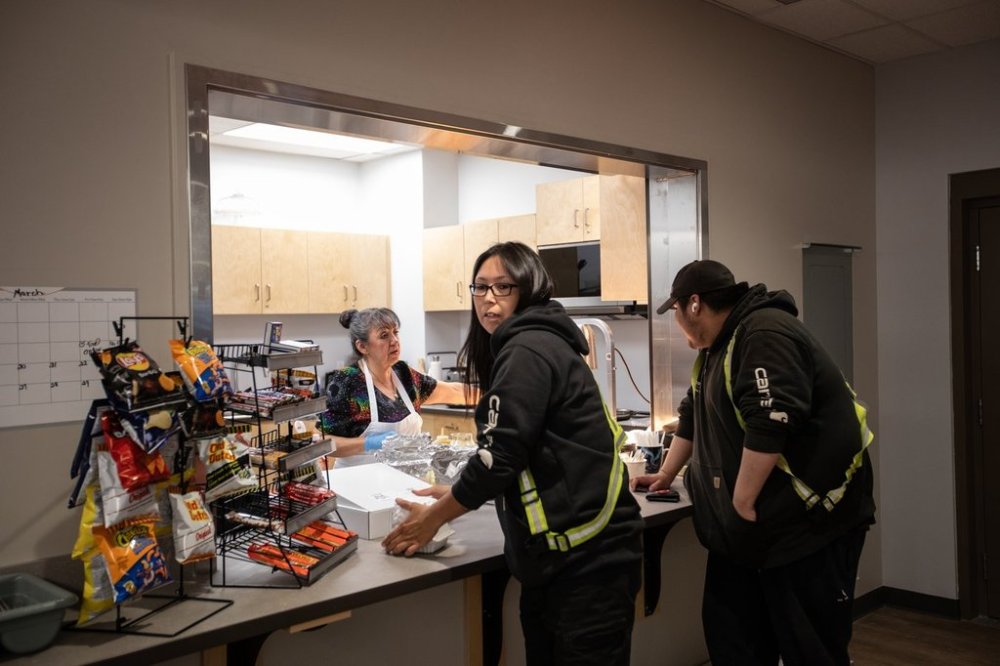
The vast majority of those funds — $13.9 billion — were spent in Alberta.
“Working collaboratively with Indigenous communities and businesses, the oil and natural gas industry can support economic reconciliation and prosperity for generations to come,” CAPP president and CEO Lisa Baiton said in a news release.
During the three-year period captured in the study, almost 18 per cent of the industry’s supply chain spending was directed to Indigenous-affiliated vendors.
In Alberta the CAPP members did business with 585 Indigenous-affiliated enterprises across 110 municipalities and 45 Indigenous communities.
Most of the spending was on construction vendors, followed by environmental and industrial waste services and equipment services and maintenance.
John Desjarlais, executive director of the Indigenous Resource Network, praised CAPP for holding itself accountable regarding its commitments to Indigenous communities.
“As can be seen, the impact is considerable and, as we have seen in our work and through our members, one of the great drivers of self-determination is through economic reconciliation,” Desjarlais said in the release.
Crystal Quocksister, client service manager at iTOTEM and an Indigenous data science entrepreneur, said the work with CAPP was about industry transparency and checking the numbers.
“There’s still work to do,” she said in the release.
“But I’m hopeful, because I see a shared commitment from Indigenous communities, entrepreneurs, and industry to shape the future of resource development together. And the numbers show this to be true.”
Staffers of Indigenous descent make up seven per cent of the oil and gas workforce — well above the national average of just under four per cent, CAPP said.
In an onstage interview at the Global Energy Show in Calgary last week, the chief executive at Crown-owned pipeline operator Trans Mountain Corp. said it’s worthwhile to hire Indigenous contractors not only because they’re Indigenous, but “they’re really good at what they do.”
“The Indigenous part would be a bonus, so to speak,” Mark Maki said. “But they’re good at whatever it is we’re asking them to do.”

In British Columbia, First Nations have been playing a key role in liquefied natural gas projects in development.
One of those is the Haisla Nation, which owns just over half of the Cedar LNG project under construction in Kitimat, B.C., alongside Pembina Pipeline Corp.
Haisla Chief Crystal Smith told the Global Energy Show last week that there’s a misconception that Indigenous groups are an obstacle to development.
“We’re not a problem,” she said. “We’re actually the solution.”
This report by The Canadian Press was first published June 19, 2025.