

Home construction must double over next decade to restore 2019 affordability: CMHC
Advertisement
Read this article for free:
or
Already have an account? Log in here »
To continue reading, please subscribe:

Digital Subscription
One year of digital access for only $205*
- Enjoy unlimited reading on winnipegfreepress.com
- Read the E-Edition, our digital replica newspaper
- Access News Break, our award-winning app
- Play interactive puzzles
*First annual payment billed as $205.00 + GST for one year. This annual subscription will automatically renew at $233.00 + GST every 52 weeks (10% off the regular annual price of $259.35). Offer available to new and qualified returning subscribers only. Cancel any time.
To continue reading, please subscribe:
Add Free Press access to your Brandon Sun subscription for only an additional
$1 for the first 4 weeks*
- Enjoy unlimited reading on winnipegfreepress.com
- Read the E-Edition, our digital replica newspaper
- Access News Break, our award-winning app
- Play interactive puzzles
*Your next Brandon Sun subscription payment will increase by $1.00 and you will be charged $17.95 plus GST for four weeks. After four weeks, your payment will increase to $24.95 plus GST every four weeks.
Read unlimited articles for free today:
or
Already have an account? Log in here »
Hey there, time traveller!
This article was published 19/06/2025 (432 days ago), so information in it may no longer be current.
Canada Mortgage and Housing Corp. says up to 4.8 million new homes will need to be built over the next decade to restore affordability levels last seen in 2019 based on projected demand.
The national housing agency released its latest supply gaps estimate report on Thursday, which said between 430,000 and 480,000 new housing units are needed per year across the ownership and rental markets by 2035.
That would represent around double the current pace of home construction in Canada.
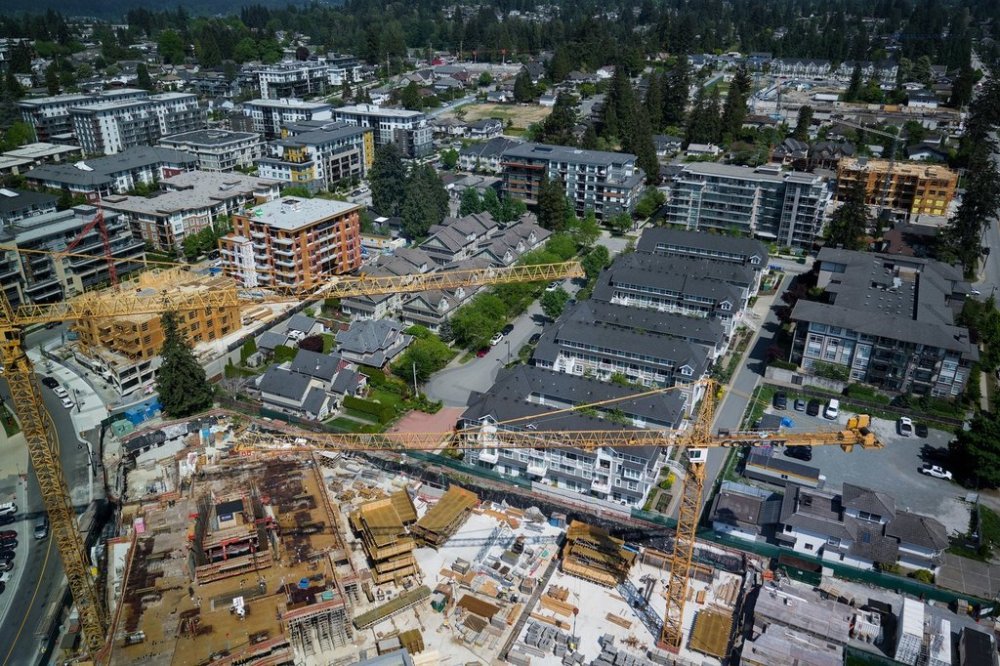
A total of 90,760 housing starts have been recorded so far this year through May, and CMHC projects an average of 245,000 starts annually over the next 10 years under current conditions.
CMHC deputy chief economist Aled ab Iorwerth said doubling the pace of housing construction in Canada is achievable, “but not without a significantly larger and modernized workforce, more private investment, less regulation, fewer delays, and lower development costs.” He also called for more innovation in construction technology and growth in labour productivity.
“As we increase housing over time, house price growth will come down,” ab Iorwerth said on a call with media prior to the report’s release.
The report reassured that increasing housing supply is “unlikely to cause financial instability because these forces take time to produce reactions.” Ab Iorwerth added the projections were calculated on a 10-year timeline for that reason.
“We’re hoping that this will be a gradual transition,” he said.
“Housing supply will be increasing. This will start to slow the growth in house prices. Canadians will then be a little bit less keen to bid aggressively on housing … and they’ll diversify their savings into other money markets or the stock exchange or whatever. And so the pressure will be taken out of house prices.”
In 2023, the agency estimated Canada would need to build an additional 3.5 million housing units by 2030, on top of 2.3 million that were already projected to be built by that year, to reach affordability levels seen in 2004.
In its latest report, CMHC said that timeline “is no longer realistic,” especially after the post-pandemic price surge seen across the housing market.
Ab Iorwerth said Canada has faced a “shock” to housing affordability since 2019.
“When we were looking at the data, we saw that there’s been a lot of loss of affordability since 2019,” he said.
“We’ve seen these very fundamental changes in the housing system since 2019. It’s what the pandemic led to, these structural changes that we’re seeing in the housing system … and that’s why we’ve decided to look at 2019 as this aspiration to really try and address this challenge that most Canadians are now feeling.”
The agency defines affordability as the amount of income that goes toward housing. In general, it aims to return to levels of affordability at which adjusted house prices are no higher than 30 per cent of average gross household income.
But that ratio is projected to reach 52.7 per cent by 2035 in a “business-as-usual” scenario, up from 40.3 per cent in 2019. Doubling projected housing starts over the next decade would bring the figure down to 41.1 per cent of income being allocated for homebuying nationally, according to the agency.
During the federal election campaign, the Liberals promised to double the rate of residential construction over the next decade to reach 500,000 homes per year.
The plan emphasized scaling up prefabricated housing construction. It said a new entity called Build Canada Homes would provide $25 billion in debt financing and $1 billion in equity financing to prefabricated homebuilders to reduce construction times by up to 50 per cent.
Returning to 2019 affordability levels in the next decade would lead to house prices being roughly one-quarter lower than where they would otherwise be in 2035, the CMHC’s report added. Average rents would also be about five per cent lower.
The report included regional breakdowns, which show Ontario, Nova Scotia and B.C. have the most significant housing supply gaps by province.

Montreal faces the largest gap of any major city, where home ownership costs have also risen faster than other regions in recent years, followed by Ottawa, where CMHC said new supply has not kept pace with increased housing demand.
In Toronto, despite increased rental construction in recent years, the region is lacking home ownership options that match local incomes, and CMHC estimated a 70 per cent increase in homebuilding over the next decade would help to improve affordability issues.
For Vancouver, it said an estimated 7,200 additional homes are needed annually above the “business-as-usual” scenario, an increase of 29 per cent.
It estimated Calgary, which has seen record levels of home construction for three straight years, will need 45 per cent more new homes annually. Meanwhile, no additional supply is required beyond what is currently projected in Edmonton, as sufficient market housing is expected to be built in the region to maintain affordability by 2035.
This report by The Canadian Press was first published June 19, 2025.