

S&P/TSX composite finishes higher despite lower oil prices, U.S. stock markets up
Advertisement
Read this article for free:
or
Already have an account? Log in here »
To continue reading, please subscribe:

Digital Subscription
One year of digital access for only $205*
- Enjoy unlimited reading on winnipegfreepress.com
- Read the E-Edition, our digital replica newspaper
- Access News Break, our award-winning app
- Play interactive puzzles
*First annual payment billed as $205.00 + GST for one year. This annual subscription will automatically renew at $233.00 + GST every 52 weeks (10% off the regular annual price of $259.35). Offer available to new and qualified returning subscribers only. Cancel any time.
To continue reading, please subscribe:
Add Free Press access to your Brandon Sun subscription for only an additional
$1 for the first 4 weeks*
- Enjoy unlimited reading on winnipegfreepress.com
- Read the E-Edition, our digital replica newspaper
- Access News Break, our award-winning app
- Play interactive puzzles
*Your next Brandon Sun subscription payment will increase by $1.00 and you will be charged $17.95 plus GST for four weeks. After four weeks, your payment will increase to $24.95 plus GST every four weeks.
Read unlimited articles for free today:
or
Already have an account? Log in here »
Hey there, time traveller!
This article was published 24/06/2025 (466 days ago), so information in it may no longer be current.
TORONTO – Strength in technology stocks helped Canada’s main stock index climb over 100 points on Tuesday, while U.S. markets also rose and oil prices fell.
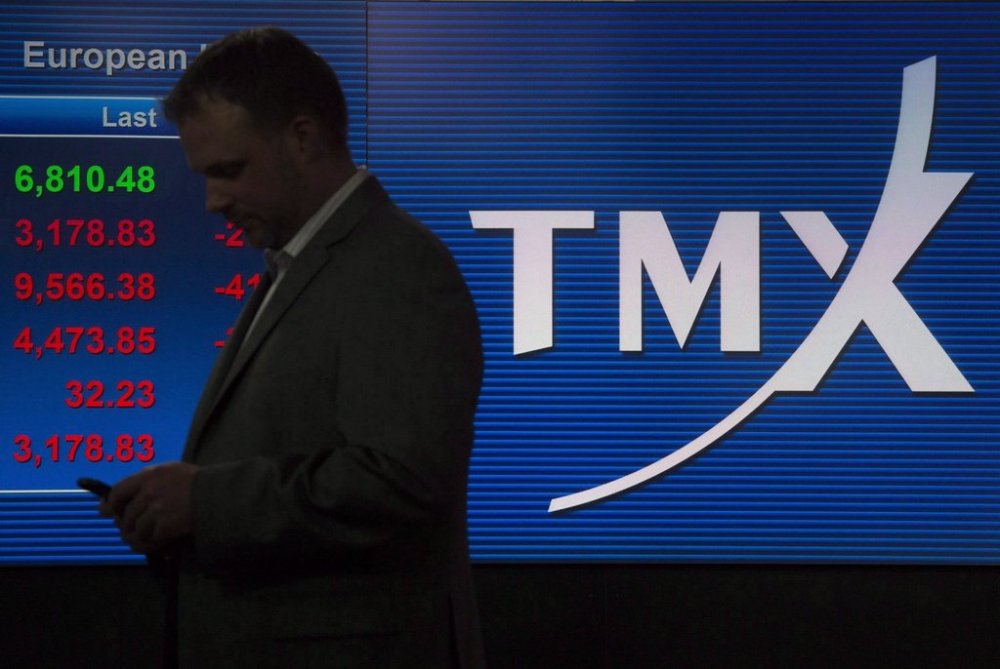
The S&P/TSX composite index closed 109.26 points higher at 26,718.62.
A rally in the U.S. tech sector had a spillover effect, according to one strategist, driving Canada’s benchmark index higher.
“You’ve got the U.S. tech sector that is leading, and so it’s a good rally on tech in general. Actually, when you look at where it’s coming from, Intel, AMD, Super Micro, it’s not coming from the usual suspects of Nvidia. So I would argue that we’re getting a broadening out of a rally in the tech sector, obviously spilling over into Canada as well,” Philip Petursson, chief investment strategist at IG Wealth Management, said in an interview.
In New York, the Dow Jones industrial average was up 507.24 points at 43,089.02. The S&P 500 index was up 67.01 points at 6,092.18, while the Nasdaq composite was up 281.56 points at 19,912.53.
“The markets aren’t necessarily looking for peace in the world; what the markets are looking for is certainty. And I think given what has gone on over the last three months, we are in a much more certain environment than we were at the beginning of the quarter. And that I think is what’s being reflected,” Petursson said.
Specifically, he pointed to tariff uncertainty and more recent geopolitical uncertainty in the Middle East.
“Those questions have been answered as well, and so, with less uncertainty, we can now focus back on the fundamentals of valuation, earnings growth, and the economic cycle. In that regard, I would say things are better than what people perhaps thought three months ago,” Petursson said.
Equity market gains came as the price of oil pulled back on hopes that Israel’s war with Iran will not damage the global flow of crude. The August crude oil contract was down US$4.14 at US$64.37 per barrel.
The fear throughout the Israel-Iran conflict has been that it could squeeze the world’s supply of oil, which would pump up prices for gasoline and hurt the global economy. Iran is a major producer of crude, and it could also try to block the Strait of Hormuz off its coast, through which 20 per cent of the world’s daily oil needs passes on ships.
Oil prices began falling sharply on Monday after Iran launched what appeared to be a limited retaliatory strike to the United States’ entry into the war, one that did not target the production or movement of oil. They kept falling even after attacks continued past a deadline to stop hostilities early Tuesday. Trump later said that the ceasefire was “in effect.”
Oil prices have dropped so much in the last two days that they’re below where they were before the fighting began nearly two weeks ago.
Petursson said the decline in oil prices was a reaction to the ceasefire.
“We’re back to where energy prices were a couple of weeks ago before some of these tensions were bubbling up. And so that’s what we’re getting … the US$10 geopolitical premium that was priced into oil has been removed,” he said.

The August gold contract was down US$61.10 at US$3,333.90 an ounce.
The Canadian dollar traded for 72.93 cents US compared with 72.70 cents US on Monday.
This report by The Canadian Press was first published June 24, 2025.
Companies in this story: (TSX:GSPTSE, TSX:CADUSD)
— With files from The Associated Press

Advertisement Advertise With Us
Advertisement Advertise With Us