

Hong Kong plans to regulate Uber and other online ride-hailing services
Advertisement
Read this article for free:
or
Already have an account? Log in here »
To continue reading, please subscribe:
Monthly Digital Subscription
$1 per week for 24 weeks*
- Enjoy unlimited reading on winnipegfreepress.com
- Read the E-Edition, our digital replica newspaper
- Access News Break, our award-winning app
- Play interactive puzzles
*Billed as $4.00 plus GST every four weeks. After 24 weeks, price increases to the regular rate of $19.95 plus GST every four weeks. Offer available to new and qualified returning subscribers only. Cancel any time.
Monthly Digital Subscription
$4.99/week*
- Enjoy unlimited reading on winnipegfreepress.com
- Read the E-Edition, our digital replica newspaper
- Access News Break, our award-winning app
- Play interactive puzzles
*Billed as $19.95 plus GST every four weeks. Cancel any time.
To continue reading, please subscribe:
Add Free Press access to your Brandon Sun subscription for only an additional
$1 for the first 4 weeks*
*Your next subscription payment will increase by $1.00 and you will be charged $16.99 plus GST for four weeks. After four weeks, your payment will increase to $23.99 plus GST every four weeks.
Read unlimited articles for free today:
or
Already have an account? Log in here »
Hey there, time traveller!
This article was published 15/07/2025 (256 days ago), so information in it may no longer be current.
HONG KONG (AP) — The Hong Kong government on Tuesday unveiled proposals to regulate online ride-hailing services provided by tech companies like Uber, requiring platforms, cars and drivers to be licensed before hitting the road.
In a document sent to the legislature, transport officials said those companies applying for a license would need to have business registration and an office in the city. They also said the platforms would have to fulfill certain conditions on operating experience, proof of financial capability and capital investment, in addition to ensuring the cars and drivers working for them already purchased the required insurance.
Under the licensing plans, eligible drivers must have held a private car driving license for at least one year and have no serious traffic convictions within five years. The drivers also need to pass a test and complete training.
Officials plan to set a quota on the number of vehicles allowed to be run under the policy, adding that the cars cannot be over seven years old and have to pass an annual inspection.
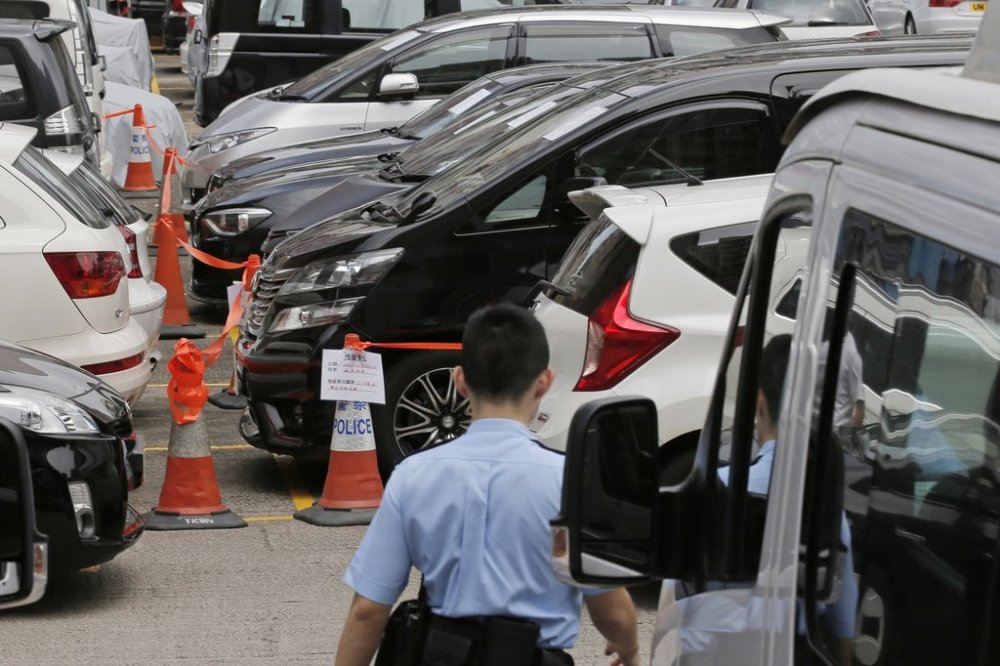
Currently, it is illegal for drivers of private vehicles to provide paid services to customers without a permit. Police have arrested some Uber drivers suspected of driving without a permit in the past and in 2018, more than two dozen drivers were fined.
Uber, which started operating in Hong Kong in 2014, has faced multiple legal and regulatory challenges in its overseas expansion but remains popular in the semi-autonomous Chinese city, where many residents are frustrated with poor taxi services.
Some taxi companies have long resisted online platforms like Uber, seeing them as a threat to their business.
Hong Kong leader John Lee said the legislative framework would need to ensure the co-existence of online ride-hailing services and traditional taxi services. Transport officials could first handle issues with consensus and set up the framework before focusing on other controversial technical problems, Lee said.
“I agree the problem is complicated but it should not be further delayed,” he said.

In the document, the government said it would consider charging the platforms fees to provide resources for supporting the taxi industry in improving its service quality. It also suggested the companies allow taxi drivers to offer services through their platforms.
Officials aimed to propose the changes in the third quarter of the year to set out matters in principle first. They planned to suggest further legal amendments for other issues in the first half of 2026.
Uber Hong Kong welcomed the regulatory framework in a statement, saying it was encouraged to see safety and service standards placed at the center of the proposals.
“While we commend this progress, we remain concerned about the proposed cap on the number of ridesharing vehicles. Artificial limits risk increasing wait times, raising prices for riders and restricting earning opportunities for drivers,” it said.
It said it looked forward to continuing dialogue with the government and other stakeholders.