

UK Treasury chief will slash financial services red tape to boost investment
Advertisement
Read this article for free:
or
Already have an account? Log in here »
To continue reading, please subscribe:

Digital Subscription
One year of digital access for only $205*
- Enjoy unlimited reading on winnipegfreepress.com
- Read the E-Edition, our digital replica newspaper
- Access News Break, our award-winning app
- Play interactive puzzles
*First annual payment billed as $205.00 + GST for one year. This annual subscription will automatically renew at $233.00 + GST every 52 weeks (10% off the regular annual price of $259.35). Offer available to new and qualified returning subscribers only. Cancel any time.
To continue reading, please subscribe:
Add Free Press access to your Brandon Sun subscription for only an additional
$1 for the first 4 weeks*
- Enjoy unlimited reading on winnipegfreepress.com
- Read the E-Edition, our digital replica newspaper
- Access News Break, our award-winning app
- Play interactive puzzles
*Your next Brandon Sun subscription payment will increase by $1.00 and you will be charged $17.95 plus GST for four weeks. After four weeks, your payment will increase to $24.95 plus GST every four weeks.
Read unlimited articles for free today:
or
Already have an account? Log in here »
Hey there, time traveller!
This article was published 15/07/2025 (453 days ago), so information in it may no longer be current.
LONDON (AP) — U.K. Treasury chief Rachel Reeves said Tuesday that she’ll cut red tape for banks and finance firms so that “informed risk-taking” can help kickstart Britain’s sluggish economy.
The government is trying to regain the economic initiative after rocky weeks of costly U-turns and figures showing the U.K. economy contracted for two months running.
Arguing that regulation often “acts as a boot on the neck of businesses,” Reeves announced plans to pare back some of the rules introduced after the 2008 global financial crisis, which was triggered by risky lending. That includes reforms to “ring-fencing” rules enacted to separate banks’ retail and investment banking activities, and a review of the amount of capital banks must hold.
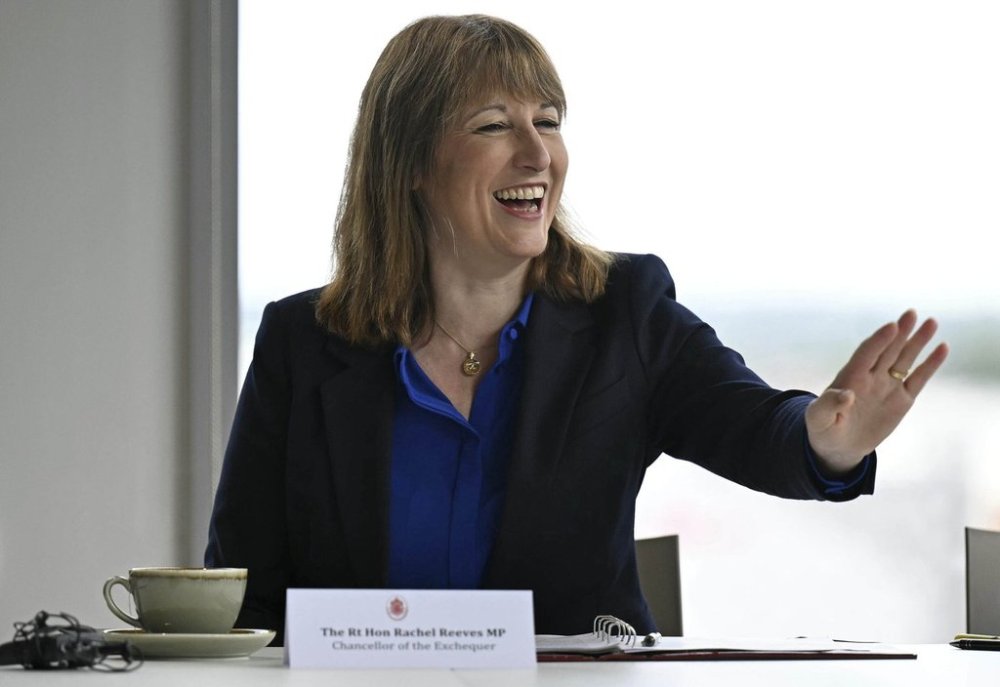
She said that it was the widest set of reforms of financial services in more than a decade.
“We are fundamentally reforming the regulatory system, freeing up firms to take risks and to drive growth,” Reeves said on a visit to Leeds in northern England.
Reeves set out the changes in her annual Mansion House speech to finance bigwigs in London, saying she was “rolling back regulation that has gone too far in seeking to eliminate risk.”
“I have placed financial services at the heart of the government’s growth mission … with a ripple effect that will drive investment in all sectors of our economy and put pounds in the pockets of working people,” she said.
Reeves also praised new Bank of England guidance allowing mortgage lenders to loan more than 4 1/2 times a buyer’s income, saying that would allow tens of thousands of people to buy their first home.
She added that “regulators in other sectors must take up the call I make this evening not to bend to the temptation of excessive caution, but to boldly regulate for growth.”

The center-left Labour Party won a landslide election victory in July 2024, but has struggled to deliver on its pledge to boost economic growth.
Efforts to soothe markets and demonstrate fiscal prudence have proved unpopular with voters. A decision to end winter home heating subsidies for millions of retirees, announced soon after the election, was reversed last month. Earlier this month, the government ditched planned cuts to welfare spending after an outcry from Labour lawmakers.
The U-turns have reduced the Treasury’s future income by several billion pounds, increasing the likelihood of tax increases in the fall. But the government has boxed itself in by ruling out hikes to sales tax or to income tax for employees.
Questions swirled about Reeves’ future earlier this month when she appeared in tears in the House of Commons during the weekly prime minister’s questions session. The Treasury said that Reeves was dealing with a “personal matter.”
The cost of government borrowing spiked at the sight of Reeves’ tears, but settled down after Prime Minister Keir Starmer gave her his full backing.