

Owners of cargo ship that crashed into Baltimore bridge sue company that built vessel
Advertisement
Read this article for free:
or
Already have an account? Log in here »
To continue reading, please subscribe:
Monthly Digital Subscription
$1 per week for 24 weeks*
- Enjoy unlimited reading on winnipegfreepress.com
- Read the E-Edition, our digital replica newspaper
- Access News Break, our award-winning app
- Play interactive puzzles
*Billed as $4.00 plus GST every four weeks. After 24 weeks, price increases to the regular rate of $19.95 plus GST every four weeks. Offer available to new and qualified returning subscribers only. Cancel any time.
Monthly Digital Subscription
$4.99/week*
- Enjoy unlimited reading on winnipegfreepress.com
- Read the E-Edition, our digital replica newspaper
- Access News Break, our award-winning app
- Play interactive puzzles
*Billed as $19.95 plus GST every four weeks. Cancel any time.
To continue reading, please subscribe:
Add Free Press access to your Brandon Sun subscription for only an additional
$1 for the first 4 weeks*
*Your next subscription payment will increase by $1.00 and you will be charged $16.99 plus GST for four weeks. After four weeks, your payment will increase to $23.99 plus GST every four weeks.
Read unlimited articles for free today:
or
Already have an account? Log in here »
Hey there, time traveller!
This article was published 04/08/2025 (235 days ago), so information in it may no longer be current.
ANNAPOLIS, Md. (AP) — The owners of the cargo ship that crashed into the Francis Scott Key Bridge are suing the company that built the vessel, alleging negligence in the design of a critical switchboard on the ship.
Grace Ocean Private and Synergy Marine PTE Ltd, the owners of the Dali, filed the lawsuit last week against Hyundai Heavy Industries in U.S. District Court for the Eastern District of Pennsylvania.
“As a result of the defectively designed Switchboard, the Vessel suffered a power outage that led to the allision with the Key Bridge,” Grace Ocean Private alleges in the lawsuit.
Hyundai Heavy Industries could not immediately be reached for comment. Court records in the case did not name legal representatives for Hyundai.
Grace Ocean Private contends the switchboard was defectively designed in a manner that wiring connections were not secure. The defect, the company alleges, “caused the switchboard and the vessel to be unreasonably dangerous … when it left HHI’s control.”
“HHI’s defective manufacture of the Switchboard and Vessel caused the signal wiring to come loose in normal operation, resulting in the power outage that led to the allision,” the lawsuit says.

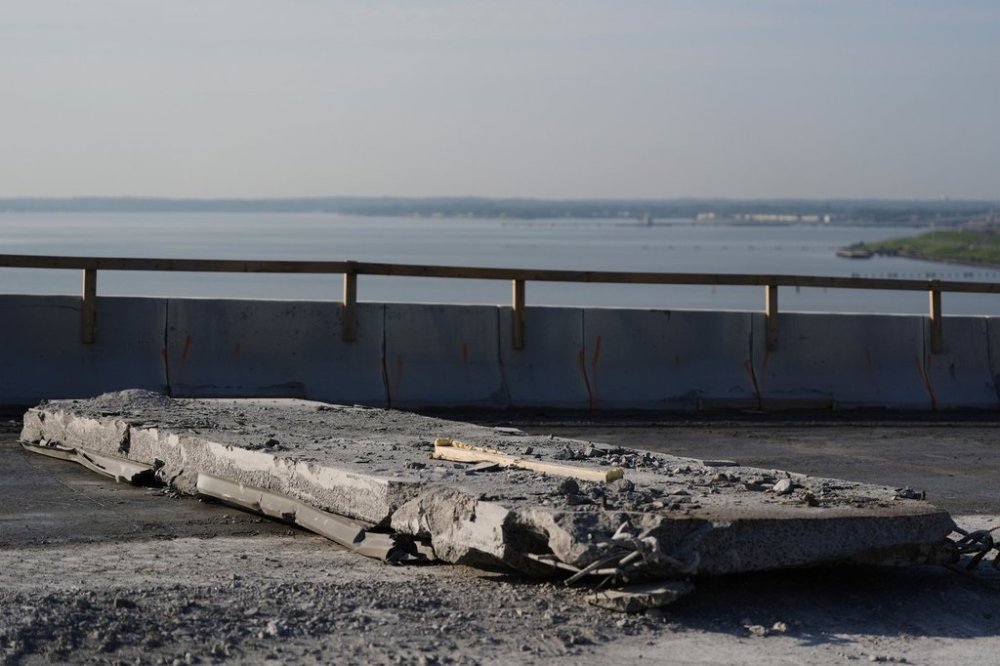
The Dali was leaving Baltimore bound for Sri Lanka on March 26 last year when its steering failed due to the power loss. It crashed into one of the bridge’s supporting columns, destroying the 1.6-mile span and killing six members of a roadwork crew. Baltimore’s port was closed for months, and increased traffic congestion remains a problem across the region.
The Justice Department last year filed a lawsuit seeking to recover more than $100 million that the government spent to clear the underwater debris and reopen the city’s port. The owner and manager of the cargo ship agreed to pay more than $102 million in cleanup costs to settle the lawsuit brought by the government.
In that lawsuit, the Justice Department alleged the owner and manager of the cargo ship recklessly cut corners and ignored known electrical problems on the vessel. In particular, the Justice Department accused the ship owner of failing to address “excessive vibrations” that were causing electrical problems.
The National Transportation Safety Board said in its preliminary report last year that the Dali experienced electrical blackouts about 10 hours before leaving the Port of Baltimore, and yet again shortly before it slammed into the bridge.
Last week, Maryland officials visited the site where demolition crews are using giant saws, backhoes and other heavy equipment to remove large sections of the remaining pieces of the bridge. Its replacement is expected to open in 2028.